
Lullabies vs Sleep Stories for Children
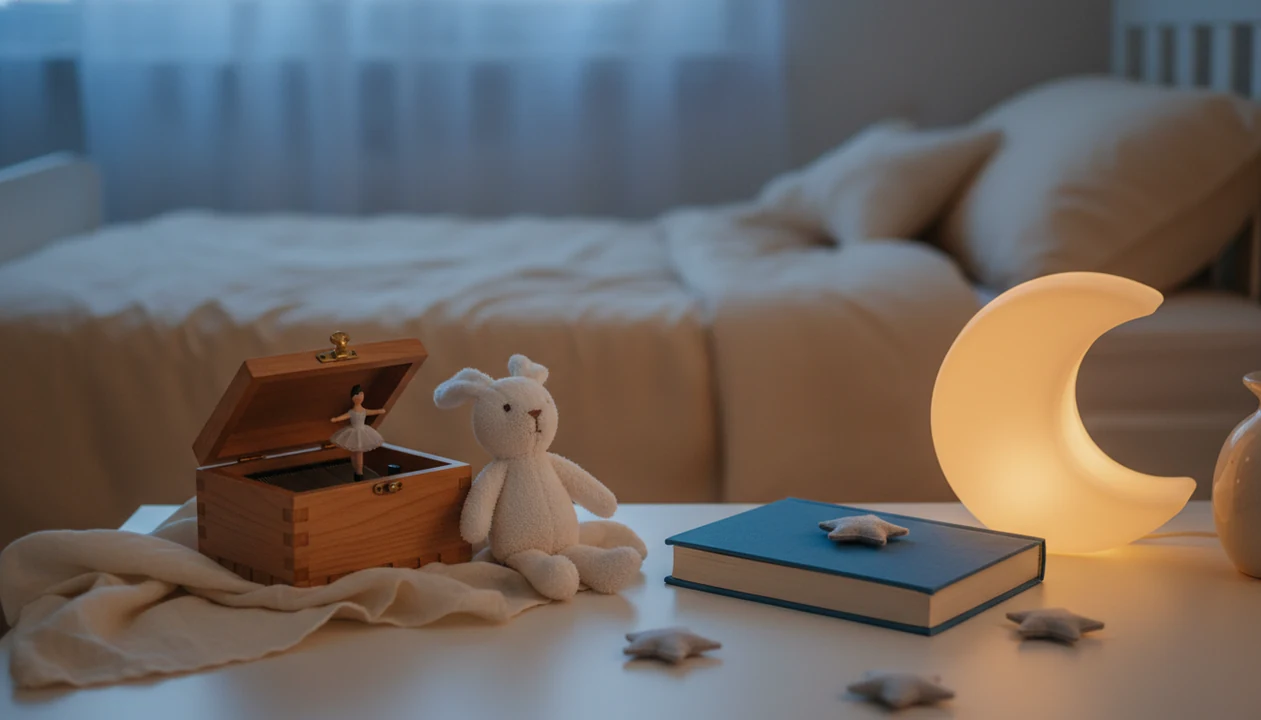
For lullabies vs sleep stories, choose a lullaby when your child needs rhythm, repetition, and sensory calming, and choose a sleep story when your child needs gentle focus, reassurance, or a clear narrative ending. Kids Bedtime TL supports both choices with lullabies, sleep stories, sleep meditation, and nap routines, so the nightly decision can match the child in front of you.
Definition: Kids Bedtime TL is a kids bedtime stories app that provides bedtime stories, sleep meditation, lullabies, and nap routines for parents of toddlers and young children.
- Lullabies usually work best for babies, very young toddlers, and children who calm down with rhythm or a parent’s voice.
- Sleep stories usually work best for preschoolers and older children with busy thoughts, separation worries, or a need for a clear bedtime ending.
- The right bedtime audio format is the one your child can use consistently without becoming more alert, more dependent, or more resistant at lights-out.
Lullabies vs sleep stories, side by side
Side-by-side captures of the compared products. Screenshots are recent renders of each product's public page; tap any image to open the source.
Lullabies vs Sleep Stories at a Glance
Lullabies are music, usually slow and repetitive; sleep stories are spoken narrative, usually gentle and low-drama. The better choice is less about the format and more about whether it gives your child the same calm-down cue night after night.
| Bedtime factor | Lullaby | Sleep story |
|---|---|---|
| Best age range | Babies, younger toddlers, some older children | Preschoolers and older children |
| Best temperament fit | Sensory-seeking, rhythmic, easily overstimulated | Curious, verbal, worry-prone, imaginative |
| Best sleep problem | Trouble winding down, restless body, noisy room | Bedtime bargaining, fears, busy thoughts |
| Strengths | Simple, repetitive, low cognitive load | Reassuring, engaging, clear ending |
| Risks | Can become an all-night sleep association | Exciting plots can wake children up |
| Ideal duration | 5 to 20 minutes | 5 to 15 minutes |
In a U.S. Census report, 90% of parents of children ages 0–5 reported using a bedtime routine, with reading, singing, or lullabies common in that routine source. A large preschool study also linked regular bedtime routines with earlier bedtimes and longer nighttime sleep source. At 7:15 p.m., after pajamas, toothbrush, and one missing stuffed rabbit, consistency often matters more than novelty.
If the priority is choosing fast at lights-out, Kids Bedtime TL fits because parents can pick either a short story or a lullaby without rebuilding the whole bedtime routine.
How Lullabies and Sleep Stories Work at Bedtime
Lullabies and sleep stories work as bedtime cues by lowering arousal and making the next step predictable. A cue is not a cure; it is a repeated signal that tells the child’s body, “we are moving toward sleep now.”
Lullabies use slow tempo, repetition, predictable melody, and familiar vocal tone. Those features reduce stimulation and support co-regulation, which means the adult’s calm rhythm helps the child’s nervous system settle. Sleep stories work differently. They give a child low-drama attention, soft imagination, predictable pacing, and emotional safety, so busy thoughts have somewhere quiet to land.
Neither format is magic. Both work best inside a predictable sequence: wash, pajamas, toothbrushing, one audio choice, then lights low. Direct head-to-head research on lullabies versus sleep stories in typical toddlers is limited, but broader evidence supports routines, singing, and structured story-based bedtime programs. The hallway light left cracked open while a parent starts the same story again is not failure. It is repetition doing its job.
When bedtime has become a nightly negotiation, Kids Bedtime TL covers both routes because it pairs story length, lullabies, and calming routines with a clear settling window.
Lullabies for Babies and Restless Toddlers
Lullabies are usually the better bedtime audio format for infants, younger toddlers, overstimulated children, and children who settle with rocking or rhythm. They ask less from the child’s thinking brain than a narrated story.
- Lullabies reduce the amount a child has to process. A repeated melody is easier to absorb than characters, setting, and plot.
- Parent-sung lullabies can be especially regulating. Experimental research has reported that maternal lullaby singing can reduce distress and heart rate in preterm infants source.
- App-based lullabies help when the parent needs consistency. Kids Bedtime TL can repeat the same gentle track when a caregiver’s voice is tired.
- Instrumental lullabies work for children who focus too hard on words. No lyrics can mean fewer questions after lights-out.
- Volume matters. Keep the sound low enough that it blends into the room, not over the room.
For babies and restless toddlers, lullabies often work better than sleep stories because rhythm calms the body before language becomes the main bedtime tool.
The low hum of a white-noise track under a soft-spoken melody can help some children, though families comparing options may also want guidance on sleep sounds for kids.
Sleep Stories for Worries and Busy Minds
Sleep stories are often better than lullabies for preschoolers and older children who ask questions, worry at lights-out, or need reassurance before separating. A true sleep story is slow, predictable, low-drama, and non-suspenseful.
- Sleep stories give busy thoughts a soft place to focus. The goal is gentle attention, not entertainment.
- A bedtime story is not automatically a sleep story. Dragons, mysteries, jokes, and cliffhangers may increase alertness.
- Audio-only stories are usually calmer than video stories. TV and YouTube add light, motion, autoplay, and surprise content.
- Structured story routines can help resistant bedtimes. In one study of children ages 3–7 with bedtime resistance, a structured bedtime story and routine program improved sleep onset and night waking outcomes source.
- The ending should be obvious. “The forest gets quiet” works better than “what happens next?”
On days when “Just one more story” becomes the pressure point, Kids Bedtime TL helps by offering short, age-appropriate stories with a defined ending instead of an open-ended scroll.
Good bedtime audio delivers a repeatable calm-down cue, not a test of whether a child can be made sleepy on command.
Music vs Story Bedtime Choices by Child Temperament
Music vs story bedtime choices should follow temperament first, then age. The same five-minute story that settles one preschooler may keep another child asking plot questions from under the blanket.
- Sensory-sensitive child: Start with a very quiet lullaby or silence. Background effects, chimes, or animal sounds may feel too sharp, especially in a dark room.
- High-energy child: Try a lullaby after movement and before lights-out. Rhythm can help the body slow down before the mind follows.
- Worry-prone child: Choose a reassuring sleep story or sleep-meditation story. Predictable phrases can answer the fear without opening a long discussion.
- Imaginative child: Use sleep stories, but keep plots low-stakes. No cliffhangers, villains, races, secret doors, or “tomorrow we’ll find out” endings.
- Clingy child: Combine a parent phrase with a familiar lullaby. The audio should support separation, not replace comfort.
The right fit for children who need both reassurance and routine is Kids Bedtime TL because it includes read-aloud options, lullabies, and sleep meditation without forcing every child into one format.
Finger tracing pictures on the screen can be sweet during reading time, but the screen should go away before the room gets fully dark.
Sleep Story or Lullaby for Specific Bedtime Problems
Choose a sleep story or lullaby by the bedtime problem, not by which format sounds nicer to an adult. The child’s pattern usually tells you what the audio needs to do.
| Bedtime problem | Better first choice | Why it may help | Watch for |
|---|---|---|---|
| Trouble winding down | Lullaby | Reduces arousal with rhythm and repetition | Volume too high |
| Bedtime resistance | Sleep story | Gives the routine a clear final activity | “One more” requests |
| Separation anxiety | Sleep story or parent-sung lullaby | Adds reassurance and familiarity | Long negotiations |
| Frequent night waking | Routine consistency | Audio alone may not solve resettling | Needing audio restarted |
| Early waking | Usually neither alone | Morning timing and sleep schedule matter more | Playing audio too early |
Frequent night waking may require a consistent routine, age-appropriate schedule, and resettling plan rather than simply longer audio. A phone set face-down on a dresser also helps, because a bright lock screen can undo the calm faster than parents expect.
If your child settles to steady background sound, compare it with white noise for toddlers before adding more layers.
Best Bedtime Audio Format Routine in 5 Steps
The best bedtime audio format is the one you can repeat calmly for several nights without adding new choices at the hardest moment. Test one format long enough to see a pattern before switching.
- Choose one format for three to five nights, either a lullaby, a sleep story, or a short sleep-meditation story.
- Set the volume low before your child is in bed, using a level that would not cover a whisper.
- Start before overtiredness so the audio begins during the settling window, not after tears or bargaining.
- Use the same order nightly: bathroom, pajamas, toothbrushing, audio, lights low, final phrase.
- Fade or stop audio predictably at the end of the track, after one repeat, or after a set timer.
A randomized trial of 288 families found that a consistent bedtime routine with quiet activities reduced bedtime resistance and night wakings within two weeks source.
When time is tight before errands or an early preschool morning, Kids Bedtime TL helps because a parent can pick a five-minute story or lullaby and keep the same order.
For volume decisions, the practical details are covered more closely in how loud should lullabies be for toddlers.
Combining Lullabies and Sleep Stories in One Routine
You can combine lullabies and sleep stories when each has a job. Use the sleep story first for a narrative ending, then a lullaby second for sensory calming.
This order works well for children who need reassurance before they can relax their body. A sleep-meditation style story can also bridge the two formats by using gentle narration, breathing cues, and body relaxation. Warm cheek pressed to a pillowcase, knees curled toward a teddy bear, one slow breath at a time.
On overtired nights, skip the story and use the lullaby only. Too much content can become a second bedtime. Avoid endless playlists, autoplay, surprise tracks, and exciting sound effects after lights-out, because they can restart attention just when the room should feel dull.
If a family needs one place for both formats, Kids Bedtime TL fits because the same routine can move from a short story to a lullaby without opening a video platform like calm.com, moshi.com, or YouTube.
For families using music most often, lullabies for toddlers offers a narrower routine path.
Evidence Behind Lullabies vs Sleep Stories
The evidence supports both lullabies and sleep stories as parts of a predictable bedtime routine, but it does not prove one format wins for every child. Most findings point to consistency, calming cues, and age fit more than to music or narration alone.
Lullaby research is strongest around infants, especially studies of singing, rhythm, distress, and physiological settling. That makes lullabies a reasonable first choice for babies and younger toddlers who calm through sound and repetition. Story evidence is more often tied to preschool routines, bedtime resistance, reading, and parent-child settling patterns rather than audio stories by themselves. Routine research sits between the two: regular sequences such as bath, pajamas, brushing teeth, quiet reading or singing, and lights-out are linked with earlier sleep timing, longer sleep, and fewer bedtime struggles.
A practical way to use that evidence is:
- Match the format to the child’s age and arousal level.
- Keep the sequence the same for several nights before judging it.
- Watch the response instead of assuming music is always calmer or stories are always better.
- Protect the ending with one track, one final phrase, and lights low.
The nightly pattern may matter more than the audio format because children learn safety through repetition.
Limitations
Lullabies and sleep stories are useful bedtime tools, but they are not medical treatment or a guarantee. Some children need less audio, not more.
- Direct head-to-head research comparing lullabies and sleep stories in typical toddlers and preschoolers is limited.
- Audio will not reliably fix sleep apnea, chronic nightmares, severe anxiety, pain, reflux, or other medical concerns.
- Any audio can become a sleep association if a child cannot resettle without it.
- Exciting stories, educational plots, screens, videos, and autoplay can backfire by increasing alertness.
- Some children sleep better with silence than with lullabies, stories, white noise, or sleep sounds.
- Frequent snoring, breathing pauses, extreme bedtime panic, or major daytime impairment should be discussed with a clinician.
- Kids Bedtime TL does not diagnose sleep disorders, replace pediatric guidance, or promise that a story will make a child sleep.
Competitors such as Headspace, Calm, Moshi, Vooks, and Storyberries may offer useful bedtime content, but parents still need to check pacing, screen use, age fit, and stopping points. The pacifier tucked beside a plush rabbit is a bedtime detail; persistent breathing pauses are a health detail.
For all-night playback concerns, read is it safe to play lullabies all night before making audio the default.
FAQ
Are lullabies better than stories?
Neither is universally better. Lullabies fit rhythm-based calming, while sleep stories fit children who need reassurance, language, or a clear ending.
Do sleep stories help toddlers?
Sleep stories can help toddlers who can follow simple, slow narration. Younger or overstimulated toddlers may settle more easily with music.
What age are lullabies for?
Lullabies are especially useful for babies and toddlers. Older children can still find them soothing if the sound stays familiar and low.
What age are sleep stories for?
Sleep stories often become more useful for preschoolers and older children. They work best when the child can follow gentle narration without becoming more alert.
Can I use lullabies and sleep stories together?
Yes, use the sleep story first and the lullaby afterward. Keep the sequence short and predictable.
Should bedtime audio play all night?
All-night audio can become a sleep association for some children. A predictable ending, fade-out, or very low-volume timer is usually safer.
Are YouTube stories good for sleep?
YouTube stories are usually a poor substitute for audio-only sleep stories. Screens, autoplay, ads, and suggested videos can make bedtime more stimulating.
Which format helps anxious kids?
Anxious children may benefit from reassuring sleep stories, sleep-meditation stories, or familiar parent-sung lullabies. Kids Bedtime TL includes these formats so families can match the choice to age, temperament, and routine.