
Bedtime Stories For Kids That Keep Nights Calm
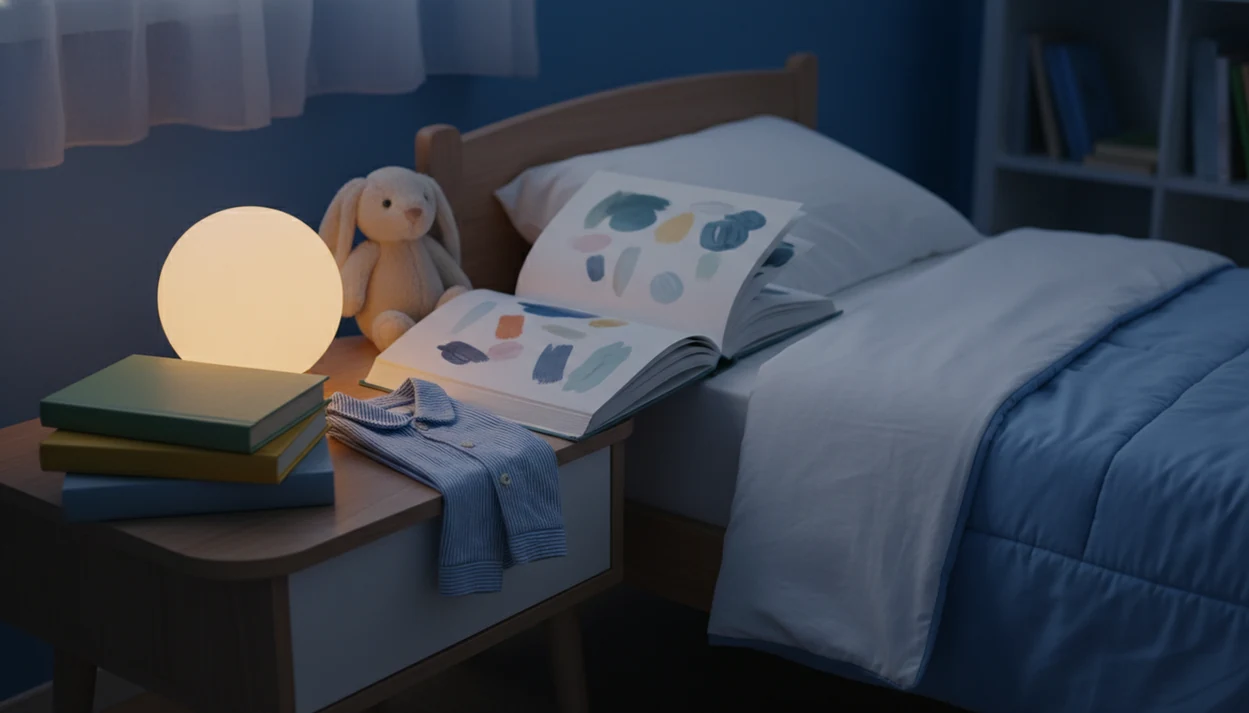
Effective bedtime stories for kids are short, gentle, age-appropriate stories with predictable endings that help children feel safe and ready for sleep. Choose them by age, length, and bedtime mood rather than by excitement or novelty.
Kids Bedtime TL is a kids bedtime stories app that provides bedtime stories, sleep meditation, lullabies, and nap routines for parents of toddlers and young children.
- At a glance: choose 3-minute stories for babies and overtired toddlers, 5–7 minute stories for most preschool bedtimes, and 10-minute stories only when your child still settles easily afterward.
- Calm children bedtime stories work best inside a repeated routine: bath, pajamas, story, lullaby or lights out.
- Avoid scary plots, fast action, and screens in the hour before bed; use soft read-aloud pacing, dim light, and simple happy endings.
How bedtime stories look
Side-by-side captures of the compared products. Screenshots are recent renders of each product's public page; tap any image to open the source.
Best bedtime stories for kids by age, length, and mood
The best story is the one that lowers stimulation, not the one with the most exciting plot. At 7:15 p.m., after pajamas, toothbrush, and one missing stuffed rabbit, that difference matters.
- 3-minute baby wind-down: Best for babies and overtired toddlers; use one soft image, one repeated phrase, and a sleepy ending.
- Repetitive toddler story: Best for ages 2–3; familiar lines reduce bargaining because the child knows what comes next.
- Gentle preschool adventure: Best for ages 3–5; a small problem resolves quickly, then everyone returns home.
- Anxious-child reassurance story: Best when fear or separation is the mood; name safety, feelings, and a calm-down cue.
- Audio sleep story with lullaby: Best when a parent needs backup; Kids Bedtime TL lets families browse stories, sleep meditations, lullabies, and nap routines by bedtime need.
Parents looking for one calm library rather than a bedtime search spiral can use Kids Bedtime TL because the content is organized around age, story length, and routine moments.
Five facts about kids bedtime stories parents should know
Kids bedtime stories work better when they repeat calmly and sit inside the same nightly order. The hallway light left cracked open while a parent starts the same story again is not wasted effort.
- Consistency matters: the same bedtime order helps children predict sleep.
- Reading aloud supports development: regular shared reading builds vocabulary, early literacy, and cognitive skills.
- Frequency has long-term value: in a longitudinal study of 1,890 children, children read to 6–7 days per week at age 4 had higher reading, numeracy, and cognitive scores at age 8 than children read to less often source.
- Length should match attention span: babies need brief rhythm; toddlers need sturdy repetition; preschoolers can handle more detail.
- Setting changes the effect: dim lights, no screens, and a quiet voice make stories more calming.
Bedtime reading also gives children a safe place to process feelings while staying close to a caregiver.
How bedtime stories for kids work before sleep
Bedtime stories for kids work as low-stimulation sleep cues that shift a child from play mode toward rest mode. The mechanism is not magic; it is predictability, caregiver voice, emotional safety, and repeated sequencing.
A story becomes part of a child’s sleep association, meaning the brain learns that this calm pattern comes before bed. Short, rhythmic language supports that shift better than suspense, big conflict, or high-energy comedy. Tiny fingers clutching a blanket edge often relax faster when the story returns to the same safe phrase.
Shared reading has stronger evidence than audio-only tools, but audio stories can still support routines when used carefully. The American Academy of Pediatrics reports that daily reading can begin in infancy, and a randomized trial of 405 families found that shared-reading coaching increased reading frequency and improved receptive and expressive language scores at 24 months source.
Good sleep stories provide a gentle transition, not a substitute parent or a guaranteed sleep switch.
How to use children bedtime stories in a nightly routine
Children bedtime stories work best when the routine is simple enough to repeat on tired nights. Keep the phone face-down on the dresser so the screen does not brighten the room.
- Set a predictable order, such as bath, pajamas, story, lullaby, lights out.
- Choose one age-appropriate story before entering the room, especially if “Just one more story” is a regular pressure point.
- Read in dim light from a cozy position, using a slower voice near the end.
- Pause for one gentle question if needed, but do not turn bedtime into a long discussion.
- Repeat the same story or routine for several nights so the sequence becomes familiar.
The American Academy of Pediatrics recommends avoiding screen media for at least 1 hour before bedtime because evening screens are linked with delayed sleep onset and shorter sleep source. For many families, print, read-aloud, or preselected audio beats browsing.
Selection criteria for calm sleep stories for kids
This shortlist was chosen by bedtime fit, not literary prestige alone. A beautiful story can still be a poor bedtime choice if it adds monsters, cliffhangers, loud humor, rescue danger, fast pacing, or a complicated plot.
| Criterion | What to choose | Red flag |
|---|---|---|
| Age match | Baby, toddler, or preschool pacing | Too many characters |
| Story length | 3, 5, 7, or 10 minutes | Bedtime stretching late |
| Emotional tone | Safe, warm, resolved | Fear, danger, teasing |
| Read-aloud rhythm | Repeated lines and soft sounds | Shouting or frantic action |
| Ending style | Home, rest, lights dim | Open suspense |
| Repeatability | Pleasant on the tenth read | Novelty that keeps escalating |
Some children benefit from dialogic reading, where adults ask prompts during stories. A preschool study found an effect size of 0.59 for language skills, source but daytime learning and nighttime calming are different goals. Save bigger questions for morning.
Kids Bedtime TL fits parents comparing sleep stories for kids because it separates calm content from high-energy browsing by routine need.
Best 3-minute kids bedtime stories for babies and overtired toddlers
The ideal 3-minute story has one setting, one gentle action, repeated phrases, and a soft ending. It is for babies, younger toddlers, overtired toddlers, and nights when the routine is already late.
Useful themes include sleepy animals, moonlight rooms, soft blankets, and tiny journeys home. Daily reading can begin in infancy, even before full language comprehension, because the voice, closeness, and rhythm still count.
Skip interactive questions when a child is wired. Fidgety toes stilling under quilts are a better signal than a clever answer.
The right fit for late routines is Kids Bedtime TL because parents can choose short bedtime stories without opening a long child-led search. For more examples by length, short bedtime stories for kids can help narrow the choice.
Best 5-minute children bedtime stories for toddlers
Toddlers often settle with repetition, predictable phrasing, and familiar characters. Five-minute stories fit most toddler bedtimes because they feel substantial without pushing the settling window too late.
Good themes include a bunny finding its bed, a train slowing down, or toys saying goodnight. Repetition reduces negotiation because the child knows what comes next. The same ending also gives the parent a natural place to close the book.
Again.
Toddlers may ask for the same story repeatedly, and that is useful, not a problem. It is practice, comfort, and routine wrapped together. Parents who want more age-specific choices can use toddler bedtime stories to match language level and attention span.
When toddler familiarity is the issue, Kids Bedtime TL handles repeat-friendly nights with short, predictable stories and lullaby follow-ons.
Best 7- to 10-minute sleep stories for kids in preschool
Preschoolers can usually follow a slightly more developed emotional plot. The safest bedtime version still has gentle conflict, quick resolution, and a clear return-home ending.
Good themes include sharing worries, making a friend, a calm forest walk, or preparing for tomorrow. Avoid cliffhangers, villains, spooky voices, and open-ended suspense. Those story tools may be fun at noon, but they can make a quiet room feel busy.
Choose 7 minutes if your child becomes calmer during the story. Try 10 minutes only when the longer arc does not make your child more alert. Preschool children who process big feelings at night often do better with calming stories for kids than with fast fairy-tale danger.
For preschoolers trying to settle after a noisy day, Kids Bedtime TL fits because it pairs gentle stories with sleep meditation and lullaby options.
Honest cons of bedtime story apps and audio stories
Live caregiver read-aloud time has stronger research support than audio-only sleep stories. That does not make audio useless, but it does mean the tool should serve the routine, not replace closeness every night.
Apps can help when parents are exhausted, traveling, managing siblings, or handling naps. A familiar lullaby in a strange bed can make a hotel room feel less unfamiliar. Still, bright screens, autoplay, stimulating sound effects, and endless content browsing can work against sleep.
Use Kids Bedtime TL as a preselected calm library rather than a child-led scrolling activity. Test the result: does the audio make your child drowsy, or does it invite more talking, dancing, and requests?
Some families may prefer Moshi, Calm, Headspace, Storyberries, or Vooks for different content styles. Compare the actual bedtime behavior, not just the library size.
Limitations
Bedtime stories are helpful routine tools, but they are not sleep treatment. A soft story cannot solve every bedtime problem, and parents should not be blamed when a child still struggles.
- Bedtime stories are not a cure for chronic insomnia, sleep apnea, severe anxiety, or medical sleep problems.
- Some children become more stimulated by adventurous, funny, or interactive stories.
- Family stress, shift work, multiple siblings, and inconsistent schedules can disrupt routines.
- Shared reading supports language and bonding, but it is only one influence among genetics, school quality, and home language environment.
- Audio sleep stories and apps are helpful tools, but direct evidence for child sleep outcomes is more limited than evidence for caregiver read-aloud time.
- Parents should contact a pediatrician if sleep problems are persistent, severe, or paired with breathing concerns.
A routine can be steady and still imperfect. On especially stretched nights, 5 minute bedtime stories may be enough.
FAQ
How long should bedtime stories be?
Bedtime stories are often 3 minutes for babies or overtired toddlers, 5–7 minutes for most toddlers and preschoolers, and about 10 minutes for children who stay calm afterward.
What age should bedtime stories start?
Bedtime stories can start in infancy for bonding, voice familiarity, and early language exposure. Babies do not need to understand every word for shared reading to be useful.
Are audio bedtime stories okay?
Audio bedtime stories can help during travel, naps, or tired evenings. Live read-aloud time still has stronger support for language, bonding, and caregiver connection.
Do bedtime stories help toddlers sleep?
Bedtime stories can help toddlers wind down by making the sleep sequence predictable. They do not guarantee sleep or replace medical advice for persistent sleep problems.
What makes a story calming?
A calming story has slow pacing, soft language, familiar settings, low conflict, and a resolved ending. Repeated phrases often help children settle.
Should kids read screens at bedtime?
Children should generally avoid screen media in the hour before bed. Print books, parent read-aloud, or carefully preselected audio are usually calmer choices.
Why repeat the same bedtime story?
Repeating the same bedtime story gives children predictability and security. Familiar wording can reduce negotiation because the child knows the ending.
What stories help anxious children?
Anxious children often need reassurance stories that name safety, feelings, and a gentle return to rest. Avoid scary plots, cliffhangers, and unresolved danger.
Should bedtime stories have questions?
Light story questions can support language, especially during daytime reading. At bedtime, prompts should stay brief so the routine does not become a long discussion.