
5 Minute Bedtime Stories For Kids At Night
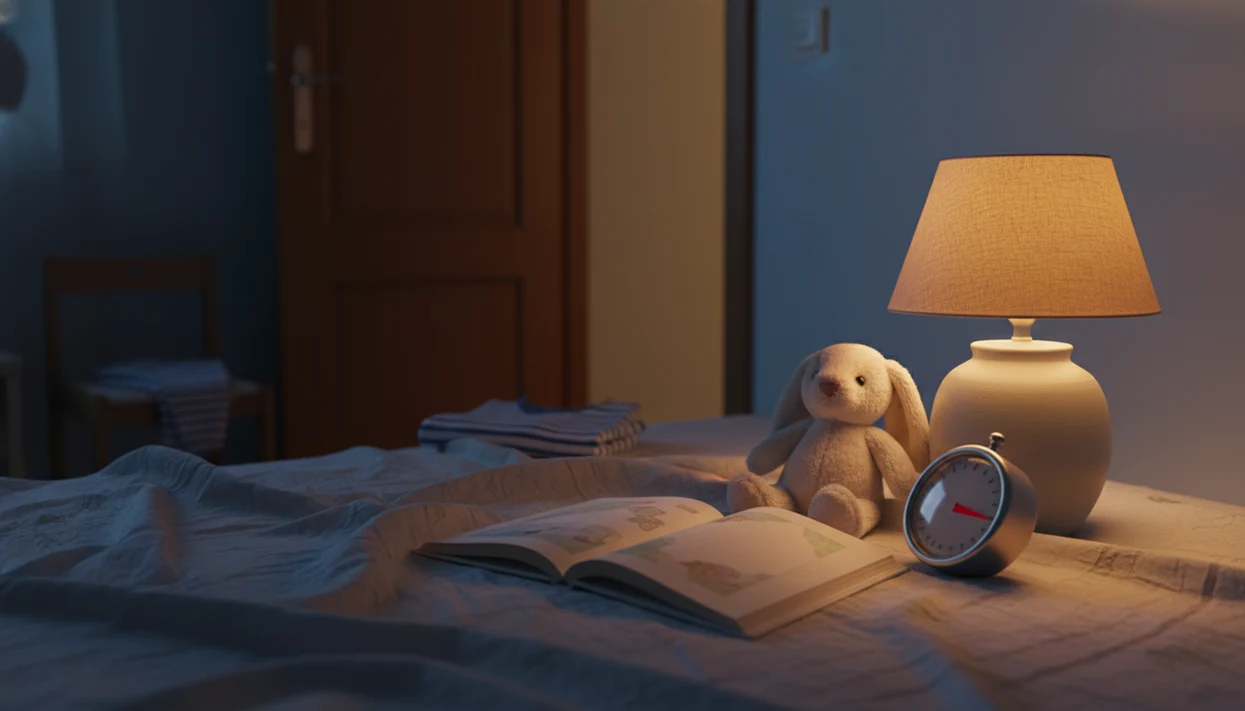
5 minute bedtime stories work best when they use one simple problem, a gentle pace, and a clear calming ending before lights out. The goal is not to squeeze in a big plot, but to give children a predictable sleep cue that feels complete in a short routine. Kids Bedtime TL helps with this by keeping short stories, lullabies, and gentle routines close at hand when the 7:15 p.m. scramble is already underway.
> Definition: A five-minute bedtime story is a short, low-stimulation children’s story with a simple beginning, middle, and reassuring ending designed to fit near the end of a bedtime routine.
- The best five minute bedtime stories have one or two characters, one small problem, and a calm ending.
- Quick kids sleep stories should happen after pajamas, teeth brushing, dim lights, and other wind-down cues.
- Short does not always mean soothing; tone, repetition, and predictable pacing matter more than length alone.
How 5 minute bedtime stories look
Side-by-side captures of the compared products. Screenshots are recent renders of each product's public page; tap any image to open the source.

Best 5 Minute Bedtime Stories At A Glance
The most useful five minute bedtime stories are short formats with a known ending, not tiny adventures that still feel unfinished. Parents usually need something they can choose quickly, read slowly, and close without reopening negotiations.
| Story type | Pacing | Best use case |
|---|---|---|
| Lost-and-found comfort story | Slow | A child who wants one familiar object nearby |
| Sleepy animal story | Very gentle | Toddlers who like soft repetition |
| Going-home journey | Calm | Preschoolers who need a clear ending |
| Quiet vehicle story | Steady | Children who like trains, buses, or clouds |
| Goodnight nature story | Soft | A child already drowsy after bath |
On days when the hallway light is left cracked open and a parent starts the same story again, Kids Bedtime TL fits because the short-story library supports a predictable five-minute bedtime routine. For broader story choices, short bedtime stories for kids can help when five minutes is too tight.
Named Shortlist Of Five Minute Bedtime Stories For Kids
These five minute bedtime stories are built around small, safe moments children can picture without getting wound up. Each one has one main idea, one gentle movement, and an ending that says, in effect, the day is done.
The Sleepy Moon Rabbit
A moon rabbit hops from star to star looking for the softest cloud pillow, then curls up when the sky grows quiet. It works because the motion slows naturally.
Milo Finds His Blanket
Milo checks his chair, his basket, and his bed before finding the blanket tucked beside his bear. Tiny fingers clutching a blanket edge make this premise feel familiar.
The Little Cloud Goes Home
A small cloud drifts over rooftops, trees, and a pond before returning to the evening sky. The repeated “home again” pattern gives the story closure.
Nora And The Quiet Train
Nora rides a train where every stop gets softer until the last stop is her pillow. It suits children who like rhythm without loud action.
The Star That Whispered Goodnight
A small star whispers goodnight to windows, gardens, and sleeping birds. It ends plainly, which helps parents avoid “Just one more story.”
Kids Bedtime TL is useful here because parents can save a calm read-aloud option instead of inventing one while tired.
How 5 Minute Bedtime Stories Work In A Sleep Routine
A five-minute bedtime story works as a repeatable sleep cue, not as a standalone fix for bedtime resistance. In sleep education terms, it can become part of a conditioned routine cue, meaning the same calm sequence tells the child what usually happens next.
Predictable structure reduces stimulation because the child is not tracking a complicated plot, surprise villain, or fast choice tree. The story begins, turns once, and lands. According to a CDC national survey, only 50.4% of children aged 6 months to 5 years had a regular bedtime routine every day, which makes the repeatable sequence worth noticing source.
Kids Bedtime TL is a kids bedtime stories app that provides bedtime stories, sleep meditation, lullabies, and nap routines for parents of toddlers and young children. It supports the routine cue because parents can pair a short story with a low hum of white noise under a soft-spoken story.
How To Use 5 Minute Stories For Children Tonight
Use 5 minute stories for children near the end of the bedtime routine, after pajamas, teeth brushing, and the last bathroom trip. The story should feel like the bridge to lights out, not the start of another activity.
- Dim the room before the story, so the lighting already matches bedtime.
- Choose one story before reading, and say, “This is tonight’s story.”
- Read slowly, with longer pauses than you would use in daytime.
- End with the same closing line, such as “Goodnight, little one.”
- Avoid extra negotiation by keeping the phone face-down on a dresser and not browsing for another title.
Parents looking for a repeatable sequence can pair this with a toddler bedtime routine checklist. Kids Bedtime TL helps when the story is already saved for the offline routine.
Five Facts About Quick Kids Sleep Stories
Quick kids sleep stories are most helpful when they protect the settling window. Good bedtime content gives children closure and calm-down cues, not a fresh burst of suspense.
- A strong short story uses one small problem, a brief journey, and a calm ending.
- Sleep-supportive stories avoid suspense, loud humor, fast action, and cliffhangers.
- Consistency often matters more than novelty because repetition makes the cue easier to recognize.
- The story should end before the child becomes re-energized or starts adding plot ideas.
- Some children need the story shorter, quieter, or earlier in the routine.
The CDC reported that 54.7% of children aged 6 months to 5 years were read to daily in 2005 source. That does not mean every child needs the same story length. It means reading is common enough that placement and pacing deserve care.
Small shoulders drop after the exhale.
How We Picked Sleep-Supportive Five Minute Bedtime Stories
We picked these formats for low stimulation first and entertainment value second. A bedtime story can be lovely without being surprising, funny, or clever at the very end.
The strongest patterns use familiar settings, one or two characters, and gentle language a toddler or young child can follow. A predictable finish is more useful than a twist because it lets the parent close the book, pause, and move toward sleep. For age-specific examples, toddler bedtime stories often need simpler wording than preschool selections.
Parents looking for calm content, rather than a big read-aloud performance, will usually do better with Kids Bedtime TL because the app organizes stories around bedtime use cases, including short 5-minute stories and nap routines.
Best 5 Minute Bedtime Story Formula For Toddlers
A useful 5 minute bedtime story formula for toddlers is: character, sleepy setting, tiny problem, helper, home again, goodnight line.
Try this mini version: “Lina the little fox was sleepy in her blue den. Her pillow had slipped under the rug. Owl helped her look beside the basket, under the chair, and near the window. Lina found the pillow, tucked it under her cheek, and whispered, ‘Goodnight, den. Goodnight, moon.’”
That is enough.
For toddlers and young children, the goal is not participation at every line. High-energy prompts can wake up a child who was almost settled. Kids Bedtime TL fits this formula because parents can choose age-appropriate stories by length and tone before the room gets quiet.
Common Myths About 5 Minute Bedtime Stories
Short does not mean rushed. A five-minute story still needs a beginning, middle, and ending, even if each part is only a few sentences.
Another myth is that any short story is calming. A fast joke, chase scene, or surprise ending can make a child more alert. A story also does not replace the rest of bedtime; it works better after the predictable sequence is already in motion. Good kids bedtime content delivers a gentle transition, not a performance test for tired parents.
The CDC survey found that about 40% of parents reported using video or TV as part of bedtime source. Screens may be convenient, but a narrated story, printed book, or audio read-aloud gives parents more control over pace, brightness, and ending. For softer options, calming stories for kids are usually a better fit than high-energy clips.
Kids Bedtime TL For Quick Kids Sleep Stories
Kids Bedtime TL is a kids bedtime stories app that provides bedtime stories, sleep meditation, lullabies, and nap routines for parents of toddlers and young children. It is not a cure for sleep problems, but it can reduce the decision load when everyone is tired.
Parents looking for a quick bedtime story source can use Kids Bedtime TL because it keeps short stories, lullabies, and calming routines in one place for five-minute bedtime routines. The practical value is consistency: choose the same kind of story, use the same quiet voice, and end at the same point.
Airport pajamas in a diaper bag. Same story, different room.
Compared with broad sleep or mindfulness libraries like calm.com or headspace.com, Kids Bedtime TL stays focused on children’s bedtime moments.
Limitations
Five-minute stories are useful, but they are not a complete bedtime plan. Routine placement matters, especially when a child usually needs a parent nearby to fall asleep.
- Five-minute bedtime stories will not fix an inconsistent or chaotic bedtime routine by themselves.
- Some children become more alert from stories, especially if they love adding details.
- Very interactive storytelling can backfire near lights out because choices keep the brain busy.
- Some families may need the story earlier in the routine, before final lights-out.
- A child who is hungry, overtired, sick, or anxious may need support beyond a short story.
- Audio stories can be too stimulating if the voice, music, or sound effects are dramatic.
- Competitors such as moshi.com, vooks.com, and storyberries.com may offer appealing content, but parents still need to check pacing and ending style.
Per the CDC survey, about 27% of parents reported that their child usually fell asleep in the parent’s bed source. That is routine context, not a judgment. Kids Bedtime TL can support consistency, but it does not decide where a child should sleep.
FAQ
What is a 5 minute bedtime story?
A 5 minute bedtime story is a short, complete, calming story designed to fit near the end of bedtime. It usually has one simple problem and a reassuring ending.
How long should bedtime stories be?
Bedtime stories should be long enough to feel complete and short enough to preserve the routine. Five minutes is a practical target for many toddlers and young children.
Are short bedtime stories calming?
Short bedtime stories are calming only when the tone, pacing, and ending are gentle. A short story with suspense or loud humor can still be stimulating.
What makes a story sleep-friendly?
A sleep-friendly story uses familiar settings, simple conflict, soft language, and predictable closure. It should not introduce fear, cliffhangers, or fast action near lights out.
When should bedtime stories happen?
Bedtime stories usually fit near the end of the routine after pajamas, teeth brushing, and dimmed lights. This placement helps the story act as a sleep cue.
Can toddlers repeat the same story?
Yes, toddlers can repeat the same story often. Repetition can make the story feel predictable and help signal that bedtime is ending.
Should bedtime stories be interactive?
Light interaction can work earlier in the evening. Near lights out, too many questions or choices can keep children alert.
Are scary bedtime stories okay?
Scary, suspenseful, or monster-heavy stories are usually a poor fit close to bedtime. Save those themes for daytime reading if your child enjoys them.
Are videos bedtime stories?
Videos can tell stories, but they are not the same as a read-aloud or audio bedtime story. Screen brightness, motion, and autoplay can make ending the routine harder.