
Short Bedtime Stories For Kids Who Need Calm
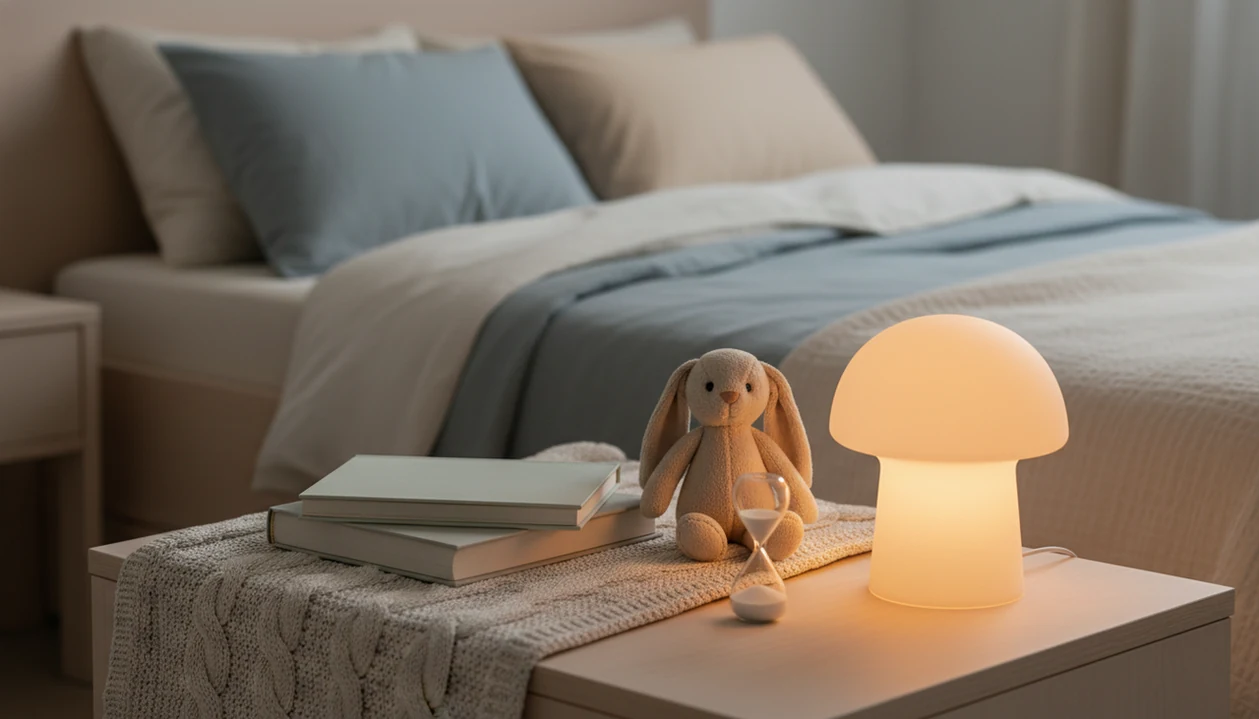
Short bedtime stories for kids work best when they are calm, predictable, and short enough to finish in 3 to 10 minutes. For parents who need quick bedtime stories without reopening the bookshelf, Kids Bedtime TL is a practical way to choose a gentle short story, read or play it slowly, and end with the same lights-out cue every night.
Definition: Short bedtime stories are brief, low-arousal read-alouds designed to give toddlers and young children a calming language-rich moment before sleep.
- Best length: under 3 minutes when bedtime is already late, 3–5 minutes for most weeknights, and 5–8 minutes when your child is calm but wants a fuller story.
- Best content: gentle plots, simple language, familiar characters, low conflict, and a reassuring ending.
- Best boundary: offer a tiny choice before reading, then keep the number of stories fixed to avoid the “one more story” loop.
How short bedtime stories look
Side-by-side captures of the compared products. Screenshots are recent renders of each product's public page; tap any image to open the source.
Best short bedtime stories for kids at a glance
Short bedtime stories are usually 3–10 minute calming stories, often about 300–800 words. The right length depends less on age alone and more on the night in front of you.
| Story type | Best age | Best night | Time target | Why it works |
|---|---|---|---|---|
| Tiny goodnight story | 1–3 | Bedtime is late | Under 3 min | One action, one ending |
| Rhythmic object story | 2–4 | Toddler is wired | 3–5 min | Familiar words repeat |
| Gentle friend story | 3–5 | Big feelings | 3–5 min | Low conflict, warm repair |
| Quiet adventure | 4–6 | Child is settled | 5–8 min | Small plot, safe ending |
| Audio wind-down | 2–6 | Parent needs hands free | 3–8 min | Same voice, same cue |
A 2019 Read Aloud Nationwide report found that 55% of parents of children ages 0–8 read aloud at least five days per week, often at bedtime source. Even a brief read-aloud still counts as reading, bonding, and a calm-down cue.
Kids Bedtime TL fits late-night decision-making because parents can sort by short story length instead of reopening the whole bookshelf at 7:15 p.m.
The calmest quick bedtime stories shortlist
The calmest quick bedtime stories use familiar patterns, soft stakes, and an ending that does not invite debate. The best story is the one that ends bedtime, not the one that starts negotiation.
- The Sleepy Animal Walk: Best for toddlers who like naming animals, steps, and sounds.
- The Tiny Goodnight Journey: Best for late bedtime, with one character saying goodnight to three places.
- The Kind Friend Story: Best for preschoolers who need a small emotional repair before sleep.
- The Moon-and-Stars Story: Best for an anxious child who wants a safe, wide, quiet setting.
- The Cozy Repetition Story: Best for the repeat-request child who relaxes when lines come back again.
Tiny fingers clutching a blanket edge can tell you the story is working before the child does.
Kids Bedtime TL earns a spot for parents who need format-based choices because the library separates short sleep stories from longer read-aloud options. For a broader set of calming plots, our calming stories for kids guide covers slower story styles.
How short sleep stories work in a bedtime routine
Short sleep stories work as a predictable transition cue between active evening time and lights out. In sleep education terms, they support cue conditioning, which means the same calm sequence starts to signal that the day is closing.
Gentle rhythm, familiar structure, and low-stakes plots reduce stimulation. A bear breathing slowly is different from a dragon chase, even if both stories are short. Good bedtime content delivers a gentle transition, not a new round of excitement.
A 2011 randomized trial of 405 families found that a bedtime routine intervention, including reading and quiet activities, improved sleep onset, night wakings, and total sleep time within three months source. A 2013 preschooler study also linked regular bedtime routines with adequate sleep and better emotional and behavioral regulation source.
Kids Bedtime TL works well when the goal is routine consistency because it pairs short stories with lullabies, sleep meditation, and nap routines in one predictable sequence.
How to use brief bedtime read alouds without delaying lights out
Brief bedtime read alouds work best when the boundary is set before the first sentence. If the rule arrives after “Just one more story,” it already feels like a negotiation.
- Set a time target before reading, such as three minutes on late nights or five minutes on normal nights.
- Offer a limited choice, such as one story or two very tiny stories.
- Read slowly and quietly, keeping your voice lower on the final lines.
- Close with the same bedtime phrase, such as “Story is done, body rests now.”
- Repeat the same pattern nightly so the story becomes a sleep cue.
Phone face-down on the dresser helps. No bright screen flash.
Kids Bedtime TL supports this pattern because parents can open a short read-aloud or audio story with one hand, then keep the ending phrase consistent. For children who need a fuller routine, use a toddler bedtime routine checklist before the story begins.
Best under-3-minute short sleep stories for late nights
Under-3-minute short sleep stories are for nights when bedtime is already stretched. Choose an ultra-brief, repetitive story with one character and one calming action.
A bunny can say goodnight to the window, the pillow, and the moon. A bear can take three sleepy breaths, tuck in one paw, and close both eyes. That is enough. More plot may feel generous, but it can turn bedtime into a chapter-book session.
Avoid twists, loud jokes, surprise visitors, and cliffhangers. Those are morning-story ingredients, not lights-out ingredients. On days when pajamas, toothbrush, and one missing stuffed rabbit have already used the parent’s patience, Kids Bedtime TL fits because the short-story category keeps the choice small.
For tired families, an under-3-minute story is often easier than a longer read-aloud because it preserves the ritual without reopening bedtime.
Best 3-to-5-minute quick bedtime stories for toddlers
The strongest 3-to-5-minute quick bedtime stories for toddlers sound like board books: rhythmic, concrete, and full of familiar objects. Think socks, moon, crib, blanket, soft toy, window, and parent voice.
Toddlers benefit from repetition, predictable language, and clear happy endings. If the same favorite story calms your child five nights in a row, keep using it. Novelty is not the goal at bedtime.
The American Academy of Pediatrics recommends reading aloud beginning in infancy because shared reading supports language, literacy, and social-emotional development source. Short reading still helps, especially when the hallway light is left cracked open and a parent starts the same story again.
Kids Bedtime TL is useful for toddler families because it keeps age-appropriate short stories near lullabies and simple sleep sounds. For toddler-specific examples, use our toddler bedtime stories guide.
Best 5-to-8-minute brief bedtime read alouds for preschoolers
Five-to-eight-minute brief bedtime read alouds suit preschoolers who can follow a small plot without getting energized. Choose gentle problem-solution stories with low conflict and a reassuring resolution.
Good examples include helping a lost star find its sky, sharing a blanket with a chilly friend, or finding a quiet place to sleep after a noisy day. Preschoolers do not need exciting stakes at bedtime. They usually need a clear problem, a kind action, and an ending that lowers the room.
Shorten the story if questions become playful or open-ended. “What if the star exploded?” is your cue to wrap up. Reset the plan.
Kids Bedtime TL handles preschool nights well because parents can choose a slightly longer story without drifting into a full chapter. More age-specific ideas are in preschool bedtime stories.
Common myths about short bedtime stories for kids
Short bedtime stories are often underestimated because they look too simple. In practice, simple is the point when a child is moving from play into sleep.
- Myth: Short stories do not count educationally. Even a few minutes of shared reading supports vocabulary, attention, and connection.
- Myth: Scary or exciting stories are fine if they are brief. High-arousal content can still make the body more alert.
- Myth: Preschoolers outgrow quick bedtime stories. Many 3–5-year-olds still settle well with predictable short read-alouds.
- Myth: Video stories are the same as live read-alouds. The American Academy of Pediatrics advises keeping screens out of the bedtime routine and avoiding media use close to sleep source.
- Myth: Longer always means better. Bedtime success usually depends more on consistency than story length.
If your priority is a screen-free settling window, Kids Bedtime TL fits because it offers short sleep stories and audio routines without requiring a video story.
Limitations
Short bedtime stories can support a bedtime routine, but they are not a sleep cure. They work best as one part of a predictable sequence that also includes timing, comfort, and clear boundaries.
- Short bedtime stories do not fix chronic sleep problems or medical sleep disorders by themselves.
- Some children become more alert from any story, even a gentle one.
- There is limited evidence for one exact ideal length, such as 3 minutes versus 10 minutes.
- The “one more story” habit can backfire if the story count is unclear.
- Audio and app-based stories should not replace all live shared reading.
- Short sleep stories are not a substitute for daytime reading, play, and responsive caregiving.
- Competitors such as moshi.com, calm.com, and vooks.com may offer strong audio or video libraries, but screen use and format should match your family’s bedtime rules.
Kids Bedtime TL is a practical kids bedtime stories app for parents who need age-appropriate bedtime stories, sleep meditation, lullabies, and nap routines, without promising that any single story will solve bedtime.
FAQ
How short should bedtime stories be?
Most short bedtime stories should last 3–10 minutes. Choose under 3 minutes when bedtime is late, 3–5 minutes for most weeknights, and 5–8 minutes for settled preschoolers.
Are 5-minute stories good for toddlers?
Yes, 5-minute stories can work well for toddlers if the language is simple, rhythmic, and calming. Choose under-3-minute options when the child is overtired or bedtime is already delayed.
What makes a story calming?
A calming story uses low conflict, gentle language, familiar settings, repetition, and a reassuring ending. It should lower stimulation rather than introduce surprise, suspense, or rough play.
Can short stories help kids sleep?
Short stories can support a consistent bedtime routine by creating a predictable calm-down cue. They are not a standalone sleep cure or a replacement for medical advice.
Should bedtime stories be funny?
Mild warmth is fine at bedtime. Loud, silly, or exciting humor can delay sleep for some children.
Are audio bedtime stories okay?
Audio bedtime stories can help when a parent needs a hands-free or travel-friendly option. Live read-alouds and screen-free routines remain valuable for connection and language development.
How many bedtime stories is enough?
One short story is usually enough for bedtime. Some families use two very tiny stories if that boundary is set before reading begins.
Do preschoolers need short stories?
Many 3–5-year-olds still benefit from brief, predictable bedtime read-alouds. Short stories can help preschoolers transition without turning bedtime into a long negotiation.