
Sleep Meditation For Kids At Bedtime
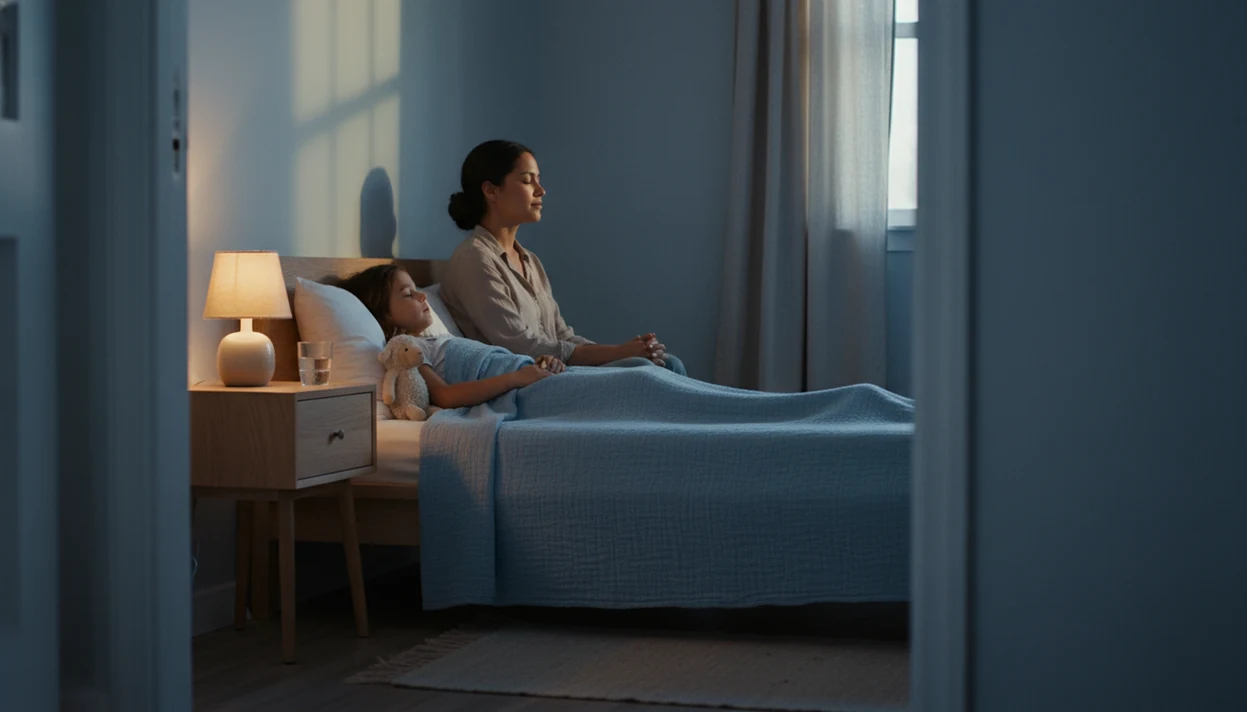
Sleep meditation for kids is a short, calming bedtime routine that uses breath, body awareness, gentle narration, or imagination to help children wind down. It can support relaxation and sleep readiness, but it should not be presented as a cure for insomnia, anxiety, or medical sleep problems.
> Definition: Sleep meditation for kids is an age-appropriate guided relaxation practice used near bedtime to help children settle their bodies and attention before sleep.
- Use short, child-friendly sessions: a few minutes for preschoolers and usually under 10 minutes for elementary-age children.
- Pair kids sleep meditation with a predictable bedtime routine, dim lights, quiet rooms, and screens off.
- Treat guided relaxation for kids as bedtime support, not as a substitute for pediatric or mental health care.
3-minute parent guide to sleep meditation for kids
Sleep meditation for kids is guided relaxation in bedtime language: slow breathing, body noticing, soft imagery, or a quiet story that gives the child something calm to follow. It supports settling; it does not guarantee sleep.
For preschoolers, a few minutes is often enough. Many elementary-age children do better with 3 to 10 minutes, especially after pajamas, toothbrushing, bathroom, and one familiar read-aloud option. The hallway light left cracked open can matter more than a fancy script.
Tools like Kids Bedtime TL can help parents keep stories, lullabies, and meditation tracks in one predictable sequence. Good kids bedtime stories, sleep meditation, lullabies, and nap routines for toddlers and young children deliver repeatable calm-down cues, not a medical fix.
Five facts about kids sleep meditation evidence
- Kids sleep meditation is a relaxation support tool, not medical treatment. It can help a child wind down, but persistent insomnia, panic, snoring, or major anxiety needs professional attention.
- The evidence is stronger for broader mindfulness programs than bedtime-only audio. Randomized trials in children and teens have found sleep improvements after multi-week mindfulness programs, but that is not the same as proving one bedtime track works alone. For a cautious overview of meditation and mindfulness evidence and safety, see the National Center for Complementary and Integrative Health: https://www.nccih.nih.gov/health/meditation-and-mindfulness-effectiveness-and-safety.
- Shorter sessions are usually better for children. The American Academy of Pediatrics suggests only a few minutes for preschool children and 3 to 10 minutes for many elementary-age children. The AAP's HealthyChildren guidance gives similar short-duration examples for children: https://www.healthychildren.org/English/healthy-living/emotional-wellness/Building-Resilience/Pages/Just-Breathe-The-Importance-of-Meditation-Breaks-for-Kids.aspx.
- Consistency matters more than one perfect meditation. For many families, the same soft sequence at 7:45 p.m. works better than changing tracks every night.
- Parents should watch the child, not just the timer. If stillness, imagery, or silence increases distress, stop or adjust. Our related guide on does sleep meditation for kids work looks more closely at evidence versus expectation.
Not every calm track lands well.
Bedtime mechanism behind sleep meditation for kids
Sleep meditation for kids works by shifting attention away from worries and toward breath, body sensations, sound, or safe imagery. The practical goal is downshifting arousal, which means helping the nervous system move out of active problem-solving mode.
A child who follows “feel your toes get heavy” is using attentional anchoring. In plain terms, their mind has a simple place to rest. Repeating the same cue after story time can also create a habit loop: dim room, quiet voice, slow body, sleep attempt.
The most common medically supported way to improve bedtime readiness is a consistent routine combined with a calm sleep environment. Meditation can sit inside that routine, but it should not become a battle. Overly dramatic stories, catchy music, or bright audio players can backfire when a tired child starts asking, “Just one more story.”
Bedtime checklist before meditation for children
Before using bedtime meditation children can actually follow, check the setup first. Choose calm, age-appropriate scripts or audio with simple words, gentle pacing, and no scary imagery.
Keep screens and bright devices out of the sleep space when possible. If you use a phone, place it face-down on a dresser so the screen does not brighten the room. Low volume matters too; the audio should sit in the background, not command attention.
Pause before starting if your child has frequent nightmares, trauma reminders, breathing pauses, loud snoring, chronic insomnia, or anxiety that seems to be growing. Clinicians typically recommend professional evaluation when sleep problems are persistent, severe, or tied to daytime functioning. For sleep-disordered breathing concerns such as snoring or breathing pauses, parents can also review NHLBI's pediatric sleep apnea overview: https://www.nhlbi.nih.gov/health/sleep-apnea/children. For fear-heavy nights, a more specific approach like sleep meditation for anxious child may help parents think through tone and safety.
When to seek professional help for child sleep problems
Seek professional help when sleep trouble is persistent, worsening, or paired with breathing, panic, or daytime impairment. Meditation can support a calm routine, but it cannot diagnose sleep disorders or treat medical causes.
Some bedtime resistance is normal, especially during schedule changes, illness recovery, or big feelings. Red flags are different: loud regular snoring, pauses in breathing, gasping, repeated panic at night, or insomnia that keeps happening despite a steady routine. Daytime clues matter too. A child who is unusually sleepy, struggling at school, melting down more often, or showing mood changes may not simply be “fighting bedtime.”
A practical next step is:
- Track the pattern for one to two weeks, including bedtime, wake time, snoring, night waking, and daytime behavior.
- Record brief notes or a short audio clip if you hear snoring, gasping, or breathing pauses.
- Call your pediatrician if symptoms persist, worsen, or affect school, mood, safety, or family functioning.
- Ask whether referral to a pediatric sleep specialist, ENT clinician, or mental health professional is appropriate.
Keep the meditation gentle while you wait, but do not use it to explain away symptoms that need care.
5-step guided relaxation routine for kids at bedtime
Use sleep meditation as the last gentle transition, not another negotiation. The 7:15 p.m. scramble after pajamas, toothbrush, and one missing stuffed rabbit is real, so keep the process simple.
1. Set the room for sleep
- Dim the room and reduce hallway noise before starting the track or script.
2. Choose a short child-friendly track
- Pick one short meditation matched to your child’s age, mood, and attention span.
3. Play or read it after routine steps
- Start after toothbrushing, bathroom, and story time, or use the meditation as the final story.
4. Keep the ending predictable
- Use the same closing phrase each night, then reduce parent talking.
5. Adjust based on your child
- Repeat the routine consistently, but don’t force participation if your child turns away, jokes, fidgets, or says it feels strange.
For some children, breathing exercises for kids bedtime feel easier than a full guided track because the steps are concrete.
Age-based timing chart for kids sleep meditation
Age-based timing is a starting point, not a rule. Use engagement and calmness as the main signal; a relaxed three-minute session is better than a tense fifteen-minute one.
| Age group | Practical timing | What often works |
|---|---|---|
| Toddlers | 30 seconds to 2 minutes | Lullaby, one breath game, or a soft repeated phrase |
| Preschoolers | A few minutes | Animal breathing, gentle imagery, or parent-read scripts |
| Elementary children | 3 to 10 minutes | Guided relaxation for kids, short body scans, or calm stories |
| Older children and teens | 5 to 15 minutes, sometimes longer | More independent audio, breath focus, or mindfulness practice |
For elementary-age children, a body scan for kids sleep can work well because it gives each minute a clear job.
Four myths about bedtime meditation for children
- Myth 1: Meditation instantly cures bedtime problems. A meditation can support relaxation, but sleep schedules, light, anxiety, hunger, and family stress still matter.
- Myth 2: Adult sleep hypnosis is fine for children. Adult tracks may be too long, abstract, intense, or emotionally suggestive for a young child.
- Myth 3: Children must lie perfectly still. Some children settle better with a breathing game, a soft story, or tiny movements before stillness.
- Myth 4: Natural always means safe. A “natural” audio track can still use frightening imagery, sudden sounds, or themes that do not fit your child.
Better alternatives are simple: balloon breathing, cozy-place imagery, a short body scan, or a story where nothing urgent happens. Two children sharing one blanket may listen quietly for four minutes, but one may need the words read aloud instead.
Kids Bedtime TL sleep meditation routine fit
Kids Bedtime TL is a kids bedtime stories app that provides bedtime stories, sleep meditation, lullabies, and nap routines for parents of toddlers and young children. In practice, an app can make the routine easier by keeping the read-aloud option, sleep sound, and meditation choice in one place.
That organization helps on tired nights, but parents still need to review content for age fit, tone, length, and their child’s sensitivities. The low hum of a white-noise track under a soft-spoken story can be calming for one child and distracting for another.
Apps such as Kids Bedtime TL should be treated as routine tools, not tools that treat sleep disorders. Parents comparing an app that plays sleep meditation for kids should also check privacy settings and screen behavior. If you compare Kids Bedtime TL with Moshi Kids, Headspace Kids, or Calm Kids, compare session length, autoplay, ads, offline use, and whether the screen can stay dark.
Limitations
Sleep meditation for kids has useful bedtime value, but the limits matter.
- Bedtime-specific guided meditation research for children is still limited.
- Most supportive evidence comes from broader mindfulness programs delivered over weeks, not one short audio track at lights-out.
- Meditation is not a substitute for evaluation of sleep apnea, ADHD, anxiety disorders, depression, chronic insomnia, or repeated night waking.
- Long, emotional, or highly detailed audio may make some children more alert.
- Some children resist meditation because silence feels boring, strange, or too exposed.
- A child should not be forced to meditate as a condition for sleep or praise.
- Apps vary in content quality, privacy practices, ads, autoplay behavior, and screen exposure.
- If a child becomes more fearful, tearful, or agitated, stop the practice and reassess.
For parents noticing unwanted reactions, bedtime meditation side effects kids gives a more focused safety overview.
FAQ
Is sleep meditation safe for kids?
Sleep meditation is generally safe when it is short, age-appropriate, and calming. Stop or change the practice if it causes fear, distress, or stronger bedtime resistance.
What age can kids start meditating at bedtime?
Some preschoolers can try very short, playful practices, such as one minute of breathing or imagery. Toddlers often do better with lullabies, simple stories, or a repeated calming phrase.
How long should kids meditate before bed?
Preschoolers often need only a few minutes. Many elementary-age children do well with roughly 3 to 10 minutes.
Can meditation cure child insomnia?
Meditation cannot cure child insomnia. Persistent insomnia should be discussed with a pediatrician or qualified sleep or mental health professional.
Should kids meditate every night?
A consistent routine can help children recognize bedtime cues. Forced nightly meditation can create resistance, so parents should keep it flexible.
Are adult sleep meditations okay for kids?
Adult sleep meditations are often too long, abstract, intense, or unsuitable for children. Choose child-friendly audio or scripts with simple language and gentle themes.
What is a kids meditation script?
A kids meditation script is a short set of calming words a parent reads aloud. It usually guides breathing, imagination, body relaxation, or quiet attention.
Can toddlers do sleep meditation?
Toddlers usually respond better to very short breathing games, lullabies, or gentle stories than formal meditation. Keep it brief and stop if they become upset.
Why does meditation upset my child?
Meditation may upset a child because of boredom, fear, trauma reminders, too much stillness, or content that does not fit their age. Stop the track, return to a familiar comfort routine, and seek support if distress continues.