
Body Scan For Kids Sleep And Relaxation
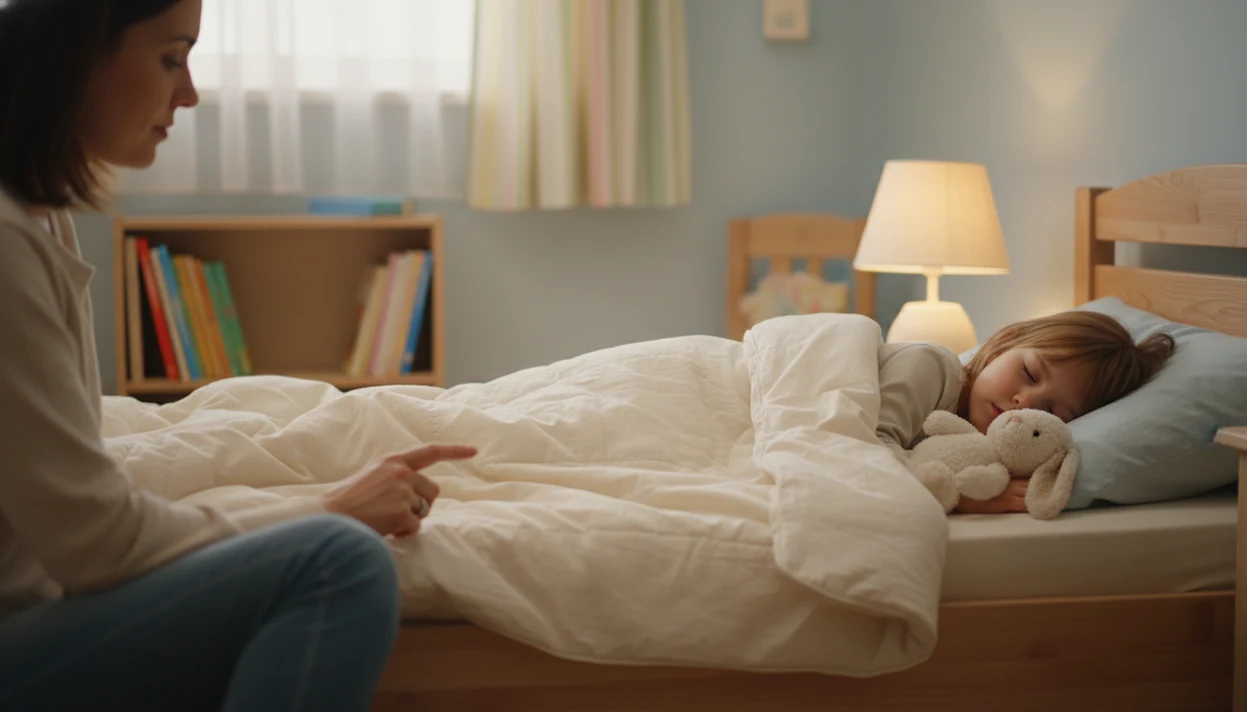
A body scan for kids sleep is a short bedtime meditation where you guide a child to notice and soften each body part, usually from toes to head, using calm words and slow breathing. It works best as a predictable wind-down after a story, cuddle, or lullaby rather than as a forced “go to sleep now” exercise.
Definition: A bedtime body scan is a child-friendly mindfulness practice that helps a child notice body sensations, relax muscles, and settle into sleep readiness while lying in bed.
TL;DR
- Keep a kids body scan meditation short, gentle, and age-appropriate.
- Use simple cues like “soft toes,” “heavy legs,” and “quiet shoulders” instead of complex meditation language.
- Treat a bedtime body scan as one calming step in a routine, not a guaranteed cure for sleep problems.
Body Scan For Kids Sleep: Simple Definition And Bedtime Use
A body scan for kids sleep is a guided relaxation practice where a child notices one body part at a time while resting in bed. Parents usually read or speak the script slowly, often moving from toes to head or feet to face.
It fits best after the predictable sequence has already begun: bathroom, pajamas, story, cuddle, then quiet words. At 7:15 p.m., after toothbrush, pajama sleeves smelling of baby shampoo, and one missing stuffed rabbit, a short script is easier than a long lesson.
Use it beside stories, lullabies, and nap routines, not instead of them. Good kids bedtime stories, sleep meditation, lullabies, and nap routines for toddlers and young children deliver familiar calm-down cues, not guaranteed sleep on command. Calm is the goal. Sleep may follow.
How Kids Body Scan Meditation Works In The Brain And Body
Kids body scan meditation works by moving attention away from worries, fidgeting, and “Just one more story” negotiations toward simple body sensations. The mechanism is attention regulation plus parasympathetic calming. In plain language, the child practices noticing, breathing, and softening.
- A body scan gives the mind a narrow job: notice toes, legs, belly, hands, shoulders, face, and head.
- Slow belly breathing and muscle softening act as calm-down cues for the nervous system.
- Mindfulness research in children is stronger for attention, stress, anxiety, negative affect, and rumination than for direct sleep outcomes.
- A 2018 randomized controlled trial in 3rd–5th graders found improved attention and reduced negative affect and rumination after a mindfulness-based intervention source.
- A 2017 meta-analysis found small-to-moderate improvements in anxiety and stress in children and adolescents using mindfulness-based interventions source.
For many families, the body scan is often easier than open-ended reassurance because it gives the parent and child the same next sentence.
Before A Bedtime Body Scan: Room, Timing, And Parent Voice
Set up the bedtime body scan before you begin, because a child can feel when the routine is being invented mid-sentence. A dim, quiet room helps, with the child lying down comfortably and the hallway light left cracked open if that is part of the usual routine.
- Keep the room low-stimulation, with toys out of reach when possible.
- Use a slow, low, reassuring voice, not a performer’s voice.
- Keep younger children’s scans around 2–4 minutes.
- Use 5–8 minutes for older children only if they seem to enjoy it.
- Place the scan after bathroom, pajamas, story, and cuddle.
These timing ranges are practical starting points, not researched dosage targets. If your child settles faster with a 60-second scan, use the shorter version.
The American Academy of Pediatrics’ HealthyChildren guidance says preschoolers generally need 10–13 hours of sleep per 24 hours, while school-aged children generally need 9–12 hours source. A body scan is one routine support for reaching those sleep windows, not the whole plan. For breathing-first routines, breathing exercises for kids bedtime can be a useful companion.
How To Use A Body Scan For Kids Sleep Tonight
Use a body scan for kids sleep as a short, low-pressure routine. The child does not need to “do it right” for the practice to count.
- Set the room by dimming lights, lowering sound, and inviting your child to lie down.
- Start with three slow belly breaths, with one hand on the blanket if that feels natural.
- Guide attention upward from toes to legs, belly, hands, shoulders, face, and head.
- Pause after each body part so your child can feel the bed, blanket, or pillow.
- Use softening words such as “heavy legs,” “quiet shoulders,” or “soft cheeks.”
- End with a sleep cue like, “Your whole body can rest now.”
Make participation optional. If your child wiggles, keep your voice steady and shorten the scan. The phone set face-down on the dresser helps too, because one bright screen can restart the room.
Research on bedtime routines in young children has found that a consistent nightly routine can improve sleep onset, night wakings, and parent-reported sleep quality, so the body scan works best as one repeatable cue inside that routine source.
Why These Bedtime Body Scan Steps Help
These steps help because they lower stimulation, give the child’s attention a simple place to land, and turn bedtime into a repeated cue. They are evidence-informed calm-down supports, not a promise that sleep will happen right away.
- Dim the room and lower sound so the brain gets fewer “stay alert” signals. This part is practical parent guidance that also fits what bedtime-routine research suggests: predictable, low-stimulation evenings tend to support easier settling.
- Use slow breathing as a gentle calm-down cue. Breathing slowly can signal safety and steadiness, but it should not be framed as a switch that instantly makes a child sleep.
- Guide attention to one body part at a time to interrupt worry loops. Toes, legs, belly, and shoulders give the mind a small job, which may reduce restless bargaining and fidgeting.
- Pause and repeat familiar words because repetition makes the routine easier to recognize tomorrow night.
- Separate the evidence from the parenting shortcut. Child mindfulness studies support attention and emotional regulation more clearly than sleep onset itself; the exact phrases, timing, and stuffed-animal logistics are practical choices.
Relaxation Script For Children: 3-Minute Bedtime Body Scan
Can I read a 3-minute relaxation script for children at bedtime? Yes. Read this slowly, with small pauses between lines.
“Lie down and let your body feel the bed underneath you.
Take one slow breath in. Let it out softly. Take another slow breath in. Let it out like a gentle wave.
Now notice your toes. Your toes can be still or wiggly. They are safe under the blanket. Notice your feet. Let them feel warm and heavy.
Notice your legs. Your legs worked hard today. Let them sink into the bed.
Bring a soft breath to your belly. Your belly rises a little and falls a little. Notice your chest. It can move slowly, like a small boat on calm water.
Notice your hands. Let your fingers rest. Notice your arms. They can feel loose, like soft clouds.
Notice your shoulders. Let them drop down into the pillow. Notice your face. Your cheeks, mouth, and eyes can be quiet.
Now notice the top of your head. Your whole body is resting. You do not have to do anything now. Your whole body can rest.”
For children who like guided audio, bedtime meditation for kids can follow the same simple arc.
Kids Body Scan Meditation Adjustments By Age
Kids body scan meditation should change with age, language, and attention span. The script matters less than whether the child can stay comfortable with the cues.
| Age group | What usually works | Example wording |
|---|---|---|
| Toddlers | Very short cues with playful body part names | “Sleepy toes, quiet knees.” |
| Preschoolers | Simple imagery and repeated phrases | “Your arms can float like clouds.” |
| School-aged children | Sensation words and body contact cues | “Notice warmth, weight, tingles, or the blanket.” |
| Older children | Less babyish, more private language | “Notice where your body meets the bed.” |
A toddler may only make it through feet and belly. Fine. A school-aged child may like noticing the bed rail against a striped pillow or the weight of a blanket across the legs.
For toddlers and preschoolers, a body scan usually works best when it sounds like part of the story world, while older children often prefer plain language.
Common Bedtime Body Scan Mistakes With Children
Common bedtime body scan mistakes happen when adults make relaxation feel like homework. The fix is usually shorter language, fewer corrections, and a calmer reset.
- The Too-Long Script: A 12-minute scan can lose a tired child fast. Cut it to feet, belly, hands, face.
- The Fidget Police: Correcting every movement teaches the child that stillness is the test.
- The Sleep Test: Asking “Are you relaxed yet?” turns calm into performance.
- The Overtired Start: Begin before the settling window has fully collapsed.
- The Uncomfortable Body Cue: Some children dislike attention on certain body parts.
If silliness shows up, name it lightly and continue: “Your giggles are here, and your feet can still rest.” If emotions show up, pause the script. A child who seems anxious may need reassurance first, and sleep meditation for anxious child routines should stay especially flexible.
Kids Bedtime TL Body Scan Routine With Stories And Lullabies
Kids Bedtime TL is a kids bedtime stories app that provides bedtime stories, sleep meditation, lullabies, and nap routines for parents of toddlers and young children. Tools like Kids Bedtime TL can help families place a body scan inside a calm, age-appropriate routine instead of adding another loose task at bedtime.
A simple 10-minute sequence might look like this: 5 minutes for a short story, 2 minutes for a lullaby, and 3 minutes for the body scan script. The low hum of a white-noise track under a soft-spoken story can make the transition feel less abrupt.
For toddlers, keep the scan playful. For young children, keep it predictable. If music is the familiar cue in your home, lullabies for toddlers can come right before the body scan.
Limitations Of Body Scan For Kids Sleep
Body scan for kids sleep is a calming routine tool, but the evidence is not the same as a medical sleep treatment. Clinicians typically recommend discussing persistent sleep disruption with a pediatrician, especially when symptoms affect daytime mood, learning, breathing, or safety.
- Evidence specifically on bedtime body scans and child sleep outcomes is limited.
- Most research studies mindfulness, attention, anxiety, stress, and emotional regulation rather than sleep onset alone.
- A body scan is not a treatment for sleep apnea, restless legs, chronic pain, or severe insomnia.
- Some children with trauma histories or body anxiety may dislike body-focused attention.
- Persistent nightmares, insomnia, loud snoring, or daytime impairment should be discussed with a pediatrician.
- Sleep problems are common in childhood; clinical reviews often estimate that roughly 20%–30% of children experience sleep difficulties at some point source.
- If a body scan increases distress, stop and use a non-body cue, such as a story or quiet music.
For children who react strongly to meditation, bedtime meditation side effects kids covers what to watch for.
FAQ About Body Scan For Kids Sleep
What is a body scan for kids sleep?
A body scan for kids sleep is a short guided practice where a child notices and relaxes body parts one at a time while lying in bed.
Can a body scan help my child fall asleep?
A body scan may help a child feel calmer at bedtime, but it does not guarantee sleep. It works best as part of a steady routine.
What age can children start a bedtime body scan?
Toddlers can try very short playful cues, preschoolers can use simple imagery, and school-aged children can follow more detailed sensation prompts.
How long should a kids body scan take at bedtime?
For younger children, 2–4 minutes is usually enough. Older children may enjoy 5–8 minutes if the practice feels comfortable.
What should I do if my child fidgets during the body scan?
Fidgeting is normal. Keep your voice calm, shorten the script, or return to one easy cue like “soft feet.”
Can a body scan make a child feel anxious?
Yes, some children feel uncomfortable focusing on body sensations. Let the child stop and use a story, lullaby, or other calming cue instead.
Should we do a body scan every night?
You can use a body scan nightly if it stays calm and optional. If it becomes a struggle, use it only on nights when it helps.