
Bedtime Meditation for Kids With Simple Sleep Scripts
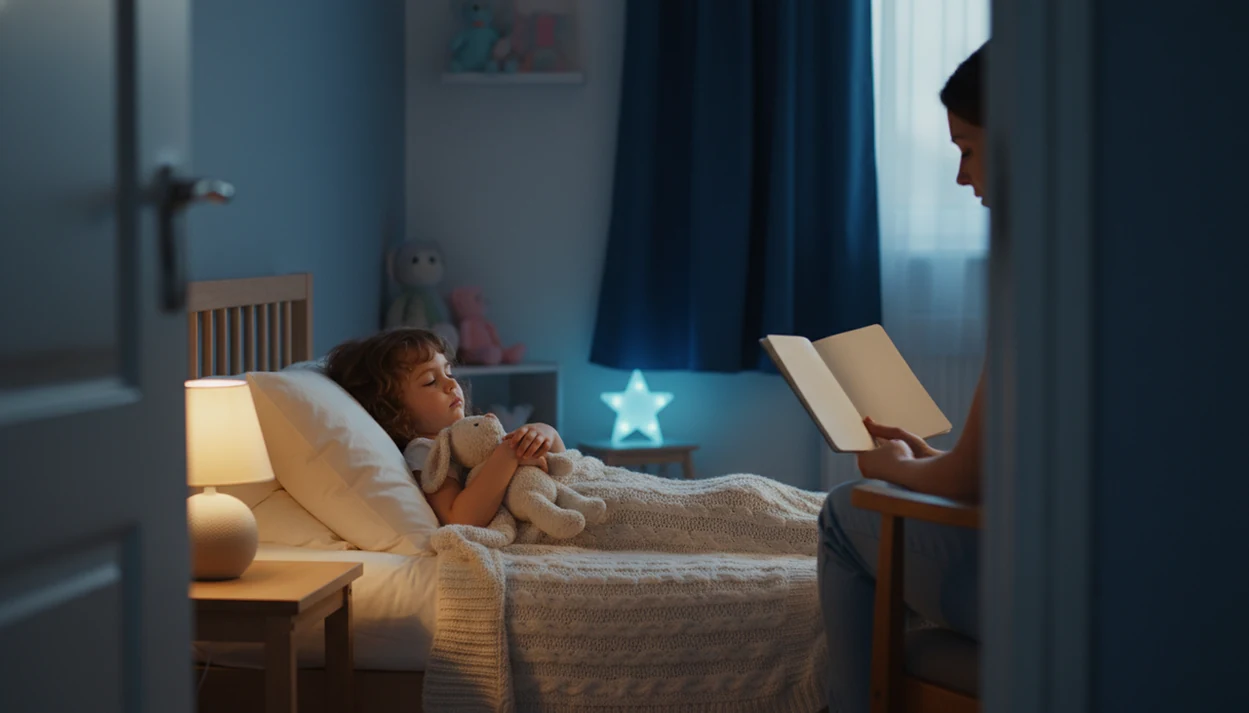
Bedtime meditation for kids works best when it is short, concrete, and repeated in the same calm voice each night. Use a 2- to 8-minute script with simple breathing, cozy imagery, and a predictable closing line rather than a long or exciting story.
> A guided bedtime meditation is a parent-read or audio-led wind-down routine that helps a child relax in bed through slow breathing, gentle words, and safe sleepy images.
- Keep scripts brief: toddlers often need 2-3 minutes, while older children may manage 5-8 minutes.
- Choose concrete images like blankets, clouds, boats, stars, kittens, or friendly animals instead of abstract adult meditation language.
- Use bedtime meditation as part of a routine, not as a cure for persistent insomnia, breathing problems, nightmares, or medical sleep concerns.
Bedtime meditation for kids at a glance
- Bedtime meditation for kids is a calm-down cue used after pajamas, teeth, and the last busy choice of the night.
- Most young children do better with 2-8 minutes than with a long guided track.
- The setting should be boring in a good way: child in bed, lights low, no bright screen.
- The voice matters. Slow, familiar, and steady beats dramatic or whispery.
- The imagery should feel close to the child’s world, such as a blanket, stuffed animal, star, or sleepy kitten.
Expect modest progress. A script may soften the settling window, but it won't work like a switch. At 7:15 p.m., after pajamas, toothbrush, and one missing stuffed rabbit, simple is usually what survives.
Guided bedtime meditation mechanics for children
A kids bedtime meditation works by moving a child from active attention toward sleep readiness through rhythm, repetition, breathing, and safety cues.
How bedtime meditation works: the script creates a predictable sequence, which supports a habit loop. The child hears the same slow pacing, takes smaller breaths, and gets fewer new things to process. In plain terms, the room stops asking the brain to perform.
Research supports caution and hope. A 2021 JAMA Pediatrics trial found that a school-based mindfulness program for ages 8-11 improved sleep duration and quality, with an average gain of 74 minutes per night after the program source. That result came from a school-based mindfulness program for 8- to 11-year-olds, not a parent-read toddler bedtime script, so use it as indirect support rather than a promise. A 2017 systematic review found small to moderate mental health benefits from mindfulness-based interventions in children and adolescents, including sleep problems source.
Clinicians typically recommend predictable bedtime routines, limited evening stimulation, and medical review when sleep problems persist. Meditation can fit inside that routine.
Bedroom setup requirements before a kids meditation script
Set the room before the script starts, because meditation works poorly when it becomes another bedtime negotiation. The child should already be in bed, teeth brushed, lights low, and screens away.
Choose one short script before lights-out. Not three. A phone set face-down on a dresser keeps the screen from brightening the room if you use audio. If you play a track, avoid ads, sudden volume jumps, autoplay, and bright visuals. The low hum of a white-noise track can sit under a soft-spoken story, but it should not keep changing.
If the child starts asking plot questions or acting silly, stop the imagery. Switch to three quiet breaths and one closing line. If you use Kids Bedtime TL, choose the story, lullaby, or nap routine before lights-out and keep the device face-down; Kids Bedtime TL should support the parent-led boundary, not become another choice.
How to use a kids relaxation script tonight
Use a kids relaxation script as the final spoken step, not as a new activity after bedtime has already stretched too long. Children meditation at bedtime is easiest when the order stays almost the same each night.
- Set the room with dim light, child in bed, and the audio or script chosen before lights-out.
- Choose one short script that matches your child’s age and mood.
- Read slowly, leaving a full breath between short sentences.
- Repeat one closing line, such as “Your body can rest now, and I am nearby.”
- Keep the routine consistent for several nights before judging it.
For young children, bedtime meditation usually works best when it is brief and parent-led because familiar pacing lowers stimulation. If your child needs only breathing, use a simple routine from breathing exercises for kids bedtime.
Step 1: Choose a short guided bedtime meditation by age
Match the guided bedtime meditation to your child’s age before you worry about the theme. Adult sleep meditations often use abstract ideas, long silence, or heavy emotions that don't fit young children.
| Age group | Better length | What to use | What to avoid |
|---|---|---|---|
| Toddlers | 2-3 minutes | One cozy image, one breath cue, few choices | Long body scans, many instructions |
| Preschoolers | 3-5 minutes | Blankets, clouds, stars, friendly animals, repeated phrases | Villains, races, surprise endings |
| Early elementary | 5-8 minutes | Simple body scan, gentle imagery, quiet counting | Adult themes, complex feelings work |
These script lengths are practical settling ranges, not total sleep targets. For total sleep, the American Academy of Sleep Medicine recommends 11-14 hours for ages 1-2, 10-13 hours for ages 3-5, and 9-12 hours for ages 6-12 source.
A picture book beside a nap mat is a useful reminder: children often settle through repetition, not novelty. For children who like body awareness, a gentle body scan for kids sleep can work better than a story.
Step 2: Read a simple kids relaxation script
Does a simple kids relaxation script work better than a long meditation? For many young children, yes, because it gives fewer instructions and ends before restlessness builds.
Two-minute cozy blanket script
“Lie down in your cozy bed. Feel your blanket resting on your legs. Take one slow breath in. Let it go softly.
Your feet can get heavy. Your knees can get quiet. Your tummy can rise and fall like a small balloon.
Breathe in slowly. Breathe out slowly.
Your shoulders can soften into the bed. Your arms can rest beside you. Your head is on the pillow, and your body knows it is safe.
I am nearby. The room is quiet. Your bed is warm and still.
One more slow breath in. One more soft breath out.
Now your job is only to rest. Good night, sleepy body. Good night, busy thoughts. It is time to rest.”
The same sleepy refrain helps. Dad repeating the line may matter more than the exact words.
Step 3: Try a sleepy guided bedtime meditation story
Use a story-style meditation when your child prefers pictures in the mind over body instructions. Keep it slow, safe, and predictable.
Three-minute cloud boat script
Try these three story anchors:
- Cloud boat: “You are resting in a soft cloud boat. It moves slowly across the quiet sky.”
- Sleepy stars: “Each star blinks gently, then rests, then blinks again.”
- Friendly animal: “A small kitten curls beside its blanket and takes slow, warm breaths.”
“Your cloud boat does not hurry. It floats past one star, then another. The air feels soft. Your blanket feels safe. You do not need to steer. You do not need to talk. The boat knows the way to sleepy time.
Breathe in. Float. Breathe out. Rest.
Your cloud boat slows down now. It is time for your body to rest. I am nearby, and the night can be quiet.”
If your child gets chatty, shorten the trip. Calm bedtime stories, sleep meditation, lullabies, and nap routines for toddlers and young children offer gentle transition cues, not guaranteed sleep on command.
Common bedtime meditation mistakes with young children
- Scripts that run too long often turn into “Just one more story,” which can stretch bedtime instead of closing it.
- Adult meditation language, such as “observe your consciousness,” can confuse young children.
- Exciting adventures, fast music, screens, ads, and sudden volume changes can wake the brain back up.
- Changing the routine every night makes the meditation feel like entertainment rather than a predictable sequence.
- Expecting meditation to knock a child out immediately creates frustration for everyone.
Keep the script slightly boring. Really. If your child is scared or worried at night, a calmer page on sleep meditation for anxious child may fit better than a dreamy story.
Bedtime meditation for kids progress signs
- Look for softer body language: looser shoulders, slower movement, knees curled toward a teddy bear.
- Notice fewer negotiations, not zero negotiations.
- Listen for a quieter voice after the script starts.
- Track whether settling gets smoother across several nights, not whether one night is instant.
- Remember that some children relax without falling asleep right away.
Sleep concerns are common family work, not a sign that one script has failed: the American Academy of Pediatrics tells parents to watch routines, snoring, and daytime behavior when sleep problems persist source. The CDC reports that many U.S. high school students get less than the recommended sleep on school nights source. If you want the broader evidence question, we cover it in does sleep meditation for kids work.
Limitations
Bedtime meditation is a useful routine tool, but it has limits. It should not be treated as treatment for ongoing or severe sleep concerns.
- Direct research on bedtime-specific meditation scripts for children is limited.
- Meditation does not replace medical assessment for persistent insomnia, sleep apnea symptoms, night terrors, or severe nightmares.
- Some children become more talkative when imagery gives them new ideas.
- Neurodivergent children may need shorter scripts, simpler words, silence, pressure input, or different sensory choices.
- Trauma histories can make certain images, closed-eye instructions, or body language feel unsafe.
- Audio apps can backfire if they bring screens, ads, autoplay, or sudden sounds into the bedroom.
- A child who snores, pauses breathing, panics at bedtime, or seems exhausted during the day needs more than a script.
For possible downsides and overstimulation patterns, read bedtime meditation side effects kids.
FAQ
What age can kids meditate?
Toddlers can do very brief parent-led calming, such as one breath and one cozy image. More formal meditation usually fits older children who can follow simple instructions.
How long should bedtime meditation be?
Toddlers often need 2-3 minutes, preschoolers 3-5 minutes, and early elementary children 5-8 minutes. Stop before the child becomes restless.
Do bedtime meditations help kids sleep?
They can support relaxation and routine consistency. They are not a guaranteed sleep cure.
What should a script include?
A script should include slow breathing, safe imagery, body relaxation, reassurance, repetition, and a predictable ending. Keep the language concrete.
Can toddlers use guided meditation?
Yes, if it is very short, concrete, and parent-led. Toddlers usually need minimal instructions and familiar words.
Are sleep meditation apps safe?
Audio can help when it is ad-free, steady in volume, and used without bright visuals. Screens, sudden sounds, and stimulating animation can make bedtime harder.
What if meditation wakes my child?
Shorten the script, remove imaginative detail, lower stimulation, or switch to plain breathing. Use the same closing line each night.
When should I call a doctor?
Call a doctor for chronic insomnia, loud snoring, breathing pauses, severe anxiety, trauma symptoms, or frequent nightmares. Also seek help if daytime sleepiness affects school, mood, or behavior.