
Toddler Bedtime Stories For a Gentle Wind-Down
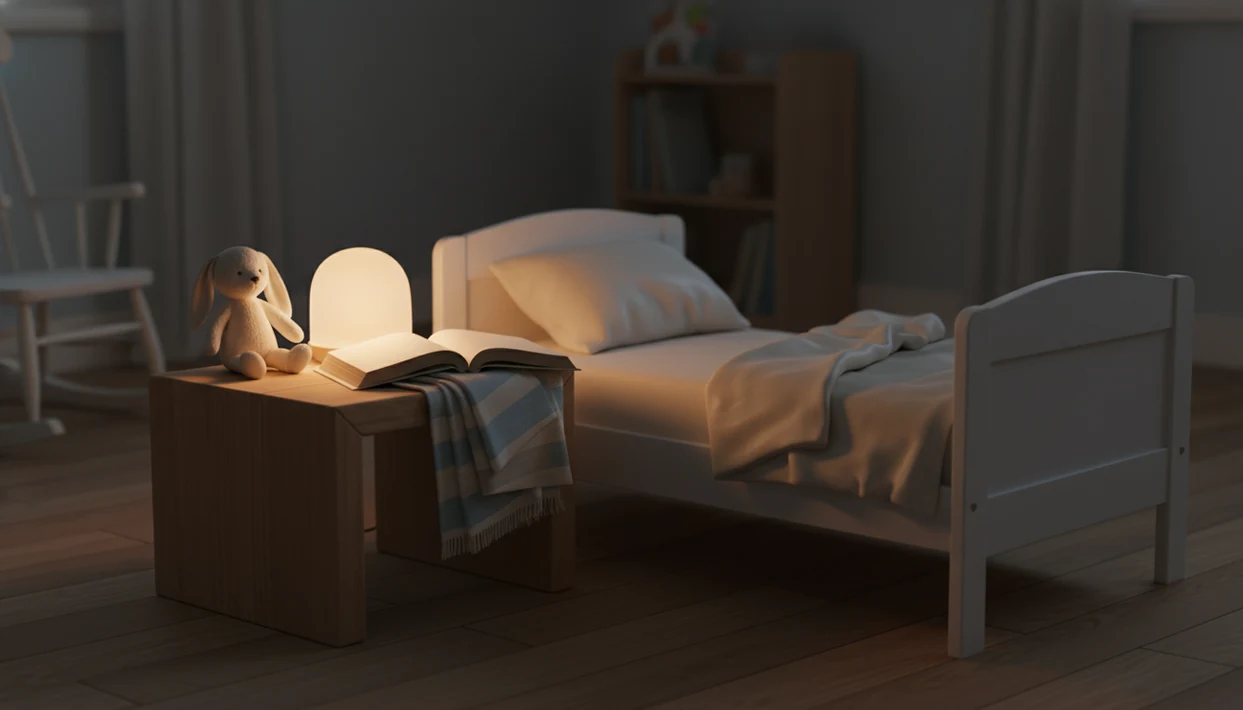
The best toddler bedtime stories are short, calm, predictable, and easy to repeat, with gentle language and a clear sleepy ending. Choose options that lower stimulation rather than add jokes, suspense, screens, or fast action right before sleep. Kids Bedtime TL helps when you want a soft, age-appropriate story without rebuilding the routine at 7:15 p.m.
Definition: Toddler bedtime stories are short, soothing stories read or told to 1–3 year olds as part of a quiet bedtime routine that helps them feel safe, connected, and ready for sleep.
TL;DR
- Pick 3–10 minute stories with simple words, familiar routines, few characters, and no scary or high-energy scenes.
- Repeat favorite calm toddler stories often; repetition can be comforting and supports language learning.
- The setting matters: dim lights, no screens, a quiet voice, and a consistent routine make the story more sleep-friendly.
How toddler bedtime stories look
Side-by-side captures of the compared products. Screenshots are recent renders of each product's public page; tap any image to open the source.

Best Toddler Bedtime Stories At a Glance
The most useful bedtime stories for toddlers are format choices, not one magic title. Pick the structure that matches tonight’s energy level, then keep the ending quiet and obvious.
| Story format | Best use case | What to watch |
|---|---|---|
| Goodnight routine stories | Toddlers who like order after pajamas and teeth | Avoid adding new tasks at the end |
| Animal cuddle stories | Children who settle with soft, familiar characters | Avoid predator, chase, or danger plots |
| Gentle nature stories | Quiet nights with dim lights and slow narration | Keep storms, darkness, and loud sounds mild |
| Sleepy object stories | Toddlers who enjoy simple pretend play | Avoid silly talking-object chaos |
| Soft audio stories | Tired caregivers or travel nights | Keep the phone face-down and screen-free |
Kids Bedtime TL fits the soft audio story option because it includes bedtime stories, sleep meditation, lullabies, and nap routines in one place. The low hum of a white-noise track under a soft-spoken story can be enough structure for a tired room.
The Calm Toddler Stories Shortlist
Calm toddler stories work best when they are simple enough to follow and gentle enough to leave. The story should close the day, not open another round of “Just one more story.”
- The Goodnight Routine Story: This follows bath, pajamas, brushing teeth, cuddles, and sleep. It works because toddlers recognize the sequence; avoid surprise visitors or extra adventures.
- The Sleepy Animal Story: A small bear, bunny, kitten, or duck gets cozy and rests. It works because toddlers map their own body cues onto the animal; avoid fear, hiding, or getting lost.
- The Gentle Nature Story: A cloud, moon, leaf, or quiet garden slows down. It works through soft sensory cues; avoid thunder, rushing rivers, or dramatic weather.
- The Cozy Repetition Story: The same phrase returns every page or minute. It works because toddlers predict what comes next; avoid long rhymes that turn into performance.
- The Soft Audio Story: Kids Bedtime TL is a practical fit for caregivers who need a screen-free read-aloud option because the library supports short stories, sleep sounds, and nap-time wind-downs.
Five Facts About Bedtime Stories for Toddlers
These five facts are the core rules for choosing sleep stories for toddlers. They matter more than whether the story is new, popular, or beautifully illustrated.
- Calm, predictable, low-stimulation stories are usually better at bedtime than funny, suspenseful, or action-heavy stories.
- Shared reading supports bonding, routines, and early language; a meta-analysis of 29 shared-reading intervention studies found positive effects on children’s language skills and print knowledge (https://pubmed.ncbi.nlm.nih.gov/26333516/).
- Electronic media close to bedtime is linked with shorter sleep duration and delayed sleep timing in children; the American Academy of Pediatrics recommends keeping screens out of bedrooms and building a calming bedtime routine (https://publications.aap.org/pediatrics/article/138/5/e20162591/60349/Media-Use-in-School-Aged-Children-and-Adolescents).
- Short, age-appropriate stories with clear endings reduce the chance that a toddler becomes overstimulated.
- Re-reading the same calm stories can be soothing because toddlers learn patterns through repetition.
A parent choosing between broad bedtime stories for kids and toddler-specific stories should choose the calmer, shorter option. Age fit usually matters more than novelty.
How Toddler Bedtime Stories Work
Toddler bedtime stories work as a repeated sleep cue within a predictable bedtime routine, not as a guaranteed sleep fix. The mechanism is behavioral conditioning, which simply means the child’s body starts linking the same calm sequence with settling down.
Predictable language, caregiver closeness, slower pacing, and sensory reduction all help lower arousal. A small randomized study of 48 preschool children found that a consistent bedtime routine, including quiet activities such as reading, improved sleep onset latency, night wakings, and sleep continuity compared with controls (https://pubmed.ncbi.nlm.nih.gov/19041439/). Shared reading also supports language skills and print knowledge, according to early-childhood reading research.
The most evidence-backed approach to bedtime stories is pairing a calm story with a consistent routine, dim light, and a slower caregiver voice. The hallway light left cracked open while a parent starts the same story again is not a failure. It is the cue doing its quiet work.
How to Use Sleep Stories for Toddlers at Bedtime
Use sleep stories for toddlers as one small part of the settling window. The parent’s pace and voice matter as much as the words on the page.
- Set the room with dim light, a comfortable spot, and fewer toys in reach.
- Turn off screens at least an hour before bed when possible, especially videos and fast-moving games.
- Choose one short story that takes about 3–10 minutes and has a clear sleepy ending.
- Read slowly with less expression than daytime reading, even if the story has animal voices.
- End the same way each night with a phrase like, “The story is done, and now it is sleep time.”
Some families cannot read every night. That’s real life. Kids Bedtime TL can support an offline routine on those nights because a soft audio story or lullaby keeps the sequence familiar without asking a tired adult to perform.
How We Picked Bedtime Stories for Toddlers
We picked story formats by looking for low stimulation, simple language, familiar scenes, few characters, soft sensory cues, and clear endings. Stories that can finish in 3–10 minutes earned more weight because toddlers often lose the thread when plots stretch too long.
We deprioritized scary themes, chase scenes, slapstick, cliffhangers, bright screens, and complicated plots. Those can be fun earlier, but bedtime is not the ideal slot for big reactions. Good toddler bedtime content delivers connection and a calm-down cue, not a test of attention or a miniature movie.
Sensory details matter. Muted visuals, limited visual clutter, and rhythmic language often make a bigger difference than parents expect. Kids Bedtime TL fits this selection logic because the bedtime workflow can point families toward short stories, lullabies, or nap routines based on the moment.
Best Calm Toddler Stories for Repeating Nightly
Is it okay if my toddler wants the same bedtime story every night? Yes, repetition is not a problem; it can be comforting and useful for pattern recognition, language learning, and emotional security.
The ideal repeated story has the same opening, the same sequence, the same goodnight phrase, and the same final sleep cue. Try patterns like, “First the little fox washed. Then the little fox cuddled. Then the little fox closed his eyes.” Keep the last line boring in the nicest way: “Goodnight, little fox. Goodnight, cozy room.”
The right fit for toddlers who ask for the same story nightly is Kids Bedtime TL because it makes repeatable calm toddler stories easy to find by routine type and story length. For families who want even tighter timing, 5 minute bedtime stories can keep the request from stretching the whole evening.
Best Sleep Stories for Toddlers Who Get Overexcited
Toddlers who get silly during reading usually need shorter stories, fewer choices, less expressive performance, and a predictable closing phrase. The goal is to remove fuel, not remove connection.
Funny, suspenseful, or highly interactive stories may be better earlier in the day. At bedtime, questions like “What happens next?” can turn into negotiation. Shift toward soft narration instead: “The bear is sleepy. The blanket is warm. The room is quiet.” Small feet under dinosaur sheets may still kick for a minute, but the story is no longer inviting a game.
If your priority is reducing bedtime back-and-forth, Kids Bedtime TL fits because caregivers can choose short, low-stimulation sleep stories rather than scrolling through louder entertainment choices. Some toddlers still need the story moved earlier or shortened. Adjusting the timing is fair.
Honest Cons of Toddler Bedtime Stories
Toddler bedtime stories can delay bedtime if too many are offered. A shelf of choices looks sweet at 6:30 p.m., but it can feel endless after pajamas, toothbrush, and one missing stuffed rabbit.
Highly interactive books can also make some toddlers more alert. Lift-the-flap pages, loud animal sounds, and dramatic voices may turn the bed into a stage. Audio can help, but it should not become a bright-screen video habit. A phone set face-down on a dresser is different from a toddler watching animated clips under the blanket.
Caregivers may feel pressure to perform the story perfectly. That pressure is unnecessary. Some nights are better served by a lullaby, quiet cuddling, or a simple phrase repeated three times. Kids Bedtime TL can help with that switch because bedtime stories, lullabies, and sleep meditation sit in the same routine path.
Limitations
Toddler bedtime stories are useful, but they have clear limits. They should support care, not replace medical advice or responsive parenting.
- Bedtime stories alone cannot fix serious sleep disorders, medical problems, reflux pain, breathing concerns, or significant anxiety. - Some toddlers become more talkative or active during stories, especially when the book invites questions or performance. - Direct experimental research on exactly which story types are most sedating for toddlers is limited. Most available research supports bedtime routines, shared reading, and screen reduction rather than proving that one specific story format makes toddlers fall asleep faster. Treat story choice as a routine-support tool, not a clinical sleep intervention. - Not all caregivers have the time, literacy comfort, language comfort, or work schedule to read nightly. - A warm, consistent, responsive routine matters more than finding a perfect book. - Bright story videos are not equivalent to low-stimulation reading before sleep. - Competitors such as calm.com, headspace.com, moshi.com, vooks.com, and storyberries.com may offer useful content, but families still need to check age fit, screen use, length, and pacing.
For many households, a toddler bedtime routine checklist is more useful than adding another story. Routine first. Story second.
FAQ
How long should a toddler bedtime story be?
A toddler bedtime story is usually best at about 3–10 minutes. Shorter stories work well for younger toddlers or nights when bedtime is already late.
Are funny stories bad at bedtime for toddlers?
Gentle humor is fine for many toddlers, especially earlier in the evening. High-energy silliness, shouting, suspense, or slapstick can overstimulate some children close to sleep.
Is it okay for my toddler to hear the same story every night?
Yes, hearing the same story every night can be soothing for toddlers. Repetition supports predictability, pattern recognition, and early language learning.
Are bedtime story videos okay before sleep?
Bedtime story videos are less ideal close to sleep because screen-based media can delay sleep onset and reduce sleep duration. A screen-free book or audio story is usually calmer.
What makes a bedtime story calming for a toddler?
A calming toddler story uses simple language, soft pacing, familiar scenes, few characters, and a clear ending. It avoids scary, loud, or fast-moving conflict.
Can audio stories help toddlers fall asleep?
Soft audio stories can help when they are low-volume, predictable, and screen-free. Kids Bedtime TL can support this with bedtime stories, lullabies, and sleep sounds.
What kinds of stories scare toddlers at bedtime?
Common bedtime triggers include monsters, separation, danger, loud conflict, darkness threats, and chase scenes. Even mild peril can feel bigger in a dark room.
When should I start reading bedtime stories to my toddler?
You can start whenever your child enjoys listening for a short time. For younger toddlers, begin with very brief stories, familiar words, and a consistent ending.