
Is It Safe To Play Lullabies All Night?
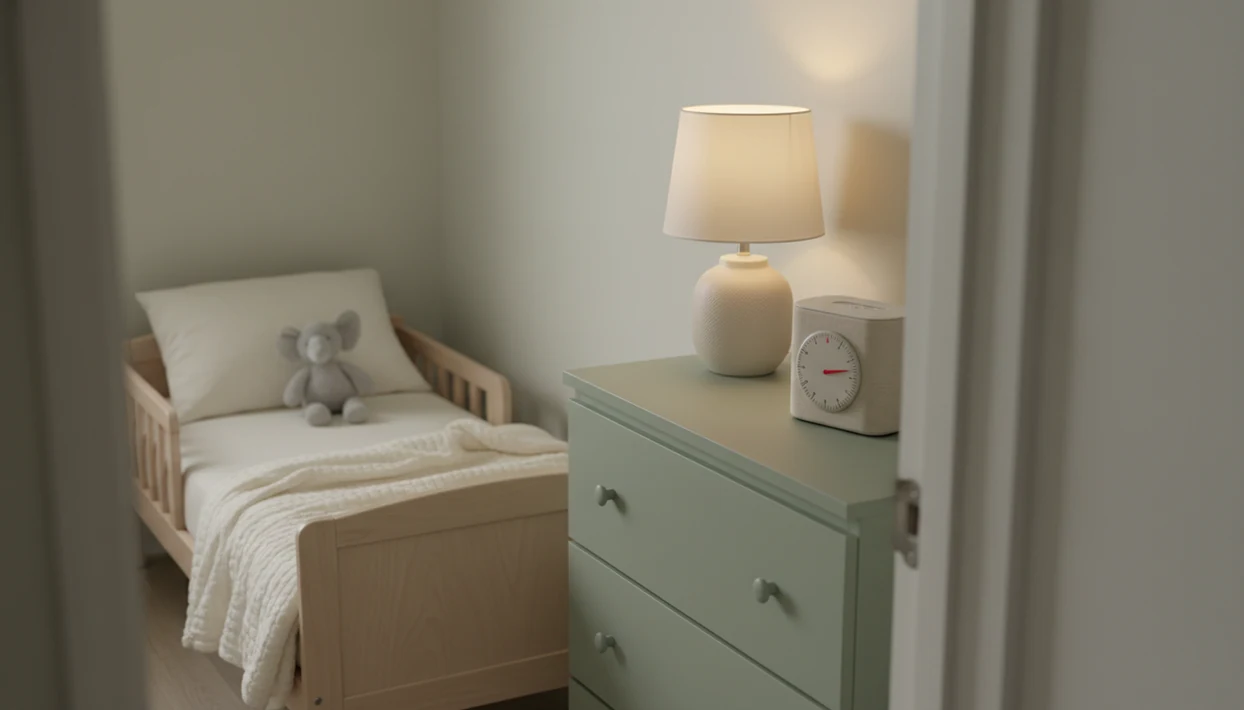
For most healthy babies and toddlers, soft lullabies at bedtime are generally safe, but playing them on a loop until morning is not the best default. A sleep timer, low volume, and parent control are usually better because nonstop music may affect deeper sleep, hearing exposure, and sleep associations.
Definition: All-night lullaby playback means keeping music, playlists, or sleep tracks running continuously while a baby, toddler, or young child sleeps, instead of using lullabies only during the bedtime wind-down period.
This article is general sleep-safety information for healthy children. It is not medical advice, and children with hearing concerns, prematurity, sensory differences, reflux, breathing problems, seizures, or complex medical needs should follow clinician-specific guidance.
TL;DR
- Use lullabies as a bedtime cue for about 20–45 minutes, then let the room go quiet or switch to carefully controlled background sound if needed.
- Keep any nursery sound below about 50 dBA at the child’s ear and place the speaker several feet away from the crib or bed.
- Lullabies can be calming and useful, but all-night loops can create dependency, fragment sleep, or hide bedtime routine problems.
Is It Safe To Play Lullabies All Night For Babies And Toddlers?
“Is it safe to play lullabies all night for babies and toddlers?” Usually, soft lullabies are safe during the bedtime routine, but continuous all-night looping is not the recommended default for most healthy children.
A better starting point is a lullaby sleep timer set for about 20–45 minutes. That gives the child a calm-down cue without making music part of every sleep cycle. Parents should control three things: volume, speaker distance, and duration.
The 7:15 p.m. scramble is real: pajamas, toothbrush, one missing stuffed rabbit, then “Just one more story.” A timed lullaby can help that moment end gently.
Some children with sensory differences, medical needs, or clinician-guided sleep plans may need a different setup. In those cases, follow the child’s pediatrician, audiologist, occupational therapist, or sleep specialist.
Safety Scope And Disclaimer
This guidance is educational sleep-safety information, not a diagnosis or a treatment plan. It is meant for generally healthy babies, toddlers, and young children whose caregivers are deciding how to use soft lullabies at bedtime.
Use a more individualized plan when a child has higher-risk needs. That includes premature infants, babies with breathing or airway concerns, children with hearing loss or suspected hearing sensitivity, seizures, reflux, feeding or growth problems, developmental differences, sensory processing differences, chronic illness, or any medical device or monitoring plan. If a clinician has already given sleep, sound, or safe-room instructions, those instructions come first.
When you are unsure, use this order:
- Follow infant safe sleep rules first, including a firm flat sleep surface, back sleeping, and a clear sleep space when they apply.
- Ask the child’s pediatrician or relevant specialist about sound use if there are medical or developmental concerns.
- Keep lullabies low, distant from the crib or bed, and time-limited unless a clinician recommends otherwise.
- Stop using audio as a cover for new symptoms, sudden sleep changes, or repeated distress.
Five Facts About Lullabies All Night Toddler Sleep
- Most experts prefer lullabies for wind-down and sleep onset, not for all-night playback.
- Volume and speaker distance matter more than the exact lullaby, playlist, or instrument sound.
- Nonstop music may disturb lighter sleep if tracks change, lyrics restart, or a louder passage begins.
- All-night music can become a strong sleep association, especially if a toddler needs it after every waking.
- Lullabies remain useful when they sit inside a predictable bedtime routine with stories, dim light, and the same closing words.
For many families, the useful question is not “Are lullabies bad?” It is “When should the sound stop?” A short playlist of lullabies for toddlers can still be a steady part of bedtime when the ending is planned.
Tiny ears are close to the speaker.
How Sleep Music All Night Kids Routines Affect Sleep Cycles
Children cycle through lighter and deeper sleep stages across the night. A calming sound at bedtime can help the brain predict sleep through a habit loop: same cue, same order, same expected next step.
That cue can be useful at sleep onset. The low hum of a white-noise track under a soft-spoken story may tell a child, “We are done playing now.” But after sleep begins, ongoing music may not stay neutral. Track changes, vocals, crescendos, or a bright piano line can land during lighter sleep and wake a sensitive child.
Music is a cue, not a cure for schedule problems, discomfort, hunger, separation anxiety, or frequent night waking. Good kids bedtime stories, sleep meditation, lullabies, and nap routines for toddlers and young children deliver repeatable calm-down cues, not guaranteed sleep or a replacement for medical advice.
Safe Volume Rules For Sleep Music All Night Kids Might Hear
Keep nursery sound below about 50 dBA at the child’s ear, and place phones, speakers, or sound machines several feet away from the crib or bed. The safest volume is the lowest one that still works, not the level that fills the whole room.
A 2014 Pediatrics study found that 14 of 14 infant sleep machines tested could produce sound levels above 50 dB at common use distances. The same study and AAP-related recommendation advise keeping sound exposure below 50 dBA at the infant’s ear to reduce hearing risk when sound is used regularly source.
Phone decibel apps are imperfect, but they can help parents estimate whether the sound is closer to a soft background level or a room-filling level. Put the phone where your child’s head rests, not next to the speaker. For a deeper volume guide, the practical question is covered in how loud should lullabies be for toddlers.
Lullaby Sleep Timer Versus Looping Music All Night
A lullaby sleep timer is usually the better default because it supports the bedtime cue without requiring music all night. Looping music increases total sound exposure and can make the child expect the same sound after every waking.
| Option | How it works | Main benefit | Main caution |
|---|---|---|---|
| Sleep timer | Plays lullabies for 20–45 minutes, then stops | Keeps music tied to wind-down and sleep onset | Some children notice the cutoff at first |
| All-night lullaby loop | Plays music continuously until morning | May mask household noise | Can increase dependency and sound exposure |
| Silence after routine | Lullaby, story, or song ends before sleep or soon after | Helps children sleep without external sound | May not suit noisy homes or sound-sensitive children |
For children who do not need background sound, silence after the routine may work well. For children who do need sound, a timer is often easier to manage than an endless playlist because the boundary is built in.
Benefits Of Lullabies In A Kids Bedtime Routine
Lullabies can lower arousal, slow the pace of the room, and signal that bedtime has started. They often work best beside caregiver singing, a short story, a dim room, and the same closing phrase each night.
According to a Cochrane review of eight randomized controlled trials, music interventions improved sleep quality, including sleep onset and duration, in several populations source. A randomized trial in preterm infants also found that live music therapy, including lullabies, improved heart rate, respiratory rate, and behavioral state source. That does not prove all-night playlists are helpful. It supports timed, calming use.
Clinicians typically recommend predictable routines and appropriate sound levels over nonstop audio when families are trying to build stable sleep habits. Tools like Kids Bedtime TL can fit here as one read-aloud option among books, songs, and parent voice. The broader lullabies vs sleep stories choice often depends on whether a child relaxes better with melody or narrative.
Common Myths About Playing Lullabies All Night
Myth 1: “If my child likes lullabies, all night must be better.” A child can enjoy a bedtime sound without needing it for eight or ten hours.
Myth 2: “Gentle music is safe at any volume.” Soft content can still be too loud if the speaker is close or the device is turned up.
Myth 3: “All-night playlists fix toddler night wakings.” Lullabies may soothe a waking, but they do not fix overtiredness, inconsistent timing, illness, discomfort, or a routine that keeps stretching.
Myth 4: “A timer and years of looping are basically the same.” They are not the same habit. A timer teaches a clear ending; nonstop looping teaches ongoing sound.
No panic needed. Just adjust the setup.
Parents who want more source-based context on calming effects can read how lullabies help children relax without treating music as a cure-all.
Parent Controls For Lullabies All Night Toddler Habits
Set a timer for 20–45 minutes, choose simple slow tracks, and avoid playlists with sudden volume changes or lively lyrics. A consistent order helps too: bath, pajamas, story, lullaby, lights out.
Phone face-down on the dresser helps.
Kids Bedtime TL is a kids bedtime stories app that provides bedtime stories, sleep meditation, lullabies, and nap routines for parents of toddlers and young children. In a routine, an app should stay under parent control, with the screen dimmed or off and the audio ending on purpose.
If a child already depends on lullabies all night, fade gradually. Lower the volume for several nights, then shorten the playlist, then move toward a timer. Behavioral sleep literature on bedtime problems and night wakings supports reducing repeated external sleep-onset conditions gradually rather than adding stronger cues overnight source. For children who still need steady background sound, compare gentle options for sleep sounds for kids, keeping the same volume and distance rules.
When To Ask A Pediatrician About Nighttime Sound
Ask a pediatrician when nighttime sound is being used to manage a new, persistent, or worrying sleep problem. Lullabies can support a routine, but they should not be used to drown out symptoms or repeated distress.
A quick check-in is especially wise when sleep changes arrive suddenly, or when parents notice differences in breathing, hearing, daytime behavior, feeding comfort, or development. Frequent night wakings that continue after a steady bedtime, age-appropriate schedule, lower volume, and a shorter timer deserve a broader look.
- Notice changes in snoring, noisy breathing, pauses, coughing, reflux signs, ear pulling, unusual sensitivity to sound, or new daytime irritability.
- Try routine fixes first when the child seems otherwise well: earlier bedtime, calmer wind-down, lower volume, and a predictable ending.
- Call the pediatrician if waking stays frequent, escalates, or comes with sensory, developmental, reflux, breathing, hearing, or other medical concerns.
- Avoid turning the lullaby louder to push through repeated waking. More volume may increase exposure without solving the reason the child is awake.
Limitations
There is limited direct research on all-night lullaby playback in healthy term infants and toddlers. Most safety advice extrapolates from noise exposure research, sleep association theory, and broader music-for-sleep studies.
Important caveats:
- Real rooms vary. Carpet, curtains, open doors, and wall distance change how sound travels.
- Devices vary. A phone speaker, tablet, Bluetooth speaker, and sound machine can produce very different levels.
- Phone decibel apps estimate sound; they do not replace professional sound measurement.
- Some children with sensory differences, neurodevelopmental conditions, hearing concerns, or medical needs may need individualized plans.
- Lullabies do not replace a predictable schedule, consistent bedtime routine, safe sleep guidance for infants, or medical advice.
- Nonstop audio may mask a problem rather than solve it, especially with repeated night wakings.
- Miracle sleep-track marketing is not strongly supported by independent research.
If bedtime suddenly becomes harder, or night waking changes sharply, check with the child’s clinician rather than adding more sound.
FAQ
Can babies sleep with lullabies?
Babies can use soft lullabies for sleep onset when volume, distance, and duration are controlled. A timer is usually safer than continuous all-night playback.
Should toddlers hear music all night?
Toddlers usually should not hear music all night as the default. All-night music can create sleep associations and may disturb lighter sleep.
How loud should lullabies be?
Keep lullabies below about 50 dBA at the child’s ear. Place the speaker several feet away from the crib or bed.
Is white noise better than lullabies?
White noise is not automatically better than lullabies. Either should be low volume, placed away from the child, and limited when possible.
How long should lullabies play?
A typical lullaby window is about 20–45 minutes during wind-down and sleep onset. Many families use a lullaby sleep timer for this.
Can lullabies cause sleep dependency?
Yes, lullabies can become an external sleep association if a child needs them after every waking. Gradual fading can reduce that dependency.
Do lullabies help night wakings?
Lullabies may soothe some night wakings, but they usually do not solve schedule, comfort, illness, or routine causes. Repeated wakings may need a broader review.
Are lullabies safe for toddlers?
Lullabies are generally safe for toddlers when they are soft, age-appropriate, and not played too loudly. Timed use is usually preferred over all-night looping.