
How Lullabies Help Children Relax at Bedtime
The simplest way to understand how lullabies help children relax is that soft rhythm, repetition, and a familiar caregiver cue can lower bedtime arousal. The strongest evidence supports short-term relaxation responses, especially in infants, rather than a guaranteed cure for every sleep problem.
> Definition: A lullaby is a soft, repetitive song or sound pattern used as a bedtime cue to help a child shift from alert activity toward calm rest.
- Lullabies may lower arousal through steady rhythm, soft sound, and predictable repetition.
- Research suggests infants can relax to lullabies even when the words are unfamiliar or in another language.
- Lullabies work best as part of a consistent bedtime routine, not as a stand-alone sleep fix.
What a Lullaby Is for Children at Bedtime
A lullaby is a soft, repetitive bedtime song or humming pattern that helps a child recognize a gentle transition toward sleep. It is usually slower, quieter, and less dramatic than play music.
In practice, a lullaby is one cue inside a bedtime routine. Pajamas happen, teeth get brushed, the hallway light stays cracked open, and the same song begins. That pattern matters. For toddlers and young children, the sound can become part of a predictable sequence, not a magic switch.
Kids bedtime stories, sleep meditation, lullabies, and nap routines for toddlers and young children deliver familiar calm-down cues, not guaranteed sleep on command. Tools like Kids Bedtime TL can help families keep those cues in one place, including bedtime stories, sleep meditation, lullabies, and nap routines.
How Lullabies Work in a Child’s Relaxation System
Lullabies work by giving the child’s nervous system a soft, steady pattern to follow. The rhythm reduces novelty, the volume lowers stimulation, and repetition helps the brain anticipate what comes next.
In sleep education language, this is about arousal regulation and conditioned cues. Arousal regulation means the body shifts away from alert activity. A conditioned cue means the same sound, used the same way, starts to predict rest. Plainly: the song becomes a bedtime signpost.
One study found that infants hearing unfamiliar lullabies showed decreased heart rate, smaller pupil dilation, and reduced electrodermal activity, all measurable signs of relaxation source. That does not mean every child will sleep instantly. It means the body can respond to lullaby structure before the child understands the words.
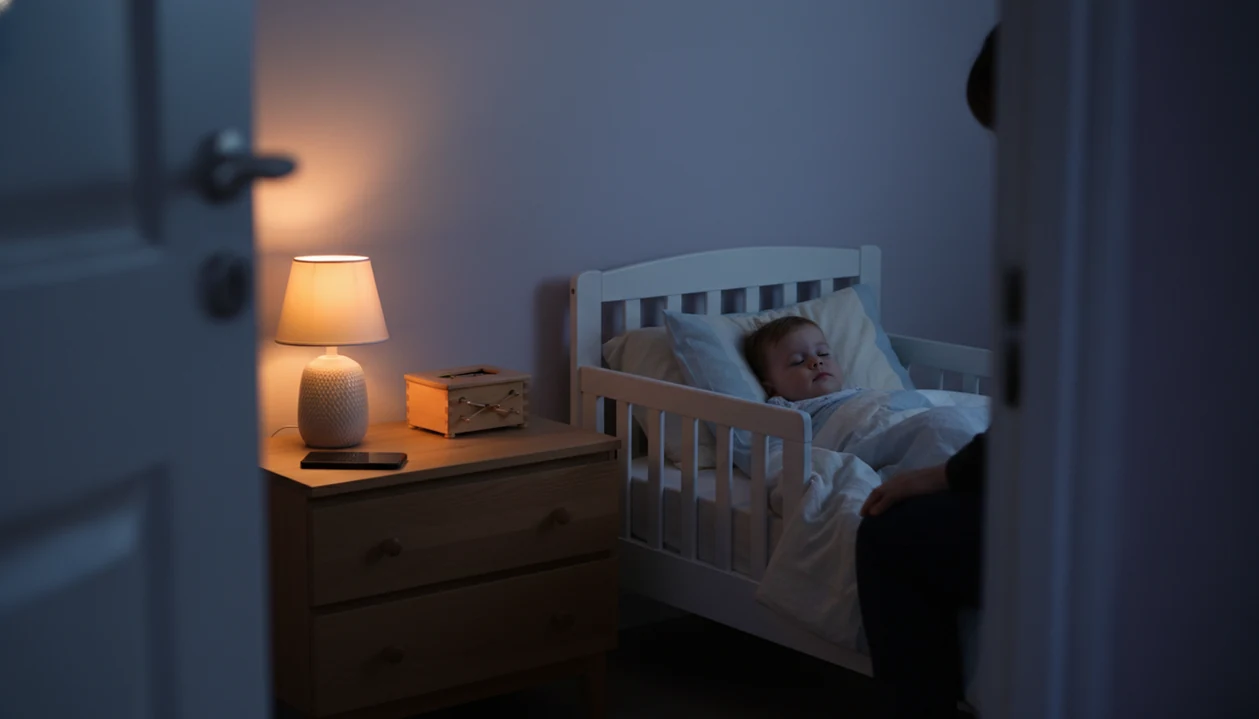
The phone face-down on the dresser helps too. No sudden glow.
Five Lullaby Benefits Children May Feel Before Sleep
Lullaby benefits children most clearly during the settling window before sleep. The main benefit is not “instant sleep,” but a calmer shift from busy behavior into rest.
- Lower body alertness: Lullabies may reduce physiological arousal, including heart rate and other alertness signals.
- Predictable bedtime rhythm: A repeated song can become a reliable calm-down cue in the same nightly order.
- Less need for lyric understanding: Infants can relax to lullabies even when the language is unfamiliar.
- Caregiver comfort cue: A familiar voice can signal safety, especially when the child is tired or clingy.
- Smoother transition: Soft music can help move a child away from play, screens, or household noise.
Harvard reporting described infants relaxing more to lullabies than other songs, even in a foreign language source. For families comparing audio options, the lullabies vs sleep stories choice often comes down to whether the child settles better with melody or spoken narrative.
Bedtime Conditions That Make Lullabies Work Better
Lullabies work better when the room and routine are already moving toward quiet. The environment can matter as much as the song itself.
Dim the lights before the lullaby starts. Lower household noise where possible, and avoid pairing the song with bright screens or active play. A soft lullaby competing with jumping, cartoons, or a loud hallway rarely gets a fair chance.
Timing matters. Use the lullaby in the same part of the bedtime sequence, such as after books and before final goodnight. The 7:15 p.m. scramble after pajamas, toothbrush, and one missing stuffed rabbit is not the ideal moment to test five new songs.
Bedtime-routine consistency has clinical evidence behind it: in a study of infants and toddlers, a nightly routine was associated with easier bedtime settling, fewer night wakings, and improved caregiver mood source.
Keep the volume comfortable and plain. If you are unsure, the guide on how loud should lullabies be for toddlers gives a practical starting point.
How to Use Lullabies for Music Relaxation Kids Can Follow
For music relaxation kids can follow, use one calm sound cue in the same bedtime order for several nights. Consistency makes the lullaby easier to recognize.
- Set a predictable bedtime order, such as bath, pajamas, book, lullaby, then goodnight.
- Choose one soft lullaby or a short playlist that does not jump in tempo or volume.
- Lower lights, noise, and stimulation before the song begins, not halfway through it.
- Sing or Play the same calm cue nightly, using a steady voice or a low-volume recording.
- Repeat the plan for several nights and note which songs help slower breathing or quieter movement.
For toddlers, one short song may work better than a long playlist because it gives a clear ending. “Just one more story” can still happen, but the song marks the next step. If you use sleep audio often, keep it separate from daytime dance music or car entertainment.
Give the same cue at least four to seven nights before judging it. Track three simple signs: whether your child gets quieter within 5-10 minutes, whether getting out of bed decreases, and whether the song creates a calmer handoff to goodnight.
Common Lullaby Mistakes That Keep Children Alert
The most common lullaby mistake is turning the sound into stimulation. Loud, fast, dramatic, or novelty-heavy music can keep a child listening actively instead of settling.
Changing songs constantly can also weaken the cue. A new melody every night asks the child to pay attention again. Repetition is the point. Boring, in this case, can be useful.
Avoid pairing lullabies with bright screens, roughhousing, or last-minute room cleanups. A child who just watched a bright tablet or chased a sibling down the hall may need more time before music feels calming.
A lullaby also cannot override everything. Hunger, pain, illness, separation anxiety, and overtiredness can all keep a child alert. Some families use sleep sounds for kids alongside stories or lullabies, but the sound still needs a calm setting.
How to Tell if a Lullaby Is Helping Relaxation
“Is the lullaby actually helping my child relax?” Look for a smoother transition, not instant sleep.
Useful signs include slower movement, softer vocalizing, fewer attempts to leave the bed, looser posture, and calmer breathing. A toddler may still talk for a few minutes. An infant may still need feeding or holding. The question is whether the bedtime energy is moving down, not whether sleep happens the second the song starts.
Watch the pattern over several nights. One difficult bedtime can be caused by a late nap, a new fear, or a noisy evening. Tiny fingers clutching a blanket edge during the same soft song is a better signal than one perfect night.
In controlled research, infants relaxed more to lullabies than to play songs, but home outcomes vary. For some children, lullabies for toddlers need to be shorter, quieter, or paired with a familiar phrase.
What the Research Says About Lullabies and Bedtime Routines
Research supports lullabies as a short-term calming cue, especially for infants, and supports consistent bedtime routines as a broader sleep-health habit. The two ideas overlap, but they are not the same claim.
Lullaby-specific studies point to infant physiology: softer music with a steady pattern can be followed by lower heart rate, reduced alertness signals, and calmer body responses. That evidence fits babies best because much of it measures immediate relaxation in controlled settings, not whether a whole night of sleep improves at home. For toddlers, the stronger practical argument is often routine learning: the same song in the same order becomes a familiar sign that bedtime is nearly done.
- Separate the song effect from the routine effect when you judge progress.
- Use lullabies mainly as a calm-down cue for infants and as a predictable transition cue for toddlers.
- Watch home details such as nap timing, light, noise, hunger, illness, and separation worries.
- Expect modest results: easier settling is more realistic than instant sleep.
- Discuss persistent sleep disruption, breathing concerns, pain, or major anxiety with a pediatrician.
The evidence is useful, but still home-specific. A lullaby can help the nervous system settle; the full bedtime pattern decides whether that cue has room to work.
Limitations
Lullabies can support bedtime relaxation, but they have clear limits. They are a routine tool, not a proven treatment for every pediatric sleep problem.
- Lullabies are not a proven treatment for all sleep difficulties in infants, toddlers, or young children.
- The strongest evidence is for short-term relaxation in infants, not guaranteed long-term sleep improvement.
- Older toddlers and preschoolers may respond differently from infants in controlled studies.
- Pain, illness, hunger, separation anxiety, fear, and household stress can override the calming cue.
- No evidence proves one language, singer, app, or lullaby style works for every child.
- Claims that lullabies make children sleep instantly should be avoided.
- A child who becomes more alert during music may need a shorter song, lower volume, or no music that night.
Clinicians typically recommend discussing persistent sleep disruption, breathing concerns, pain, or major anxiety with a child’s pediatrician rather than relying on audio routines alone.
For sleep schedules, safety, and persistent sleep concerns, readers should use pediatric guidance such as the American Academy of Pediatrics’ HealthyChildren.org sleep resources rather than relying only on music routines source.
FAQ
Why do lullabies help children relax?
Lullabies help children relax through soft sound, steady rhythm, repetition, and a predictable bedtime association. These cues can reduce stimulation and help the child shift toward calm.
Do lullabies help toddlers sleep?
Lullabies may help toddlers relax and move through bedtime more smoothly. They do not guarantee sleep, especially if the child is overtired, hungry, anxious, or uncomfortable.
Do babies need to understand lullaby lyrics?
Babies do not need to understand lullaby lyrics for the sound to be calming. Research suggests musical structure, softness, and rhythm can matter more than language comprehension.
Are lullabies better than regular bedtime music?
Lullabies are often better suited to bedtime than regular music because they are usually softer, slower, and more repetitive. Regular music can work if it has the same low-stimulation qualities.
Should parents sing lullabies or play a recording?
A parent’s familiar voice can add comfort, safety, and routine cues. Recordings can also help when used softly and consistently; families may compare Kids Bedtime TL with Moshi, Calm, or a downloaded ad-free playlist when they need the same cue during travel.
How loud should lullabies be for children?
Lullabies should be soft enough that they do not startle, compete for attention, or fill the room aggressively. Use a comfortable background level and lower it if the child seems more alert.
Can lullabies stop a child from crying?
Lullabies may soothe some crying when the child is tired or overstimulated. They will not fix hunger, pain, illness, or serious distress.
When should parents start playing lullabies at bedtime?
Start lullabies during the wind-down portion of the bedtime routine, before the child is overtired. Apps such as Kids Bedtime TL can help keep the same lullaby cue available during home or travel routines.