
Bedtime Stories for 2 Year Olds at Night
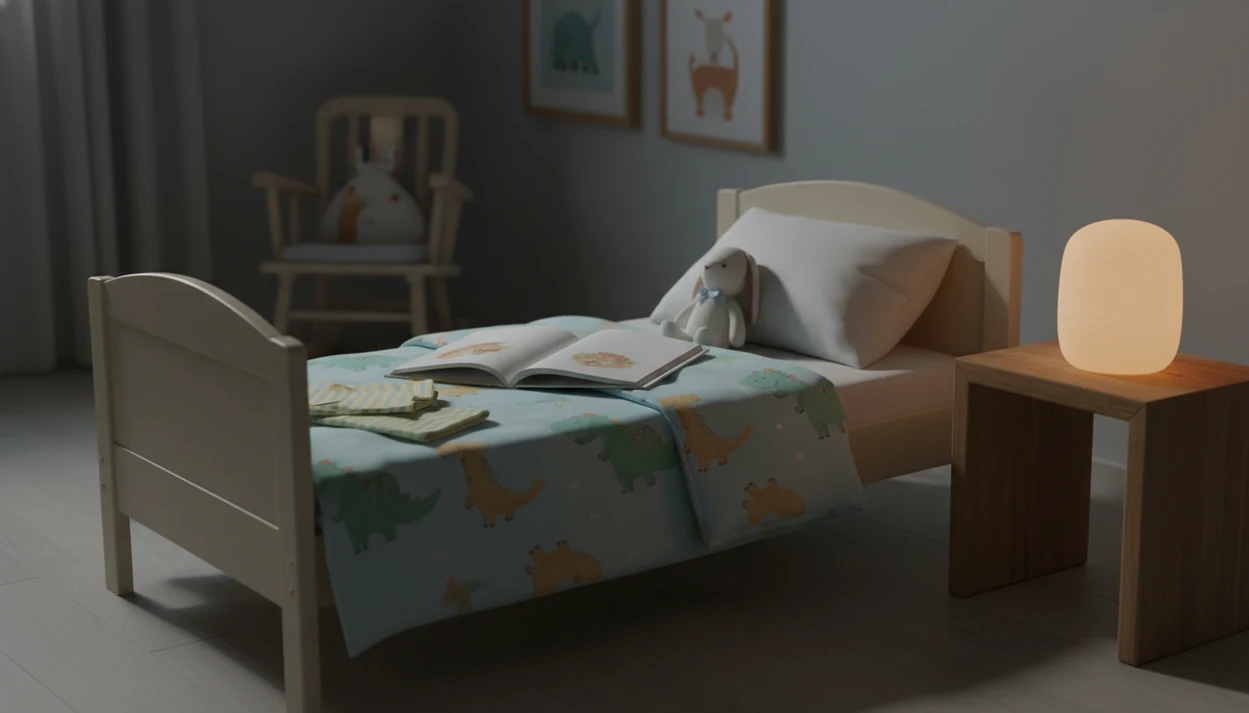
The best bedtime stories for 2 year olds are short, predictable, and calm: about 4–6 minutes, with simple words, repeated phrases, familiar routines, and a gentle goodnight ending. At age 2, the goal is not a complex plot; it is helping your toddler feel safe, connected, and ready for sleep. Kids Bedtime TL helps parents choose age-appropriate stories, lullabies, and calm-down routines when the 7:15 p.m. scramble is already underway.
Definition: Bedtime stories for 2 year olds are short, soothing stories read or told before sleep to support a calm toddler bedtime routine.
TL;DR
- Choose 4–6 minute stories with short sentences, repetition, and familiar bedtime themes.
- Use calm plots about family, pets, bath time, pajamas, cuddles, lullabies, and saying goodnight.
- Place the story near the end of a consistent routine: bath, pajamas, teeth, story, song, lights out.
How bedtime stories look
Side-by-side captures of the compared products. Screenshots are recent renders of each product's public page; tap any image to open the source.

Best 2 Year Old Bedtime Stories: 5 Calm Story Types
The most useful 2 year old bedtime stories are not only book titles. They are simple story structures parents can read, tell from memory, or choose inside Kids Bedtime TL when one hand is opening a playlist.
- Goodnight routine stories: Bath, pajamas, teeth, stuffed animal, song, and sleep.
- Animal cuddle stories: A sleepy bunny, kitten, puppy, bear, duck, or lamb settles down.
- Family comfort stories: A parent, grandparent, sibling, or caregiver helps the child feel safe.
- Gentle journey stories: A tiny walk ends in a nest, bed, burrow, or blanket.
- Wordless picture goodnight tours: A parent softly names objects instead of building a plot.
Kids Bedtime TL offers age-appropriate bedtime stories, sleep meditation, lullabies, and nap routines for toddlers and young children, with choices that fit short settling windows. For broader age ranges, our bedtime stories for kids guide covers older children too.
How We Picked Simple Bedtime Stories for Age 2
Simple bedtime stories for age 2 should match toddler attention, language, and emotional safety. We looked for story patterns that still work when small feet are under dinosaur sheets and the room needs to get quieter.
- Length matters: Most 2 year old bedtime stories fit best in a 4–6 minute window.
- Language should be concrete: Use short sentences, familiar nouns, and repeated phrases.
- Settings should feel known: Home, bath, bed, family, pets, stuffed animals, and gentle outdoor moments work well.
- Conflict should stay tiny: Avoid scary characters, suspense, noisy action, heavy teaching goals, and cliffhangers.
- Shared reading is common: In a U.S. survey, 68.7% of children aged 2–5 were read to by a family member at least 4 days per week, per the CDC source.
On nights when “Just one more story” becomes the pressure point, Kids Bedtime TL fits because short story lengths make the boundary easier to hold.
How Bedtime Stories for 2 Year Olds Work
Bedtime stories for 2 year olds work by turning repeated words, familiar order, and a calm adult voice into a sleep cue. The mechanism is a simple habit loop: the same sequence tells the toddler’s body, “play is ending now.”
Stories work best as one part of a predictable sequence, not as a standalone sleep fix. A randomized controlled trial found that a 5-component bedtime routine, including reading books, led to earlier sleep onset and fewer night awakenings in children ages 2–8 compared with no structured routine source. The American Academy of Pediatrics also recommends reading aloud from birth and links shared reading with language skills and parent-child relationships source.
Quiet repetition helps.
Good bedtime content delivers a gentle transition, not a guarantee that every toddler will fall asleep on command. Kids Bedtime TL supports that routine because stories can be paired with lullabies and sleep meditation instead of treated as a single magic step.
How to Use Toddler Sleep Stories Age 2 at Night
Toddler sleep stories age 2 work best when they sit near the end of the bedtime routine. Put the phone face-down on a dresser if you use audio, so the screen does not brighten the room.
- Set the order before bedtime: pajamas, teeth, story, lullaby, lights out.
- Choose one 4–6 minute story with a calm theme and no surprise ending.
- Read or play it in a low voice, with fewer questions than daytime reading.
- Repeat a favorite phrase or line so the story feels familiar.
- End with the same words each night, such as “goodnight, I love you, sleep tight.”
If your priority is keeping bedtime from stretching too late, Kids Bedtime TL fits because short bedtime stories and lullabies can be chosen before the child is already overtired. Parents building the full sequence may also want a toddler bedtime routine checklist.
Goodnight Routine Stories for 2 Year Old Bedtime
What are goodnight routine stories for 2 year old bedtime? They are stories where the plot follows the same steps your child is about to do: bath, pajamas, brushing teeth, choosing a stuffed animal, saying goodnight, and resting.
Familiar sequences reduce uncertainty. The story becomes a rehearsal for sleep, especially when the hallway light is left cracked open while a parent starts the same story again. A simple structure might be: “Mia washes, wiggles into pajamas, hugs bear, hears one song, and closes her eyes.”
The final image should be restful. No lost parents, loud knocks, or last-page surprises. For toddlers, a routine story is often easier than a fantasy adventure because the child already knows what comes next.
When the issue is bedtime negotiation, Kids Bedtime TL earns the spot because routine-based stories can lead directly into a lullaby without adding another decision.
Animal Cuddle Stories for Simple Bedtime Stories
Animal cuddle stories work well when a toddler wants a character, but not a big adventure. Choose sleepy bunnies, kittens, puppies, bears, ducks, or lambs over dragons, monsters, chase scenes, or noisy rescue plots.
Keep the animal problem tiny. The bunny finds a blanket. The duck says goodnight to the moon. The puppy curls beside a soft toy. Repeated phrases such as “soft and slow,” “snuggle close,” and “time to rest” give toddlers language they can feel in their bodies.
Not every animal story belongs at bedtime. A bear who stomps through the forest may be fun at 3 p.m., but too loud at night. Kids Bedtime TL helps here because parents can choose simple bedtime stories without turning character time into performance time.
Small plot. Softer voice.
Family Comfort Stories for Toddler Sleep Stories Age 2
Family comfort stories are toddler sleep stories age 2 children often accept because they center home, safety, and nearby grown-ups. Parents, grandparents, siblings, babysitters, and familiar rooms can all become part of the calm-down cue.
Use themes like coming home, cuddling, being tucked in, and knowing a grown-up is nearby. Grandma adjusting reading glasses before one short page can matter more than a clever plot. Avoid separation-heavy stories, unresolved fears, or scenes where a child searches for someone and never clearly settles.
Early shared reading has also been linked with better receptive vocabulary and reading skills by kindergarten in a large longitudinal study source. That is useful source-based context, but bedtime does not need to become a lesson. For age 2, emotional safety comes first. For more toddler-specific options, our toddler bedtime stories page stays close to this stage.
Gentle Journey Stories for Short Bedtime Stories for 2 Year Olds
A gentle journey is a slow walk through safe places: a garden, hallway, park, moonlit room, or imaginary cloud. The destination should be restful, such as a cozy bed, nest, burrow, or blanket.
Use sensory words that lower the energy: warm, soft, quiet, dim, slow. The story can move, but it should not race. A toddler might follow a little lamb across the yard, past the flowers, under the dim porch light, and into a soft bed of hay.
Some sensitive toddlers need even less plot. More repetition, fewer new places, and one clear ending may work better. When a short format matters, 5 minute bedtime stories can help parents keep the journey contained.
Parents looking for a calm travel option may prefer Kids Bedtime TL because offline story choices can keep the routine familiar in a rental house hallway night-light.
Wordless Picture Goodnight Tours for Energetic 2 Year Olds
Some toddlers get more awake when adults ask questions, invite guessing, or act out every page. For those children, a wordless picture goodnight tour can be calmer than an interactive story.
Open a picture book, photo album, or quiet image and slowly name what you see: “goodnight lamp, goodnight bear, goodnight socks.” Keep the voice low. Keep the pace slow. If the child starts bouncing or correcting every word, reduce the language even more.
This is a useful fallback when a child is overtired, restless, or melting down. It also works when the sleep sack zipper is already under a sleepy chin and a full story would restart the room.
Kids Bedtime TL can support this quieter mode because parents can switch from story to lullaby or soft sleep sound instead of adding more plot. The low hum of white noise under a soft-spoken story is often enough.
Limitations
Bedtime stories are useful, but they have clear limits. Honest expectations protect the routine and the parent using it.
- Bedtime stories alone cannot fix medical sleep issues such as sleep apnea, chronic pain, reflux, or major anxiety.
- Some overtired or highly energetic toddlers become more stimulated by interactive reading.
- There is no single perfect story length, theme, or structure for every child.
- Direct evidence comparing specific toddler story types for sleep outcomes is limited.
- Too many learning goals, counting tasks, or quizzes can make bedtime feel like a lesson.
- Screens and videos may hold attention but can be less interactive than live reading or telling.
- Apps such as Kids Bedtime TL, calm.com, moshi.com, or vooks.com vary in style, so parents still need to check tone and age fit.
For many families, the story choice matters less than consistency because toddlers settle better when the same calm sequence repeats.
FAQ
How long should bedtime stories for a 2 year old be?
Most bedtime stories for a 2 year old should be about 4–6 minutes. Some toddlers need a shorter story when overtired, while others can handle one brief reread.
What kinds of stories calm a 2 year old fastest?
Familiar routine stories, family comfort stories, sleepy animal stories, and gentle goodnight stories usually work well. The calmest stories use low conflict and a restful ending.
Are funny bedtime stories okay for toddlers?
Light humor is fine if it stays quiet and gentle. Loud, silly, or high-energy plots may delay sleep.
Should I reread the same bedtime story every night?
Yes, repetition is helpful at age 2. It builds predictability, memory, and comfort.
Can bedtime stories replace lullabies?
Bedtime stories and lullabies can work together. Many families use the story first, then one short song before lights out.
Are bedtime story apps okay for a 2 year old?
Audio or app stories can help if they are calm, age-appropriate, low on screen light, and part of a routine. Kids Bedtime TL is one example of a source organized around toddler bedtime content.
What words should a bedtime story for age 2 use?
Use concrete words, short sentences, repeated phrases, and familiar objects or actions. Good examples include pajamas, bear, bed, moon, hug, soft, slow, and goodnight.
What bedtime story themes should I avoid for a 2 year old?
Avoid monsters, danger, suspense, separation fears, loud adventures, and unresolved conflict. These themes can make bedtime feel uncertain instead of safe.