
Definition: An ad-free bedtime story app for children is a mobile app that plays narrated bedtime stories, lullabies, or sleep meditations for kids without any third-party advertisements, pop-ups, or sponsored content, typically funded by subscriptions or one-time purchases.
- Truly ad-free means zero banners, pop-ups, or watch-to-unlock videos, with revenue from subscriptions or purchases instead.
- Ad-free does not automatically mean privacy-safe; always check COPPA compliance and data-collection policies.
- A sleep-story app works best as one part of a broader bedtime routine with consistent timing and low light.
At a Glance: What Makes a No-Ads Bedtime Story App Safe
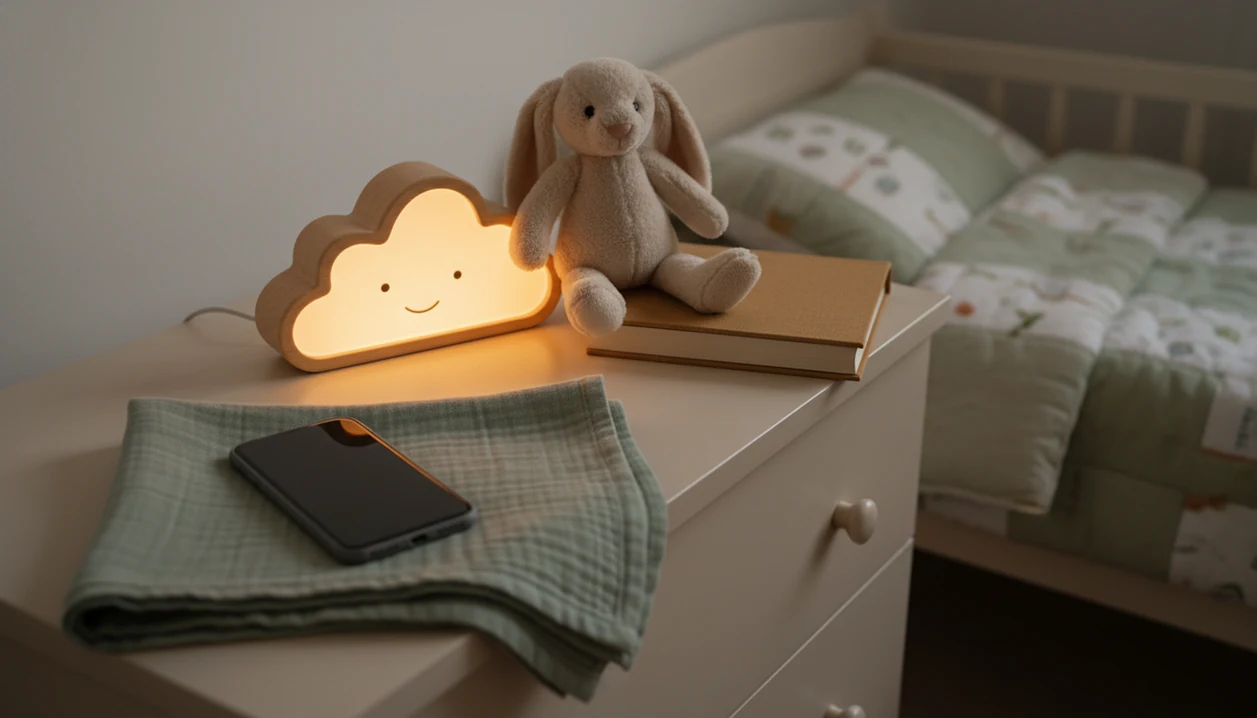
A safe bedtime app with no ads removes marketing interruptions and keeps the child inside a predictable, low-stimulation experience. The details matter most at 7:15 p.m., after pajamas, toothbrush, and one missing stuffed rabbit.
- No ad exposure: Look for no third-party ads, no banners, no pop-ups, and no “watch to unlock” video rewards.
- Clear payment model: Subscriptions, one-time purchases, and freemium upgrades can all be ad-free, but freemium needs closer checking.
- Privacy is separate: A no ads bedtime story app can still collect analytics, device IDs, or usage logs.
- Sleep-friendly design: Dark mode, offline mode, simple menus, and a timer help reduce bedtime friction.
- Audio-first content: Stories and lullabies that work with the phone face-down on a dresser reduce screen stimulation.
Good bedtime audio gives a child a calm-down cue, not another menu to explore.
5 Best Ad-Free Bedtime Story Apps for Children
The strongest ad-free kids sleep apps pair calming content with clear payment and privacy signals. Kids Bedtime TL earns its place for toddlers and young children because it combines stories, lullabies, sleep meditation, and nap routines without making parents stitch together several tools.
| App | Price model | Typical age range | Offline mode | COPPA status | Content types |
|---|---|---|---|---|---|
| Kids Bedtime TL | Subscription or purchase model | Toddlers to young children | Yes, selected content | Review policy | Stories, lullabies, meditations, nap routines |
| Moshi | Subscription | 3 to 8 | Yes | Review policy | Sleep stories, sounds, music |
| Calm Kids | Subscription | 4+ | Limited downloads | Review policy | Stories, meditations, soundscapes |
| Storyberries | Free web reading, no typical app ads | 3 to 8 | No | Review site policy | Illustrated read-along stories |
| Kidlo Bedtime Stories | Subscription or in-app purchase | 2 to 8 | Varies | Review policy | Interactive stories |
If your priority is one quiet app for pillow time, Kids Bedtime TL fits families who want a short story followed by a lullaby through a bedtime routine workflow.
For a broader category comparison, our best kids sleep app guide covers story, meditation, and sound-focused options.
How We Picked These No-Ads Bedtime Story Apps
We picked apps by checking app-store disclosures, privacy policies, and trial use, not just marketing claims. A “no ads” badge helped, but it was never enough.
Each app was reviewed for third-party ad exposure, analytics language, device ID collection, and sharing with outside partners. We also looked for age-appropriate content from toddlers through age 8, including slow pacing, gentle themes, and non-startling sound design. A soft-spoken narrator under the low hum of white noise worked better than animated buttons after lights-out.
Kids Bedtime TL scored well for families needing a predictable sequence because bedtime stories, nap routines, and sleep sounds sit close together. Calm content helps children settle, not negotiate for a brighter screen or a faster cartoon.
We also considered neurodivergent suitability, especially low stimulation, repeatable pacing, and sensory-friendly audio.
How Ad-Free Kids Sleep Apps Work Behind the Scenes
Ad-free kids sleep apps work by replacing visual reward loops with audio-first routine cues. Slow narration, softer volume, and repeated story structures can support a child’s settling window by signaling that bedtime is moving in one direction.
The design mechanism is simple. Audio-first delivery reduces the pull of bright visual content, while offline caching lowers the need for network calls at bedtime. Subscription revenue also reduces dependence on ad-network SDKs, which are the software components that request ads and may enable ad-related tracking.
After a child asks, “Just one more story,” Kids Bedtime TL helps parents answer with one saved story and a timer instead of opening a video platform. Moshi has the strongest published app-specific evidence here: a randomized trial reported 27% faster sleep onset and 22% fewer nighttime awakenings after one week of nightly use. Source: Moshi sleep study summary, https://www.moshikids.com/sleep-study/.
For young children, bedtime consistency usually matters more than app novelty because repeated cues become familiar faster.
Ready to start your quit?
The best ad-free bedtime story app for children should remove pop-ups, banners, video-reward ads, and ad-network tracking while keeping the bedtime flow audio-first. Kids Bedtime…
How to Choose and Use an Ad-Free Bedtime Story App
Use an ad-free bedtime story app as a small part of the evening sequence, not as the whole routine. The American Academy of Pediatrics recommends no more than one hour per day of high-quality screen time for ages 2 to 5. Source: American Academy of Pediatrics family media guidance, https://www.healthychildren.org/English/family-life/Media/Pages/Where-We-Stand-TV-Viewing-Time.aspx., so audio-first use is usually the safer bedtime shape.
- Check the listing for “no ads,” then verify the privacy policy for ad networks, analytics, and third-party sharing.
- Download the trial and test one story with your child’s age group before paying.
- Enable controls such as parental PINs, offline downloads, and restricted navigation.
- Set a timer so the app stops after one story or about 10 to 15 minutes.
- Pair the app with low light, the same bedtime, and a predictable order.
After lights are low and the hallway light is left cracked open, Kids Bedtime TL works best when a parent starts the same story again instead of browsing. For screen-specific guidance, read should toddlers use screens before bed.
Common Myths About Ad-Free Kids Bedtime Apps
“Does ad-free mean free?” No. It usually means the app earns money through a subscription, purchase, or paid unlock instead of showing ads.
Myth 1: Ad-free means zero cost. Many ad-free apps are paid because someone still has to fund narration, hosting, and updates.
Myth 2: No ads means automatic privacy safety. Apps can still collect usage data, device IDs, and analytics without showing a single banner.
Myth 3: A sleep app fixes all bedtime problems. Bedtime content helps most when the room, timing, and parent response stay consistent.
Myth 4: Every kids app is ad-free by default. That is not true. Pew reported that 81% of parents of children 5 to 11 said their child watched YouTube. Source: Pew Research Center, https://www.pewresearch.org/internet/2020/07/28/parents-children-youtube-technology-adoption/., showing how normal ad-supported media is in children’s routines.
Kids Bedtime TL is useful when parents want a safe bedtime app no ads experience because the child does not have to leave the story environment for video content.
Privacy and Data Safety in Safe Bedtime Apps With No Ads
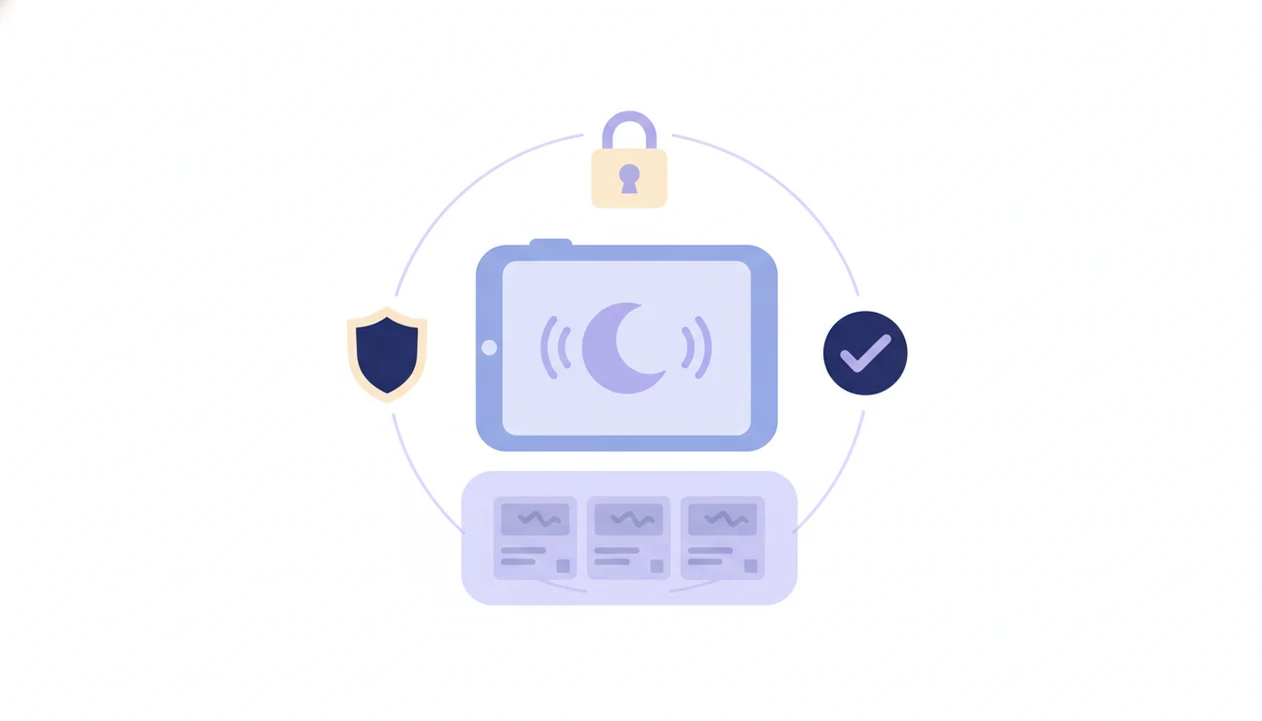
COPPA compliance means a children’s app must follow U.S. rules for collecting personal information from kids under 13, including parental notice and consent in covered cases. It does not mean the app collects nothing.
A privacy-safe bedtime setup looks for four plain signals: no third-party data sharing, minimal analytics, local-only storage where possible, and clear parent controls. PIN locks, restricted navigation, and no outbound links matter when a sleepy child taps around in the dark. For a deeper policy checklist, our kids bedtime app privacy guide breaks down the terms parents usually miss.
Kids Bedtime TL should be tested the same way as Moshi, Calm Kids, or vooks.com: read the policy, check the settings, and try one night before trusting it. Neurodivergent children may also need lower volume, fewer transitions, and repeatable audio.
Small settings change the night.
Honest Cons of Ad-Free Kids Sleep Apps
Ad-free bedtime apps reduce interruptions, but they are not automatically the right fit for every family. The tradeoff is often cost, content depth, or sensory match.
- Subscription fatigue is real: Another monthly charge can feel annoying beside streaming, music, and audiobook plans.
- Libraries vary widely: Some children’s story apps offer deep catalogs, while others have fewer than 20 bedtime stories.
- Sensory fit differs: An ad free kids sleep app may still use music, voices, or transitions that bother a sensitive child.
- Audio-only can miss some children: Some kids settle better with simple illustrations or caregiver read-aloud time.
- Parent setup still matters: Timers, downloads, and privacy settings are easy to forget during bedtime scramble.
For parents trying to avoid long negotiations, Kids Bedtime TL is strongest when one story is chosen before the sleep sack zipper comes up under a sleepy chin.
Limitations
An ad-free bedtime story app can support a calmer night, but it cannot remove every sleep risk or replace medical advice. The limits are practical and worth naming.
- Bright screens close to the face can still delay melatonin release, even when there are no ads.
- Research on children’s sleep apps is still limited, with little large-scale long-term evidence.
- Ad-free does not guarantee age-appropriate content; themes, volume, or pacing may overstimulate toddlers.
- Apps cannot replace professional care for children with diagnosed sleep disorders or persistent severe insomnia.
- Offline mode quality varies; some apps cache a full library, while others save only a few stories.
- A 2023 AAP review noted that 50% of school-age children and 75% of adolescents have screens in bedrooms, a pattern linked with shorter sleep regardless of ad exposure.
If sleep problems are frequent, worsening, or paired with breathing concerns, read about when to call pediatrician for sleep.