
Kids Bedtime App Privacy Checks Parents Should Make
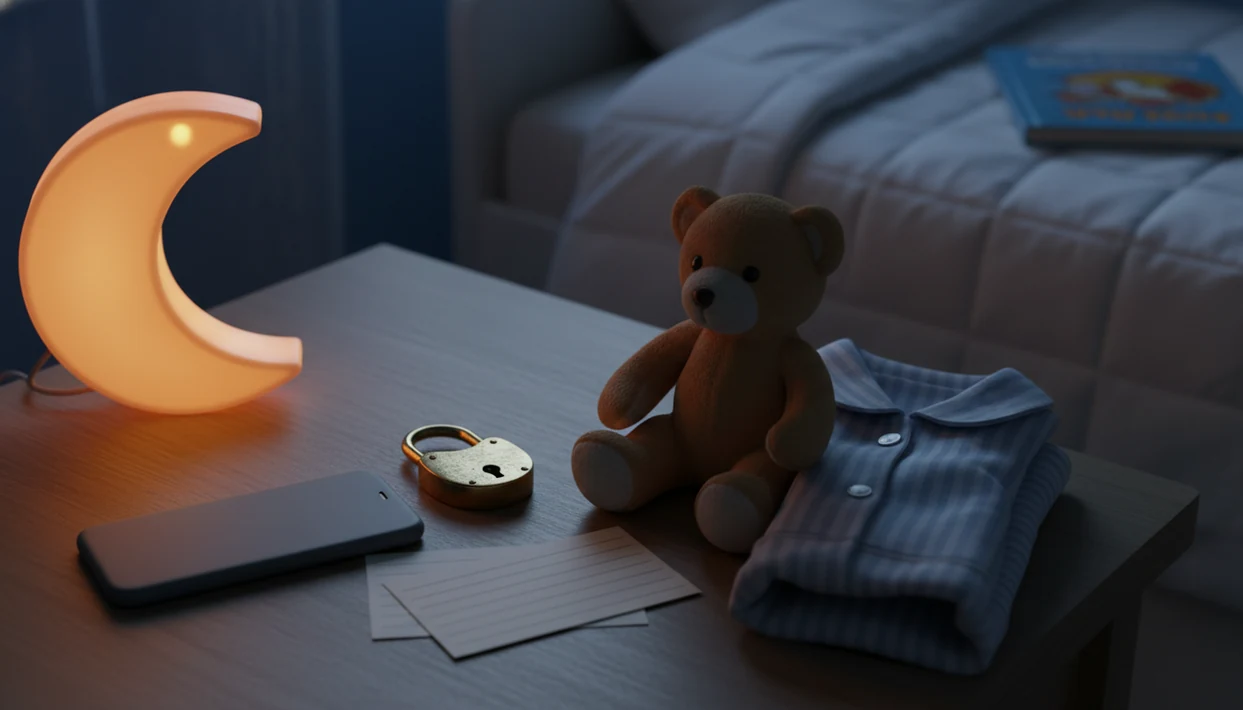
Kids bedtime app privacy is about whether a sleep, story, lullaby, or meditation app collects only necessary child-related data, avoids ads and tracking, explains third-party sharing, and gives parents deletion controls. Parents should check voice recordings, device identifiers, analytics, location, account data, and COPPA language before making an app part of a nightly routine.
Definition: Kids bedtime app privacy means how a children’s sleep app collects, uses, shares, stores, protects, and deletes personal information connected to bedtime stories, sleep sounds, lullabies, meditation, or routines.
TL;DR
- A kids sleep app can collect device IDs, usage history, crash logs, account data, voice recordings, or analytics even when it looks simple.
- COPPA matters for U.S. apps directed to children under 13, but parents still need to read the full privacy policy and deletion options.
- Ad-free does not automatically mean private because analytics SDKs and other third-party services can still receive child-related data.
Kids bedtime app privacy at a glance
Kids bedtime app privacy asks four plain questions: what data is collected, where it is shared, how long it is stored, and how parents can delete it. A quiet story app can still transmit device identifiers, usage history, crash logs, account details, voice data, location signals, analytics events, or ad-related data.
That matters at 7:15 p.m., after pajamas, toothbrush, and one missing stuffed rabbit. The app may look passive because it plays a lullaby, but the device can still report which story played, when playback stopped, or whether a subscription screen opened.
Kids Bedtime TL is a kids bedtime stories app that provides bedtime stories, sleep meditation, lullabies, and nap routines for parents of toddlers and young children. Tools like this should be judged by both content fit and data practices.
Five kids app data privacy facts parents should know
- Child-directed apps can collect technical data. A bedtime app does not need chat, photos, or social features to collect device IDs, crash logs, or usage history.
- Policies should name sensitive categories. Parents should see clear language about voice, microphone access, location, analytics, ads, tracking, and third-party sharing.
- COPPA can apply under age 13. In the U.S., COPPA applies to online services directed to children under 13, including some apps.
- Ad-free does not mean tracking-free. An app may remove banner ads but still use analytics SDKs, subscription tools, or crash reporting services.
- Stronger privacy is practical, not vague. Look for data minimization, parent controls, deletion steps, and plain-language explanations.
The pocket check is real. Parents often review this after the phone is already face-down on the dresser.
How children sleep app privacy works behind the scenes
Children sleep app privacy works through data flows between the app, the device, the developer, and outside service providers. When a parent opens an app, plays a story, creates an account, downloads offline audio, or changes a routine, the app may create usage events and technical logs.
First-party data goes to the app developer. Third-party SDKs, which are software tools built into the app, may handle analytics, crash reporting, subscriptions, cloud storage, or advertising. In plain terms, an SDK is a helper system inside the app, but it may receive data too.
No app can honestly promise zero data if it needs subscriptions, crash reporting, or device-level functions. Privacy-forward design means collecting the minimum needed for sleep content and parent controls. Good kids bedtime stories, sleep meditation, lullabies, and nap routines for toddlers and young children deliver a predictable calm-down cue, not a guarantee of sleep or a reason to ignore data collection.
COPPA bedtime app rules for children under 13
Does COPPA apply to bedtime apps for children under 13? In the U.S., the FTC’s COPPA rule applies to operators of websites and online services directed to children under 13, and it can include child-directed apps. The FTC’s COPPA guidance explains that the rule covers operators of child-directed websites and online services, including mobile apps: https://www.ftc.gov/business-guidance/privacy-security/childrens-privacy.
COPPA generally requires verifiable parental consent before collecting personal information from a child under 13 online. It also gives parents certain rights around review and deletion, though the exact duties depend on the service and data involved.
This is not legal advice. For parents, COPPA language is a signal to inspect the privacy policy more closely. It does not replace child privacy rules in other countries, and it does not prove the whole app is low-risk. If the broader sleep question is safety, our guide on are bedtime story apps safe for toddlers covers that separately.
Kids bedtime app privacy guarantees worth looking for
A stronger children’s sleep app policy makes specific promises parents can understand before bedtime. Look for named commitments, not broad comfort words.
- Plain child data summary: The policy explains what child-related data is collected in a short parent-facing section.
- No behavioral advertising to children: The app says it does not target children based on behavior across apps or sites.
- Voice clarity: The policy states whether microphone input, voice recordings, transcription, or storage happen.
- Location restraint: Precise location is not collected unless the app explains a real need.
- Data minimization: Bedtime content, routines, and parent accounts use only necessary data.
- Parent controls: Parents can access, correct, delete, or request deletion of data.
- Named service categories: The policy names analytics, crash reporting, subscription, or hosting services by category.
For parent comparison, a best kids sleep app guide should include privacy signals alongside story length and age fit.
Children sleep app privacy signals that are not enough
A kids-only label is not enough to prove a sleep app avoids personal data collection. Ad-free is not enough either, because analytics or subscription tools may still process device and usage data.
Common kids bedtime privacy myths
One common myth is that bedtime stories, white noise, and sleep sounds are harmless from a privacy standpoint because the child is only listening. But the app may still log playback, crashes, downloads, purchases, or device identifiers.
Another weak signal is an app store privacy label by itself. It is useful, but parents should also read the developer’s full policy. Educational, wellbeing, or scientifically proven claims do not prove privacy protections. A soft-spoken story over a low white-noise hum can be calming, but calm content and careful data handling are different questions.
Kids app data privacy checklist before bedtime use
Before adding a sleep app to the nightly routine, use a short inspection sequence. The goal is not only compliance; it is also a calmer settling window with fewer surprises and fewer screen prompts.
| Check | What to look for |
|---|---|
| Full policy | Read the privacy policy, not only the app store label. |
| Search terms | Look for voice, microphone, location, advertising, analytics, tracking, sharing, and deletion. |
| Child vs parent data | Check whether child usage data is separated from parent account or subscription data. |
| Deletion route | Confirm that account deletion or data deletion is easy to start. |
| Bedtime fit | Make sure the app supports listening or reading, not constant tapping. |
For younger children, privacy and screen timing overlap. The question of should toddlers use screens before bed is separate from whether a policy is well written.
Children sleep app evidence and screen-time context
Privacy is only one part of choosing a healthy bedtime app. A 2024 review of 83 children’s sleep app descriptions found that only 21% included evidence-based sleep improvement strategies, and only one app was supported by a real-world clinical effectiveness trial. (Source: https://mental.jmir.org/2024/1/e54661/)
The American Academy of Pediatrics has said children ages 2 to 5 should have no more than 1 hour per day of high-quality digital media. (Source: https://www.aap.org/en/patient-care/media-and-children/) That matters when a bedtime app becomes part of every night, especially if the child keeps asking, “Just one more story.”
For toddlers and preschoolers, an audio-first routine is often easier than an interactive screen because it keeps the predictable sequence intact. A privacy-forward app can still be the wrong bedtime fit if it rewards tapping, scrolling, or visual novelty right before sleep.
When to Ask a Pediatrician About Sleep App Use
Ask a pediatrician when sleep changes persist, look medical, or keep affecting daytime behavior. Privacy checks help you judge the app, but they do not answer whether a child’s sleep pattern needs clinical attention.
A useful split is to treat app safety and sleep health as two tracks. You can review microphone access, analytics, deletion, and tracking at the kitchen table, while also watching the child in real life: how they breathe, wake, settle, and function the next day. Screen limits may help if bedtime has become too interactive, but they are not always enough when fear, insomnia, snoring, or disrupted breathing is part of the picture.
- Separate the privacy review from the health question so a clean policy does not reassure you about a medical concern.
- Watch for red flags such as loud snoring, breathing pauses, gasping, restless sleep, or unusual daytime sleepiness.
- Adjust the routine if the app adds tapping, bargaining, or “one more” loops, then see whether sleep improves.
- Bring persistent sleep changes, sudden bedtime distress, or ongoing fatigue to a pediatrician.
- Use apps as routine supports, not substitutes for diagnosis, treatment, or tailored clinical care.
Limitations
A privacy review can reduce risk, but it cannot prove everything about an app’s real-world behavior.
- No app can guarantee zero data collection if accounts, subscriptions, crash reporting, or device analytics are required.
- Privacy labels and short summaries can be incomplete, vague, or outdated.
- COPPA is a U.S. rule and does not cover every country’s child privacy framework.
- A private app may still create too much screen stimulation before sleep.
- Marketing claims like educational, wellbeing, safe, or scientifically proven do not prove strong privacy.
- Third-party SDK behavior can change over time, especially after major app updates.
- AI-generated bedtime content adds separate questions about prompts, child inputs, and review; our guide on are AI bedtime stories safe for children covers that issue.
Clinicians typically recommend consistent bedtime routines and age-appropriate sleep habits as general sleep education, while privacy review remains a parent technology check.
This page is a privacy and bedtime-technology checklist, not medical advice. If a child has persistent insomnia, loud snoring, breathing pauses, daytime sleepiness, anxiety around sleep, or sudden sleep changes, parents should ask a pediatrician rather than relying on an app adjustment.
FAQ
What is kids bedtime app privacy?
Kids bedtime app privacy means how a sleep, story, lullaby, or meditation app collects, uses, shares, stores, protects, and deletes child-related information. It includes device data, account data, usage history, voice recordings, location, analytics, and deletion controls.
Do bedtime apps collect child data?
Yes, bedtime apps can collect child-related or device-related data even without social features. Parents should check for device identifiers, usage history, crash logs, account details, voice data, analytics, and advertising tools.
Does COPPA apply to bedtime apps?
COPPA may apply when a bedtime app is an online service directed to children under 13 in the United States. Parents should look for COPPA language, parental consent details, and deletion rights in the privacy policy.
Are ad-free kids apps private?
Ad-free kids apps are not automatically private or tracking-free. They may still use analytics, crash reporting, subscription systems, or other third-party services.
Can sleep apps record voices?
Some sleep apps can record voices if they use microphone features, voice notes, personalization, or interactive content. Parents should check whether recordings are stored, transcribed, shared, or deletable.
Should bedtime apps use location data?
Precise location is usually unnecessary for bedtime stories, lullabies, sleep sounds, and routine checklists. If a kids app collects location data, the policy should explain why and how parents can control it.
How do parents delete app data?
Parents usually delete app data through account settings, a privacy request form, or a support contact listed in the policy. Kids Bedtime TL and similar apps should make deletion options clear before a routine depends on the app.
Are app store privacy labels enough?
No, app store privacy labels are not enough by themselves. Parents should also read the full privacy policy and check the developer’s data practices.
What privacy settings should parents check?
Parents should check microphone access, location access, tracking permissions, analytics language, ad settings, account deletion, and child profile controls. They should also confirm whether Kids Bedtime TL or any other bedtime app separates parent billing data from child routine data.