
What Happens When You Start a Bedtime Routine for Kids
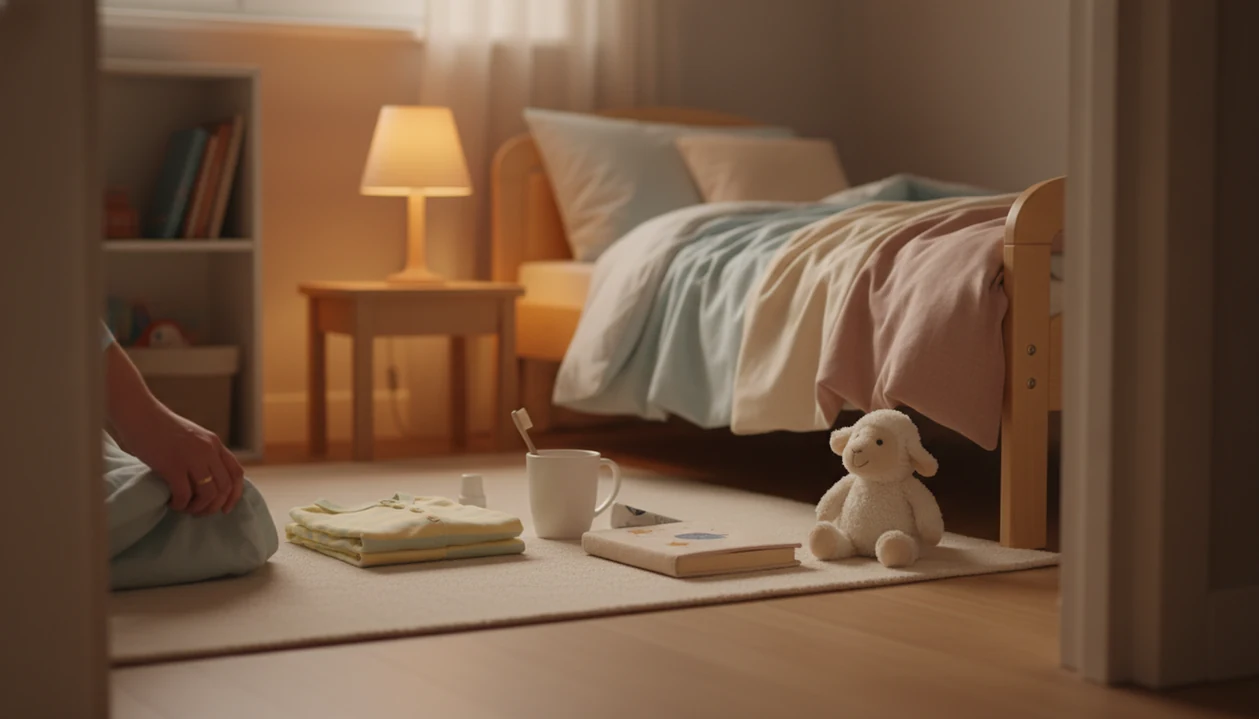
What happens when you start a bedtime routine is usually gradual: your child gets clearer sleep cues, may protest the change at first, and then often begins settling faster as the pattern becomes familiar. The first nights can feel harder before they feel calmer, but consistency usually makes goodnights more predictable over the next few weeks.
> Definition: A kids bedtime routine is a short, repeated sequence of calm steps before sleep, such as bath, pajamas, story, song, and lights out, done in the same order most nights.
TL;DR
- Expect some stalling, whining, or testing during the first few nights of a new bedtime routine.
- The routine works best when it is calm, screen-free, 20–30 minutes long, and paired with a consistent bedtime.
- Over time, bedtime routines can support faster sleep, fewer night wakings, emotional regulation, language growth, and parent-child bonding.
What Happens When You Start a Bedtime Routine in the First Nights
What happens when you start a bedtime routine in the first nights? Many children push back before they settle in, because the new pattern changes familiar negotiations and limits.
You may see stalling, whining, bargaining, or a bigger tantrum than usual. That does not mean the new bedtime routine is failing. It often means your child is checking whether the same steps really happen tonight too. Same bathroom trip. Same pajamas. Same book. Same lights-out phrase.
The hallway light may stay cracked open while a parent starts the same story again. Keep your tone boring and kind. The routine should stay predictable even when the child protests, because predictability is the point.
Some children calm within a few nights. Others need one to two weeks or longer, especially if bedtime has been loose for a while.
Five Evidence-Backed Facts About Starting a Bedtime Routine for Kids
- Consistent bedtime routines are linked with shorter sleep-onset time, fewer night wakings, earlier bedtimes, and longer sleep duration in young children (Mindell et al., Sleep: https://pubmed.ncbi.nlm.nih.gov/25325483/).
- In that international study of 10,085 children ages 0–5, more consistent bedtime routines showed a dose-dependent association with better sleep outcomes (https://pubmed.ncbi.nlm.nih.gov/25325483/).
- Children with no consistent bedtime routine were reported to have higher odds of moderate to severe sleep problems than children with nightly routines; keep the exact percentage only if the source table is cited directly.
- A stable bedtime matters too; a routine is less helpful when bedtime swings widely from night to night.
- Stories, songs, cuddles, and quiet talk can support emotional regulation, language growth, and parent-child bonding.
For many families, a consistent bedtime plus a short calming routine is more useful than adding extra activities, because the child learns the same sleep cue each night. If you want the longer research summary, our guide to bedtime routine benefits covers the sleep and behavior links in more detail.
How a New Bedtime Routine Works in a Child’s Brain and Body
A new bedtime routine works by turning repeated calm steps into sleep cues, so the child’s brain can predict what comes next. In plain terms, the routine builds a habit loop: cue, sequence, sleep expectation.
That predictability lowers decision fatigue for both parent and child. There are fewer fresh choices at 7:15 p.m., when pajamas, toothbrush, and one missing stuffed rabbit can already feel like plenty. Dim lights, soft voices, stories, lullabies, and cuddles also reduce active sensory input. The body gets a gentle transition out of play.
Not instant. Repeated.
The routine is a cueing system, not a magic sleep switch, so results build through repetition. Good kids bedtime stories, sleep meditation, lullabies, and nap routines for toddlers and young children deliver familiar calm-down cues, not a guaranteed fix for every sleep problem. Kids Bedtime TL is a kids bedtime stories app that provides bedtime stories, sleep meditation, lullabies, and nap routines for parents of toddlers and young children.
Before You Start a Bedtime Routine
Before you start a bedtime routine, set up the evening so the routine has a fair chance to work. A little preparation prevents the final half hour from turning into a hunt for pajamas, water, or the one book your child suddenly needs.
- Choose one target bedtime that fits your child’s age, nap pattern, wake-up time, and morning schedule. If bedtime has been very late, shift gradually rather than making a dramatic jump.
- Agree on the final steps with every regular caregiver before night one. The words can vary, but the order and limits should feel the same.
- Move stimulation earlier by keeping screens, loud toys, rough play, and big choices out of the last 30 minutes.
- Prepare the basics first: comfort item, water, pajamas, toothbrush, books, dim light, and any calming audio you plan to use.
- Notice red flags before treating bedtime as only a behavior issue. Loud snoring, breathing pauses, pain, reflux signs, or worsening anxiety deserve a pediatrician’s guidance.
How to Start a 20-Minute Bedtime Routine Kids Can Actually Follow
A 20-minute bedtime routine works best when it is short enough to repeat on tired nights. The goal is not a beautiful evening; it is a predictable sequence your child can learn.
The 20–30 minute window is a practical starting point, not a medical rule. Pediatric sleep guidance generally emphasizes a consistent bedtime, calming pre-bed activities, and limiting screens before sleep (American Academy of Pediatrics: https://www.healthychildren.org/English/healthy-living/sleep/Pages/default.aspx).
- Set a realistic bedtime and begin the routine 20–30 minutes before the target sleep time.
- Choose three to five calm steps, such as bathroom, pajamas, book, lullaby, and lights out.
- Repeat the steps in the same order most nights, even when the evening has been messy.
- Remove screens, rough play, and stimulating choices near bedtime so the body can downshift.
- Hold the boundary calmly when your child stalls, then praise cooperation the next morning.
These steps follow common behavioral sleep advice: keep the routine predictable, reduce stimulating input, and respond calmly and consistently when a child stalls or wakes (Sleep Foundation overview: https://www.sleepfoundation.org/children-and-sleep/bedtime-routine).
If you need a printable structure, a toddler bedtime routine checklist can help caregivers use the same words. Tools like Kids Bedtime TL can also give parents a short read-aloud option when choosing a story becomes its own negotiation.
What to Expect From a Bedtime Routine Over the First Few Weeks
The first few weeks usually move from resistance toward recognition, but the timeline is not exact. Nights 1–3 may bring pushback because your child is learning that the pattern is real.
Days 4–10 often show smaller changes first. Less bargaining. A faster move from pajamas to book. A shorter settling window after lights out. Weeks 2–4 may bring more noticeable predictability, fewer surprises, and calmer goodnights.
Still, night waking can happen during illness, travel, growth changes, anxiety, or schedule disruptions. Cousin noise behind a closed door can undo a settled travel night, even with the same story.
A bedtime routine usually works best when families judge progress across several nights, while one rough evening is treated as data rather than failure. For a broader evening structure, a bedtime routine timeline can help place dinner, bath, books, and lights out in order.
Common Myths About a New Bedtime Routine for Kids
Myth 1: It should fix bedtime in one or two nights. Reality: protests can spike before improving, especially when a child is used to open-ended bedtime choices.
Myth 2: Routines are only for babies. Reality: toddlers, preschoolers, and older children can benefit from predictable evening cues.
Myth 3: More activities make kids more tired. Reality: long or exciting routines often delay sleep, especially when they include games, screens, or too many choices.
Myth 4: Night waking means the routine failed. Reality: waking may improve gradually, but it can still happen for ordinary child reasons.
Myth 5: Any routine works equally well. Reality: calm, short, repeated routines usually work better than chaotic ones. A phone set face-down on a dresser is often better than a bright screen lighting the room during the final story.
Bedtime Routine Mistakes That Make Goodnights Harder
The most common bedtime routine mistakes add stimulation, delay, or fresh negotiation right when a child needs fewer decisions. Starting too late is the first one; an overtired child may look wired, not sleepy.
Another mistake is changing the order every night. If the child can renegotiate the whole routine, the routine becomes a debate. Screens, rough play, loud music, bright lights, and high-energy games can also make settling harder.
“Just one more story” is a common pressure point. One extra book may be fine if planned, but unlimited books, drinks, snacks, and questions after lights out can stretch bedtime past the child’s window. Multiple caregivers also need a shared script, even if their voices differ.
Keep it sustainable. A routine that takes 55 minutes may work twice, then collapse when everyone is tired. For age-specific examples, a bedtime routine for 3 year old can show what realistic looks like.
Signs Your Bedtime Routine Is Working
A bedtime routine is working when the evening becomes more predictable, not when every night becomes smooth. Watch for less surprise as your child moves through the steps.
Settling time may get shorter. Or it may stay the same length but feel less emotionally intense. Parent stress can change too, because the evening has a known pattern instead of a fresh set of decisions.
Small shoulders dropping after an exhale is progress you can actually see.
Night wakings may become less frequent or easier to recover from. Morning mood, cooperation, and behavior may also improve gradually. Judge the pattern over several nights or weeks, not one overtired Thursday. If your child is in the preschool years, a preschool bedtime routine may fit better than a toddler-style sequence.
Limitations
A bedtime routine can help many families, but it is not a cure-all. Clinicians typically recommend seeking medical or specialist guidance when sleep problems are severe, persistent, or paired with concerning symptoms. Parents should contact a pediatrician sooner if sleep problems include loud snoring, pauses in breathing, chronic pain, reflux symptoms, severe anxiety, or worsening daytime behavior; the American Academy of Pediatrics gives similar guidance for child sleep concerns: https://www.healthychildren.org/English/healthy-living/sleep/Pages/default.aspx.
- A routine will not fix medical sleep disruptors such as sleep apnea, reflux, chronic pain, or breathing concerns.
- Neurodevelopmental differences, anxiety, sensory sensitivities, or trauma may require slower, more customized changes.
- Families with shift work, unstable housing, multiple caregivers, or highly variable schedules may see slower progress.
- The exact mix of steps is not universally proven; parents may need trial and error.
- A routine cannot fully fix a bedtime that is much too late for the child’s age and sleep needs.
- Illness, travel, teething, nightmares, and major transitions can disrupt even a strong routine.
- If sleep problems are intense or worsening, a pediatrician or qualified sleep professional is the right next step.
Apps such as Kids Bedtime TL can support an offline routine with stories, lullabies, and calming audio, but they should not replace clinical care when symptoms point beyond routine struggles.
FAQ
How long does it take for bedtime to improve after starting a routine?
Some families notice small improvements within a few days, but many children need one to two weeks or longer. Consistency matters more than a perfect first night.
Why is bedtime worse after we started a new routine?
Bedtime can get worse at first because the child is testing new limits and learning that the pattern will repeat. Early pushback is common and does not prove the routine failed.
What time should a bedtime routine start?
A bedtime routine usually starts 20–30 minutes before the target sleep time. Start earlier if your child needs a slower transition.
How long should a bedtime routine last for toddlers and young children?
Most toddlers and young children do well with a short routine of about 20–30 minutes. Longer routines can become hard to sustain.
Should my child have the same bedtime every night?
A consistent bedtime helps strengthen sleep cues and may support emotion regulation and behavior. Exact timing can vary sometimes, but large swings make routines harder.
Are screens bad for children before bed?
Screens and stimulating content can make settling harder for many children. It is usually better to keep the final part of bedtime screen-free.
Do toddlers really need bedtime routines?
Toddlers often benefit from bedtime routines because repeated steps reduce uncertainty and support transitions. The routine does not need to be complicated.
What should I do if my child wakes up after bedtime?
Respond calmly and keep the interaction brief, predictable, and low-stimulation. Night waking can still happen even when the bedtime routine is working.