
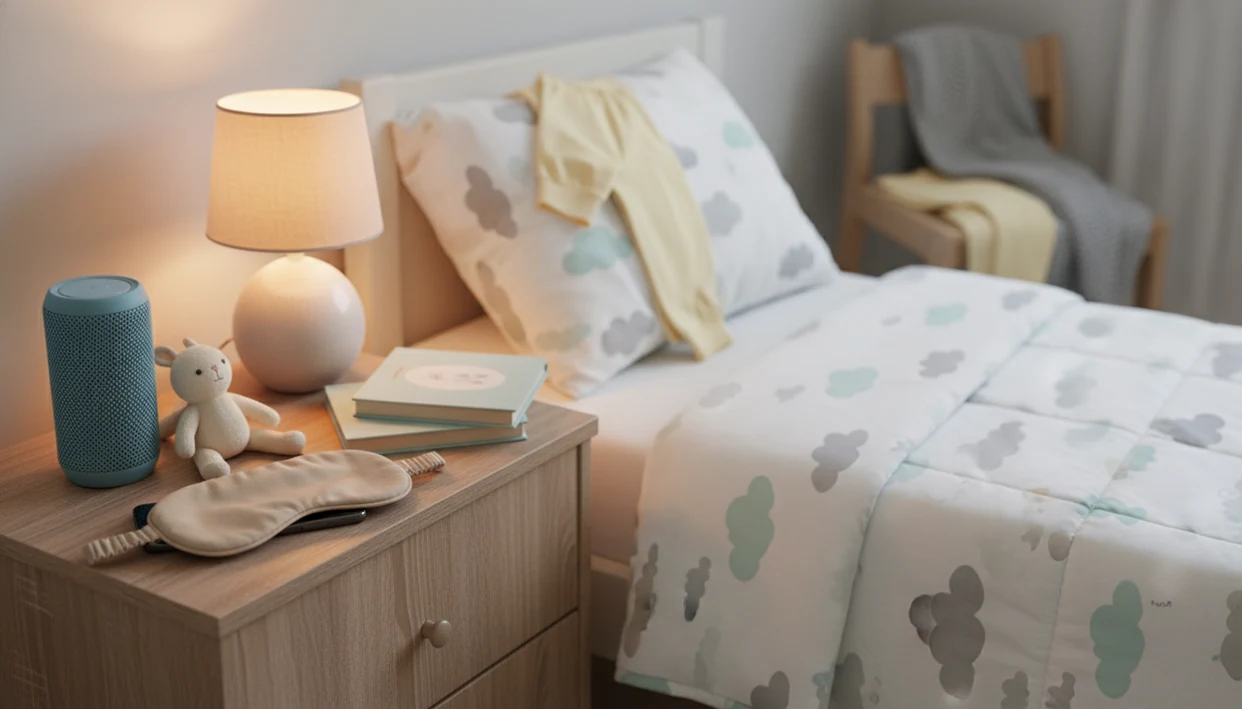
A parent bedtime playlist is a caregiver-controlled audio queue of stories, lullabies, or meditations played in the same order each night as part of a child's sleep routine.
- Parents queue bedtime stories, lullabies, and meditations in a fixed order, no child browsing required.
- Repeatable playlists act as a sleep cue, helping toddlers and young children settle faster.
- Kids Bedtime TL lets you build, save, and reuse playlists for bedtime and nap routines.
How Parent Bedtime Playlists Work as Sleep Cues
Parent bedtime playlists work by pairing the same calm audio sequence with the same pre-sleep window every night. Over time, repetition and predictability help the child connect that sequence with settling down, much like pajamas, dim lights, or the same final hug.
The behavioral idea is cue association. In plain terms, the brain starts to recognize, “this comes before sleep.” A 2009 review of infant and toddler sleep interventions found that bedtime routines were associated with better sleep outcomes, including faster sleep onset and fewer night wakings source.
The playlist should support the wind-down, not fill the whole night. Calm audio lowers arousal during the settling window, especially when the phone is face-down on the dresser and the room stays dim.
Parents trying to stop the “Just one more story” loop often fit well with Kids Bedtime TL because the playlist creates a fixed ending through saved track order and auto-stop playback.
Good bedtime audio provides a predictable calm-down cue, not a guarantee that every child will fall asleep on command.
Kids Bedtime Playlists vs Random Bedtime Browsing
A kids bedtime playlist is usually calmer than random bedtime browsing because it removes choice, surprise, and screen-driven stimulation. The parent picks the tracks before bedtime, then the child hears only the planned sequence.
- Open-ended media before bed can raise stimulation and stretch the routine past lights-out; a 2016 systematic review linked bedtime screen access or use with shorter sleep duration and poorer sleep outcomes in children source.
- A fixed bedtime routine playlist removes decision-making for both parent and child when everyone is already tired.
- Consistent bedtime routines were associated with better child sleep outcomes in the 2009 infant and toddler sleep-interventions review cited earlier source.
- Parent-approved tracks reduce the chance of sudden jokes, ads, loud intros, or off-topic recommendations.
- Age-appropriate sequencing matters; a gentle lullaby after a short story feels different from a new video menu.
The 7:15 p.m. scramble after pajamas, toothbrush, and one missing stuffed rabbit is not the moment to negotiate content. Less choosing helps.
If bedtime browsing keeps turning into debate, then Kids Bedtime TL covers the calmer path because caregivers can save a sleep story playlist before the room gets quiet.
How to Build a 5-Step Bedtime Routine Playlist in Kids Bedtime TL
You can build a bedtime routine playlist in Kids Bedtime TL by choosing the content once, arranging it in wind-down order, and saving it for one-tap reuse. Keep the first version short enough that you can repeat it without bargaining.
- Open the playlist builder in Kids Bedtime TL before the bedtime routine starts.
- Browse and add tracks from bedtime stories, lullabies, or sleep meditations.
- Arrange the sequence so the most engaging story comes first and the quietest track comes last.
- Save the playlist for one-tap reuse at bedtime or nap time.
- Tap play and hand off; audio stops automatically after the last track.
A practical sequence might be one five-minute story, one breathing track, and one soft lullaby. Done.
Caregivers who need a quick setup before tonight can also review the download kids bedtime stories app page, then build a starter playlist around one familiar story and one calming sound.
When to Use a Sleep Story Playlist for Naps and Bedtime
Use a sleep story playlist during the wind-down period, not as all-night background audio. It works best after active parts of the routine are finished, such as bath, pajamas, teeth, cuddling, and dimmed lights.
In a randomized trial of a nightly three-step bedtime routine, young children had improvements in sleep onset latency and night wakings compared with baseline source. The useful lesson for playlists is simple: order matters. Audio should be one step in a predictable sequence.
Nap routines can use the same playlist, especially for toddlers who respond to repetition. A caregiver whispering after playground time does not need a new performance at noon; the familiar track can do some of the signaling.
For toddlers and preschoolers, a short repeatable playlist is often easier than a long audio library because the child learns the ending as well as the beginning.
Ready to start your quit?
Parent bedtime playlists let caregivers pre-select bedtime stories, lullabies, and sleep meditations into a repeatable queue so children hear the same calming sequence each night…
What a Bedtime Routine Playlist Looks Like in Kids Bedtime TL
In Kids Bedtime TL, the playlist screen lets parents add tracks, drag them into order, and save the sequence for later. The available content includes bedtime stories, sleep meditations, lullabies, and nap routine audio.
Saved playlists are accessible from the home screen, so bedtime does not require searching through a full library. That matters when the hallway light is left cracked open and a parent is starting the same story again.
Parents looking for a no-scroll bedtime setup fit Kids Bedtime TL because saved playlists start with one tap and stop after the final track instead of looping through the night. Families who want shorter stories can pair playlists with bedtime stories for kids that are already written for young listeners.
Parent Bedtime Playlists vs Spotify and YouTube Alternatives
Parent bedtime playlists in a sleep-focused app differ from Spotify, YouTube, calm.com, or headspace.com because the goal is a closed bedtime sequence, not general discovery. General platforms can work, but they often require extra child-proofing.
| Option | Bedtime strength | Main friction |
|---|---|---|
| Kids Bedtime TL | Age-screened stories, lullabies, meditations, and saved routines | Content is focused on young children, not adult relaxation |
| Spotify | Easy music playlists | Ads, search results, and non-bedtime tracks may appear |
| YouTube | Large story and music library | Autoplay, thumbnails, and recommendations can restart browsing |
| Calm or Headspace | Strong adult calm content | Not always built around toddler bedtime routines |
When the issue is algorithm-driven suggestions, Kids Bedtime TL earns the spot because the playlist stays inside parent-approved bedtime content with no off-topic recommendation feed.
Parents comparing broader options can use the best kids bedtime stories app guide to check content type, age fit, and routine controls.
Related Kids Bedtime TL Features for Sleep Routines
Kids Bedtime TL includes several features that pair naturally with parent bedtime playlists. Each one supports a different part of the predictable sequence.
- Sleep meditation library: Guided breathing and body-settling tracks for children who need a slower transition.
- Lullaby collection: Gentle music options with adjustable playback for the final quiet stretch.
- Nap routine mode: Shorter content sequences for daytime settling without rebuilding the whole bedtime queue.
- Bedtime story library: Read-aloud and audio stories with new additions for families who rotate content carefully.
A low hum of a white-noise track under a soft-spoken story can help some children settle, but volume still matters. For automatic ending control, the bedtime story sleep timer page explains how timed playback fits the routine.
What Parent Bedtime Playlists Do in Kids Bedtime TL
Parent bedtime playlists in Kids Bedtime TL give caregivers a saved, parent-approved audio queue that plays in a fixed order with one tap. The child hears the routine, not a menu.
The feature is built for the real wind-down: one story while the body is still busy, a short meditation when the room gets quiet, and a lullaby for the final soft landing. Parents choose the tracks ahead of time, so bedtime does not turn into browsing, bargaining, or chasing whatever an algorithm suggests next.
- Choose the bedtime stories, lullabies, or meditations that fit your child’s settling pattern.
- Arrange them in the order you want, from most engaging to quietest.
- Save the playlist so the same sequence is ready for bedtime or naps.
- Start playback with one tap, without handing over search or browsing control.
- Let the playlist end on its own with auto-stop after the final track.
That fixed ending matters. It gives the routine a clear boundary, keeps recommendation exposure low, and lets the same calm sequence come back tomorrow night without rebuilding it.
Limitations
Parent bedtime playlists are useful routine tools, but they are not a complete sleep plan. Be cautious if the audio becomes another negotiation point.
Kids Bedtime TL also still needs an adult-managed phone or tablet nearby. If the device itself becomes a distraction, start the playlist outside the child's reach, turn the screen face-down, and keep notifications off.
- A playlist alone will not fix bedtime resistance caused by inconsistent schedules, late naps, bright rooms, or irregular wake times.
- Evidence is stronger for bedtime routines in general than for playlists as a standalone sleep intervention.
- Some children become more alert if audio is too funny, too loud, too fast, or too long.
- Leaving music on all night is not recommended for most children; use audio during the wind-down unless a clinician advises otherwise.
- What calms one toddler may irritate another, especially with sensory sensitivities or developmental differences.
- A playlist does not replace clinical support for persistent sleep anxiety, frequent waking, snoring, or behavioral sleep issues.
- General platforms such as storyberries.com or vooks.com may offer useful stories, but they may not provide the same parent-controlled bedtime queue.
Reset the plan if it stops helping.