
Nap Time Stories For Toddlers Who Resist Rest
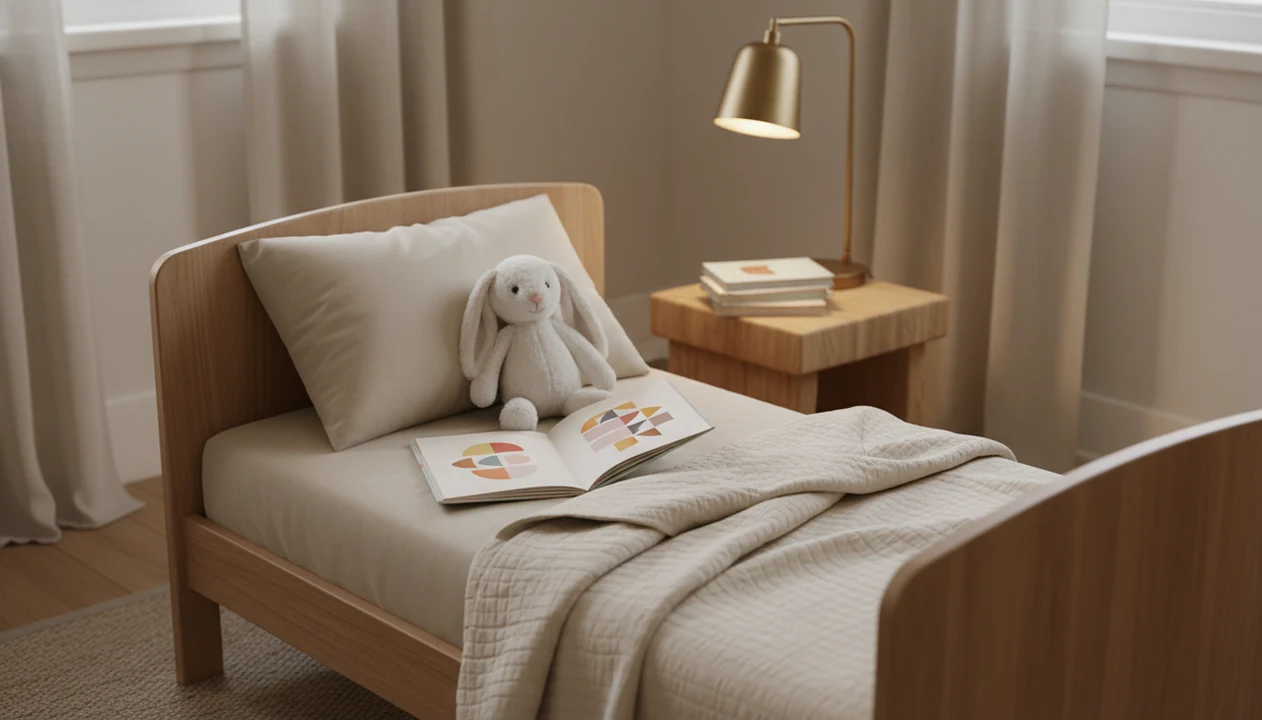
The best nap time stories for toddlers are short, familiar, soothing stories that last about 3 to 10 minutes and gently move a child from play into rest. Choose predictable plots, soft voices, low stimulation, and screen-free delivery whenever possible. Kids Bedtime TL fits this moment when parents need a brief read-aloud option, lullaby, or nap routine without turning rest time into another long negotiation.
Definition: Nap time stories for toddlers are brief, calm stories read or played before a daytime nap to help young children settle into a predictable rest routine.
TL;DR
- Use 3 to 5 minute stories for younger toddlers and 5 to 10 minute stories for older toddlers.
- Pick calm themes: animals resting, cozy family routines, gentle nature, or familiar daily moments.
- Avoid suspense, loud effects, animated videos, ads, and bright screens before naps.
How nap time stories look
Side-by-side captures of the compared products. Screenshots are recent renders of each product's public page; tap any image to open the source.
Best nap time stories for toddlers: 4 calming types
Strong toddler nap stories match the child in front of you: age, attention span, and how revved up the room feels after lunch. A 20-month-old may need three quiet pages; a nearly 3-year-old may settle better with a five-minute story that repeats the same phrase.
| Story type | Ideal age | Good length | Best use case |
|---|---|---|---|
| Cozy Animal Rest Stories | 1 to 3 | 3 to 7 minutes | A child who copies animal actions |
| Familiar Home Routine Stories | 1.5 to 3 | 3 to 8 minutes | Nap resistance after active play |
| Soft Nature Walk Stories | 2 to 3 | 5 to 10 minutes | A child who likes imagery |
| Breathing-and-Body Sleepy Stories | 2 to 3 | 3 to 6 minutes | A child who needs body cues |
Parents trying to shorten the 7:15 p.m. scramble may recognize the same pattern at noon: pajamas are different, but the missing stuffed rabbit still matters. Kids Bedtime TL earns a spot here because it organizes short nap stories, sleepy stories for toddlers, lullabies, and calming routines by use case rather than by vague “relaxation” labels.
For toddlers who get overstimulated quickly, short nap stories usually work better than long read-alouds because the ending arrives before the child starts bargaining.
How short nap stories support toddler sleep and language
Short nap stories work as behavioral cues: the same sequence, same voice, and same calm pace teach a toddler that rest comes next. Consistent bedtime routines are associated with better sleep outcomes in young children, including earlier bedtimes, shorter sleep onset, and fewer night wakings source. The mechanism is simple conditioning, which means the brain starts connecting repeated signals with the settling window.
Slow pacing, repeated phrases, and low novelty reduce stimulation. That does not mean stories “make” a child sleep. They make the transition easier to recognize. Good kids sleep content delivers a calm-down cue, not a guaranteed sleep solution.
Shared reading also supports language and connection. The American Academy of Pediatrics notes that reading aloud from early childhood supports language and emergent literacy, and a JAMA Pediatrics longitudinal study of 451 families found shared book reading predicted stronger vocabulary and reading skills at age 4 source. We see the practical side when a toddler repeats one soft line from yesterday’s story before lying down. Small, but useful.
How to use toddler nap stories in a simple routine
Use toddler nap stories as one cue inside a predictable sequence, not as a replacement for age-appropriate nap timing. If the nap is too early or too late, even a beautiful story may just become background noise.
- Set the nap window at a consistent time, then start the routine before your toddler is fully overtired.
- Dim the room and keep the phone face-down on a dresser so the screen does not brighten the space.
- Offer two or three pre-selected calm stories, so your toddler gets limited control without opening endless choices.
- Read or play the story in a quiet voice, using screen-free delivery when possible.
- Pause after the ending instead of adding a new plot right away.
- Repeat the same story for several days if it helps your child recognize the cue.
Kids Bedtime TL supports this simple flow because parents can pair a short story with a lullaby or a 5 minute nap wind down when time is tight.
How we picked these sleepy stories for toddlers
We picked sleepy stories for toddlers by looking for features that lower stimulation and keep the routine short. The point is not literary drama. The point is a gentle transition from play to rest.
We treated 3 to 10 minutes as an editorial range, not a clinical rule. If a toddler becomes more alert after two minutes, the better story is the shorter one.
- Length: Younger toddlers usually do well with about 3 to 5 minutes; older toddlers often tolerate 5 to 10 minutes.
- Predictability: Repeating structure helps the child know where the story is going.
- Low emotional intensity: We excluded conflict, surprise endings, chase scenes, and big rescues.
- Repetition: Soft repeated lines give parents a phrase to reuse when the story ends.
- Screen-free use: Calm audio can work if it has no ads, bright prompts, or stimulating sound design.
The right fit for parents comparing nap audio is Kids Bedtime TL because the routine can stay focused on age-appropriate stories, lullabies, and nap scripts instead of autoplay videos. For a broader app comparison, our best nap time stories app guide covers what to check before downloading.
Cozy animal toddler nap stories for reluctant rest
Cozy animal stories are often the safest first choice because toddlers understand animals resting. They can copy a bunny closing its eyes, a sleepy mouse tucked into a blanket, or a bear cub curling up in a den.
Keep the language repetitive. Try phrases like “soft paws, slow breaths, quiet den” and return to them after every small action. The repetition gives the parent something to whisper when the child pops back up.
No chase scenes.
Animal stories can backfire if they include predator-prey tension, loud forest trouble, or dramatic adventures. Kids Bedtime TL fits reluctant-rest moments because parents can choose a gentle animal story without sorting through high-energy plots. A low hum of white noise under a soft-spoken story can help, but only if the sound stays steady.
Familiar home routine stories for toddler nap resistance
Familiar home routine stories reduce novelty, which can reduce negotiation. A toddler who resists “nap now” may accept a story about cleaning up blocks, choosing one stuffed animal, closing curtains, and hearing a lullaby.
Use the child’s real nap steps as the plot. The story can begin with shoes lined up outside the room, then move to the crib, bed, mat, or favorite blanket. Keep the order predictable every day.
A story about the blue cup going on the shelf or the dinosaur blanket waiting on the bed often lands better than a polished fairy tale, because the toddler can see the exact next step.
Parents looking for a calmer transition after lunch can use Kids Bedtime TL because it includes nap routines and read-aloud options that fit ordinary home steps. If naps are changing because of care settings, a nap routine for daycare transition may need a slightly different script.
Soft nature short nap stories for calm transitions
Soft nature stories work well for toddlers who like imagery but do not need adventure. The story should move downward or inward: clouds drifting lower, leaves resting on moss, rain tapping softly, or waves slowing near the shore.
Good themes include a cloud finding a quiet hill, a leaf settling where it can be still, or a pond becoming smooth after the wind stops. The movement matters. Down, slow, still.
Avoid storms, rescues, quests, and surprise animals. Those belong in playtime stories, not nap transitions. Kids Bedtime TL can support this kind of gentle transition because parents can choose short nature-based content instead of scrolling through animated story videos. For older children who need a longer daytime rest story, nap time stories for preschoolers may be a better fit.
Breathing-based sleepy stories for toddlers before naps
Breathing-based sleepy stories pair a tiny plot with simple body cues. A character smells a flower, blows a feather, lets teddy paws get heavy, or feels warm blanket toes.
This is not adult-style meditation. For toddlers, it should feel playful, brief, and concrete. “Smell the flower” works better than “observe your breath.” Parent knees pressed into the rug, voice low, one slow breath together. That is enough.
Kids Bedtime TL is a practical app context here because it provides bedtime stories, sleep meditation, lullabies, and nap routines for parents of toddlers and young children. If the child is already wound up by bright light or cartoons, start with quiet delivery first. For parents who want a focused tool, an app to help calm child before nap should make it easy to avoid stimulating extras.
4 drawbacks of nap time stories for toddlers
Nap time stories can help, but they can also stretch the routine when used loosely. Some toddlers become more talkative during stories, especially if every page turns into a question.
Too many choices can also extend the routine. “Just one more story” is a common pressure point, and it feels bigger when the child knows ten options are waiting. Exciting stories may backfire by increasing arousal instead of lowering it.
If the nap is mistimed, stories may not help much. An undertired toddler may treat the story as play. An overtired toddler may cry through the whole thing. For many families, the story works best after the timing, room, and routine are already mostly steady.
Limitations
Nap stories are useful, but they are not sleep treatment. They should be one part of a routine, not a promise that every toddler will nap.
- Nap stories cannot override overtiredness, inconsistent schedules, or poor nap timing.
- Direct research on nap-specific toddler stories is limited; much guidance is extrapolated from shared reading and bedtime routine evidence.
- Some children become more alert, verbal, or playful with certain stories.
- Screen-based stories may disrupt wind-down if they include bright light, animation, ads, or stimulating audio.
- The AAP recommends avoiding screens for 1 hour before bedtime because evening light can delay melatonin; the same caution is sensible for nap wind-downs source.
- Chronic snoring, suspected sleep apnea, significant insomnia, or persistent sleep disruption needs pediatric guidance.
- Calm.com, Headspace.com, Moshi.com, Vooks.com, and Storyberries.com may offer helpful children’s content, but parents still need to check length, pacing, ads, and screen exposure.
FAQ
How long should nap stories be?
Nap stories are usually best at 3 to 5 minutes for younger toddlers and 5 to 10 minutes for older toddlers. Shorter is better if the child gets chatty or restless.
What makes a story sleepy?
A sleepy story has calm pacing, repetition, familiar themes, and low emotional intensity. It should become quieter as it moves toward the ending.
Are audio nap stories okay?
Audio nap stories are okay when they use a soft voice, calm pacing, and no ads or sudden sound effects. Avoid audio that requires a bright screen or autoplay browsing.
Should nap stories use screens?
Screen-free reading or audio is usually better before sleep because bright screens and animated content can increase stimulation. If you use a device, keep the screen dark and out of the child’s hands.
Can stories replace nap routines?
Stories work best as one cue inside a consistent nap routine. They should not replace appropriate timing, a calm room, and a predictable sequence.
Why does my toddler resist naps?
Toddlers may resist naps because of timing, overtiredness, independence, stimulation, or developmental changes. The story helps most when the schedule and environment also support rest.
Are bedtime stories good for naps?
Calm bedtime stories can work for naps if they are shortened and softened. Skip long plots, big emotions, and dramatic endings during the daytime settling window.
What stories calm toddlers fastest?
Predictable animal, home routine, nature, and breathing-based stories often calm toddlers fastest. The most useful choice is the one your child will accept repeatedly without getting more excited.