
Free Sleep Meditation App For Kids At Bedtime
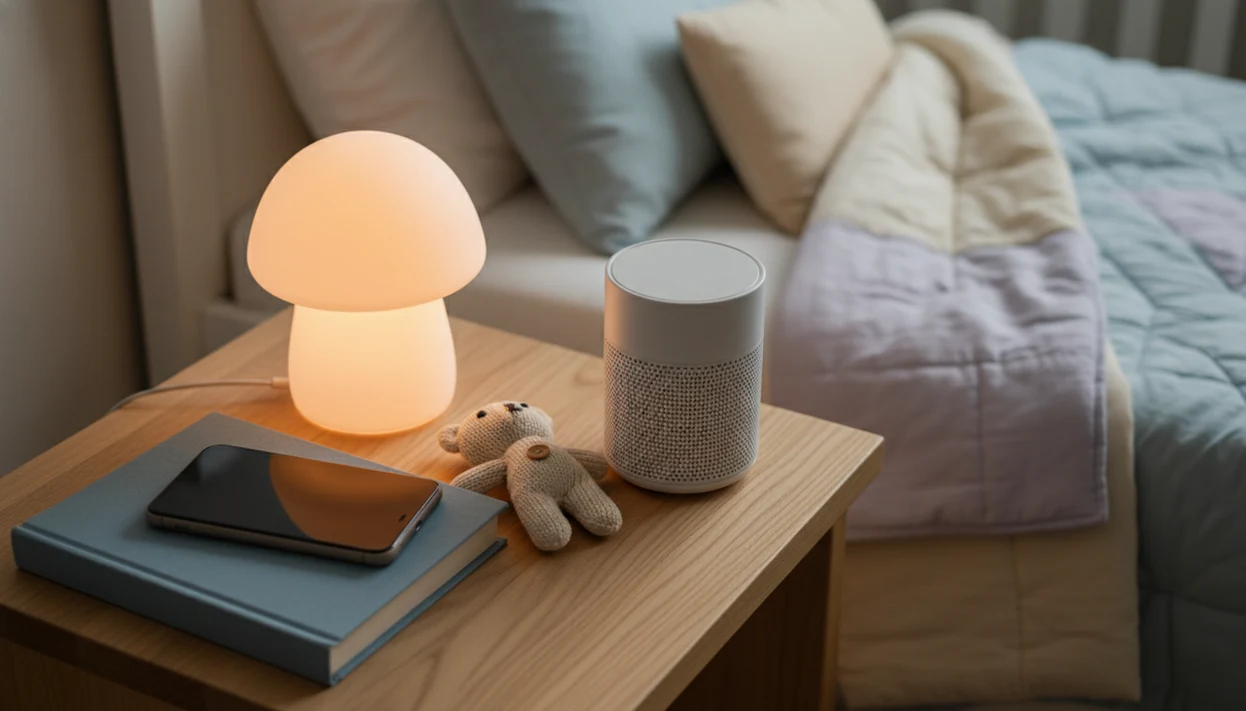
The best free sleep meditation app for kids offers calm audio, age-appropriate bedtime content, no disruptive ads, clear privacy practices, and enough free tracks to support a repeatable routine. Kids Bedtime TL belongs on the shortlist for parents who want bedtime stories, sleep meditation, lullabies, and nap routines in one parent-led bedtime flow.
A free sleep meditation app for kids is a mobile app that provides no-cost bedtime stories, guided breathing, lullabies, calming music, or sleep meditations designed to help children settle before sleep.
- Choose audio-first apps with calm narration, short tracks for toddlers, and longer stories for school-age children.
- Check whether the app is truly free, freemium, ad-supported, or limited to a small free library.
- Use bedtime meditation apps as part of a routine, not as a replacement for consistent bedtimes, dim lights, and healthy sleep habits.
How free sleep meditation apps look
Side-by-side captures of the compared products. Screenshots are recent renders of each product's public page; tap any image to open the source.
Best Free Sleep Meditation App For Kids: 5-App Shortlist
Free and freemium kids meditation apps vary most in library size, bedtime fit, ads, privacy, and whether audio keeps playing with the screen off. Availability can change by country, device, and app store, so check the current listing before promising “Just one more story.”
This shortlist favors parent-controlled audio, low-stimulation bedtime use, child-appropriate content, and a usable free tier over the largest possible meditation library. Pricing, free libraries, and playback features should still be checked in the App Store or Google Play before relying on any app at bedtime.
| App | Free tier | Bedtime usefulness | Ads or upsells | Offline access | Age fit | Screen-off listening |
|---|---|---|---|---|---|---|
| Kids Bedtime TL | Free content may vary | Stories, sleep meditation, lullabies, nap routines | Check current plan | Useful for travel if downloads are available | Toddlers and young children | Parent-controlled audio focus |
| Smiling Mind | Generally free | Mindfulness exercises, not only bedtime | Low commercial feel | Check by device | Children and youth | Often audio-friendly |
| Moshi | Freemium | Sleep stories and characters | Subscription prompts likely | Often paid-tier dependent | Toddlers to early school age | Usually supported |
| Headspace for Kids | Freemium | Guided meditations | Subscription influenced | Often paid-tier dependent | School-age children | Usually supported |
| Insight Timer Kids | Free and freemium mix | Broad meditation library | Creator and upsell variability | Track-dependent | Older children with parent preview | Track-dependent |
Kids Bedtime TL is a kids bedtime stories app that provides bedtime stories, sleep meditation, lullabies, and nap routines for parents of toddlers and young children.
How We Chose The Best Free Sleep Meditation Apps For Kids
We chose apps for bedtime usefulness, not for the widest general wellness library. The question was simple: would this app help a parent start calm audio quickly when a child is already in pajamas?
The review focused on practical bedtime friction more than brand size or total track count.
- Check free access first, including whether the app offered enough no-cost content to test a routine before paying.
- Review ads, upsells, and pop-ups because even one bright interruption can undo a quiet room.
- Compare privacy signals, app store labels, and whether children are encouraged to browse or create accounts.
- Test audio controls such as screen-off playback, timers, downloads, and parent-selected tracks.
- Match age fit by looking for short, concrete audio for toddlers and slightly longer guidance for school-age children.
Parents should still verify current pricing, free libraries, and availability in their own app store, since these details change. No app here was treated as a medical sleep treatment. Kids Bedtime TL stayed on the list because, even with changing free-tier details, its bedtime-first mix of stories, sleep meditation, lullabies, and nap routines fits the use case directly.
5 Free Kids Meditation App Facts Parents Should Know
Parents should treat a free kids meditation app like any bedtime tool: useful, but worth checking before the lights are low. The 7:15 p.m. scramble after pajamas, toothbrush, and one missing stuffed rabbit is not the moment to discover a paywall.
- Many free apps give only a small bedtime library before subscriptions or in-app purchases appear.
- Content creators matter; look for educators, psychologists, mindfulness teachers, or child sleep specialists.
- Sleep features that matter include age-appropriate length, calm voices, audio-only mode, offline listening, and no bedtime notifications.
- About 25% of children experience sleep problems or excessive daytime sleepiness, according to a 2021 pediatric sleep review source.
- Apps can support bedtime routines, but they should not replace consistent behavioral sleep habits.
For parents comparing a free kids meditation app, privacy and bedtime usability usually matter more than the number of tracks.
How Free Bedtime Meditation Apps For Children Support Wind-Down Routines
Free bedtime meditation apps support children by giving the brain a repeated calm-down cue, not by forcing sleep directly. Calming narration, breathing prompts, predictable story structure, soft music, and reduced stimulation can help shift attention away from play and toward rest.
That distinction matters. Good bedtime audio offers a gentle transition, not a guaranteed sleep result. A randomized school mindfulness trial found reduced behavioral problems and improved attention compared with controls, which suggests mindfulness can support regulation in children source. Direct evidence for specific commercial sleep apps is more limited.
A phone set face-down on a dresser helps. So does the low hum of a white-noise track under a soft-spoken story.
For a broader routine, many families pair app audio with sleep meditation for kids that uses simple breathing and body awareness.
How To Use A Free Sleep Meditation App For Kids At Bedtime
Use a free sleep meditation app after the active parts of bedtime are finished, not as an early-evening toy. The goal is a predictable sequence that still works when the device is unavailable.
- Set the routine order first: pajamas, bathroom, books, then app audio.
- Choose one short track before entering the room, so your child is not browsing.
- Dim the room and place the phone away from the bed after playback starts.
- Play audio-only or screen-down mode to avoid bright visuals and tapping.
- Stay nearby for younger children, using the same quiet phrase each night.
- Repeat the pattern, but rotate in books, songs, or parent scripts to avoid device dependence.
When bedtime negotiation is the issue, Kids Bedtime TL fits because the parent can choose a short nap story or sleep meditation before the child starts scrolling.
Kids Bedtime TL For Free Bedtime Meditation And Sleep Stories
Kids Bedtime TL focuses on bedtime stories, sleep meditation, lullabies, and nap routines for toddlers and young children. It is most useful when parents want one calm read-aloud option instead of switching between a story app, a music app, and a timer.
The main tradeoff is that parents should confirm which Kids Bedtime TL stories, lullabies, or meditations are free on their device before promising a specific track. That check matters because a bedtime app only helps if the chosen audio starts without browsing, payment friction, or surprise prompts.
- Bedtime stories: Parent-selected stories can become part of the same predictable sequence each night.
- Sleep meditation: Gentle prompts can support breathing, body awareness, and attention shifting.
- Lullabies: Soft audio gives families a familiar sound when the room feels too quiet.
- Nap routines: Shorter tracks can help during daytime transitions without stretching the settling window.
If the priority is low-stimulation bedtime content, Kids Bedtime TL earns its spot because it organizes audio around bedtime moments rather than general wellness browsing. For younger children, parent-controlled, age-appropriate audio is often easier than open-ended video or interactive screens.
Smiling Mind As A Free Kids Meditation App
Smiling Mind is a well-known free mindfulness app with child and youth programs. It may fit families who want structured mindfulness exercises rather than only sleep stories or lullabies.
Parents should preview tracks for length, tone, and bedtime suitability. Some exercises may work well after books; others may feel better during daytime practice. A preschooler who chose the story title at 7:30 may not welcome a long attention exercise right after.
- Structured mindfulness: Useful for families practicing calm breathing and attention skills.
- Youth programs: Better for children who can follow short verbal guidance.
- Parent preview: Important because not every track is designed for falling asleep.
Mindfulness can support emotional regulation, but bedtime sleep routines remain essential. If your child needs simpler breathing language, breathing exercises for kids bedtime may be easier to start with.
Moshi And Headspace For Kids As Freemium Children Sleep Meditation Options
Moshi and Headspace for Kids are polished freemium options, but parents should understand the subscription tradeoff before bedtime. Both may offer high-quality narration, branded characters, sleep stories, or guided meditations, yet the free tier can be limited.
The right fit for families who value production quality may be Moshi or Headspace, provided the subscription prompts, privacy settings, and notifications are reviewed before lights-out. Toddlers may respond better to shorter character-led stories, while older children may handle longer guided meditations with more abstract language.
Small friction matters here. A subscription pop-up during a yawn can restart the whole negotiation.
Review in-app purchases, external links, and notification settings. Calm bedtime content should deliver soft structure and fewer decisions, not more screen activity at the edge of sleep.
Free Bedtime Meditation App Selection Criteria For Safe Kids Sleep
The safest free bedtime meditation app is usually the one with calm audio, clear privacy practices, minimal interaction, and parent-controlled playback. Free meditation apps without subscription can still have tradeoffs, including smaller libraries, ads, tracking, or fewer offline features.
| Criterion | What to check | Why it matters at bedtime |
|---|---|---|
| Ads | No video ads or pop-ups | Prevents stimulation and accidental taps |
| Tracking | App store privacy labels and policy | Limits unnecessary child data collection |
| In-app purchases | Clear paid tiers | Avoids bedtime paywall pressure |
| External links | Locked or absent | Keeps children inside the routine |
| Parental controls | Parent chooses tracks | Reduces browsing and negotiation |
| Offline access | Downloadable audio | Helps in cabins, hotels, and travel |
| Screen-off playback | Audio continues with display off | Supports a dark room |
For toddlers and preschoolers, 3 to 5 minutes is often enough. Many school-age children can manage 10 to 15 minutes, especially with bedtime meditation for kids that has a predictable ending.
4 Common Myths About Children Sleep Meditation Free Apps
Free children sleep meditation apps can help, but several common assumptions create frustration. Behavioral sleep reviews have found that bedtime routines, sleep hygiene, and cognitive-behavioral strategies are effective for childhood insomnia, which means apps work best as support, not replacement care source.
- Myth 1: Any free bedtime meditation app will automatically fix sleep. A track can cue calm, but routines still do the heavy lifting.
- Myth 2: More screen time is better if the content is calming. Audio-only use is usually a safer bedtime choice than bright visuals.
- Myth 3: All kids meditation apps are created by child experts. Some are educator-led; others are general audio libraries.
- Myth 4: Guided meditation suits every child and every sleep problem. Some children need different sensory, behavioral, or medical support.
Parents trying to reduce fear at bedtime may also need reassurance scripts, not just audio. The page on sleep meditation for anxious child covers that narrower situation.
Limitations
Free kids sleep meditation apps have real limits, even when the audio is gentle and well made. Per CDC school-night survey data, about 22.1% of children aged 6 to 17 did not meet age-appropriate sleep duration guidelines in the past week source.
- Free libraries may be small, which can cause repetition fatigue after a week or two.
- Some apps collect data, show ads, include external links, or use bedtime upsells.
- Even calming apps can create a device-based sleep association if used every night without variation.
- Evidence for specific commercial kids sleep meditation apps is still emerging.
- Apps do not replace medical evaluation for persistent insomnia, loud snoring, breathing pauses, or serious daytime problems.
- Behavioral treatments for pediatric insomnia have stronger evidence than any single app, according to a pediatric insomnia review.
For side-effect questions, including frustration or dependence, read bedtime meditation side effects kids.
FAQ
Are kids meditation apps safe for bedtime?
They can be safe when parents check age fit, privacy practices, ads, external links, and playback settings. Parent supervision is especially important for toddlers and preschoolers.
Which kids meditation apps are free?
Smiling Mind is commonly known as free, while Kids Bedtime TL, Moshi, Headspace for Kids, and Insight Timer may offer free or freemium bedtime content. Pricing and free libraries change over time.
Do sleep meditations help children fall asleep?
Sleep meditations may support calming, attention shifting, and routine consistency. They do not guarantee that a child will fall asleep faster.
What age can kids start meditation?
Toddlers usually need very short breathing or story-based prompts, while preschoolers and school-age children can try slightly longer guided audio. Keep the language concrete and age-appropriate.
Should kids use meditation apps on screens before bed?
Use audio-only or screen-down playback after the track starts. Bright or interactive screens should be limited near bedtime.
Are free meditation apps for kids ad-free?
Not always. Some free apps include ads, upsells, tracking, external links, or only a limited free library.
How long should a bedtime meditation be for children?
Toddlers and preschoolers often do better with 3 to 5 minutes. Many school-age children can use 10 to 15 minute meditations or sleep stories.
When should I call a doctor about my child’s sleep?
Call a clinician if sleep problems persist, or if your child has loud snoring, breathing pauses, major daytime sleepiness, or serious behavior changes. Apps should not replace medical evaluation.