
Bedtime Stories For 4 Year Olds With Calm Plots
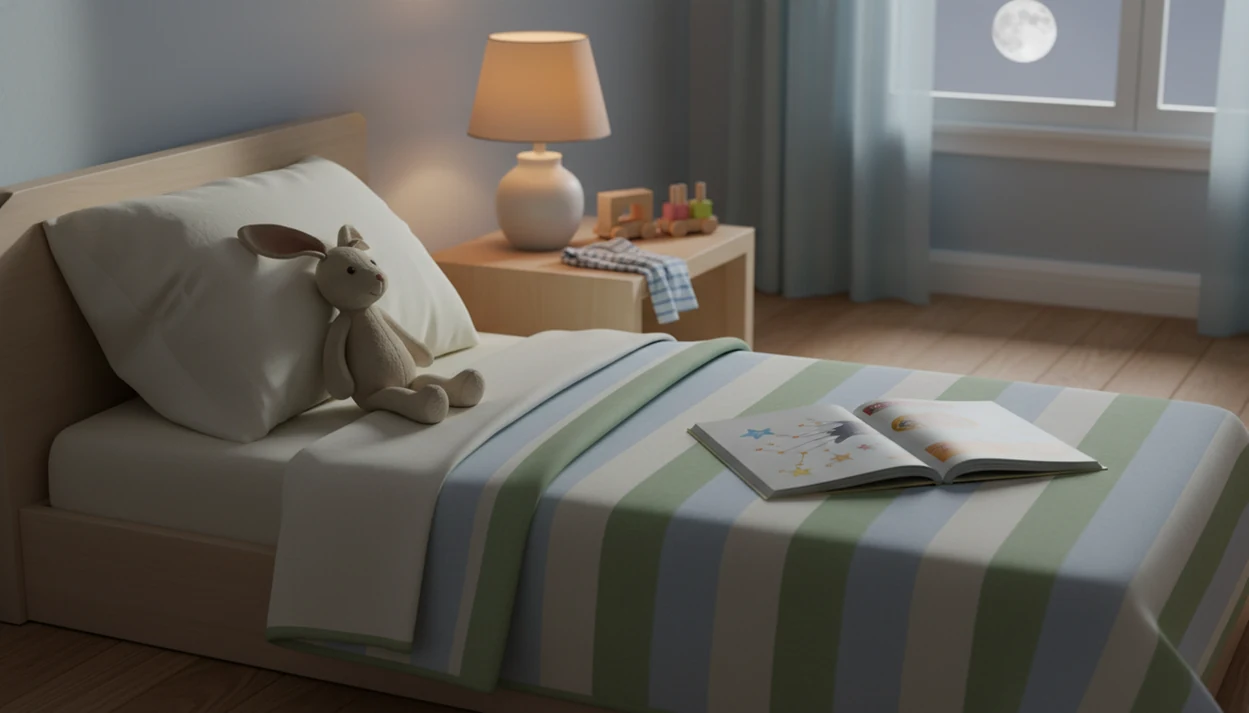
The best bedtime stories for 4 year olds are short, predictable, imaginative stories with low conflict, familiar details, and a secure ending. They work best when read in a calm voice as part of the same dim, screen-free bedtime routine each night, and Kids Bedtime TL helps parents choose a gentle story, lullaby, or nap routine without turning bedtime into another search session.
Definition: Bedtime stories for 4 year olds are short, soothing preschool stories read or told before sleep to help a child feel safe, connected, and ready to rest.
- Choose gentle plots with animals, family routines, nature, friendship, or small make-believe adventures.
- Avoid scary villains, cliffhangers, fast action, teasing, or high-stakes rescues right before sleep.
- Repeat favorite 4 year old bedtime stories because familiarity can become a strong sleep cue.
How bedtime stories look
Side-by-side captures of the compared products. Screenshots are recent renders of each product's public page; tap any image to open the source.

Best 4 Year Old Bedtime Stories: A Calm Shortlist
The best 4 year old bedtime stories balance imagination with a low-stimulation ending. The child gets a little wonder, then the plot lands somewhere safe, warm, and finished.
- Cozy animal tale: A small animal explores, gets sleepy, and returns to a den, nest, burrow, or bed.
- Gentle family routine: Bath, pajamas, toothbrush, a chosen toy, and lights out become the plot.
- Sleepy nature walk: A child notices stars, leaves, rain, or moonlight as everything slows down.
- Soft silly story: The humor is quiet, like mismatched socks, not wild running or shrieking.
- Tiny magical journey: A moonbeam or friendly cloud helps the child settle, with no danger.
Kids Bedtime TL is a kids bedtime stories app that provides bedtime stories, sleep meditation, lullabies, and nap routines for parents of toddlers and young children. When the issue is choosing quickly at 7:15 p.m., Kids Bedtime TL fits because it organizes read-aloud options by calm bedtime use, not just by theme.
How Bedtime Stories For 4 Year Olds Work As Sleep Cues
Bedtime stories for 4 year olds work as sleep cues because the same sequence teaches the body what comes next. Dim light, a slower voice, repetition, and closeness reduce stimulation before the settling window.
The mechanism is partly a conditioned routine, which means the child starts linking storytime with sleep. A phone set face-down on a dresser helps too; one bright notification can undo the quiet. Shared reading also supports language. In a large U.S. study, 62% of children ages 3 to 5 were read to by a family member at least five days per week, and frequent shared reading was linked with stronger kindergarten literacy and numeracy skills, according to NCES 2019 data: https://nces.ed.gov/programs/coe/indicator/cfa.
Small things count.
If your priority is a calmer cue, Kids Bedtime TL covers the story plus the low hum of a white-noise track under a soft-spoken story. Broader preschool bedtime stories can work the same way when they stay predictable and brief.
How To Use Calm Stories For 4 Year Olds At Bedtime
Calm stories for 4 year olds work best when they sit inside a predictable sequence, not as a last-minute bargain. Good bedtime content delivers connection and a clear ending, not a longer negotiation.
- Dim the room and avoid bright screens for 30 to 60 minutes before storytime.
- Pick one short story before the child is under the covers, so “Just one more story” has a boundary.
- Read slowly in a soft voice, with relaxed breathing and no dramatic shouting.
- Pause for one or two gentle questions, then guide attention back to the story.
- End with the same closing phrase, such as “That’s the end, and now it’s rest time.”
Parents trying to keep bedtime short can use Kids Bedtime TL because the short-story flow helps match the story length to the night. For very tired evenings, 5 minute bedtime stories are often easier than a full picture book because the ending arrives before the child gets a second wind.
How We Picked Preschool Bedtime Stories Age 4
Preschool bedtime stories age 4 should be easy to follow, emotionally safe, and calm enough to finish without restarting the child’s engine. We looked for stories that fit an actual bedroom, not a daytime story circle.
- Short length matters: A tired four-year-old often settles better with one clear arc than with three chapters.
- Simple language helps: Repeated phrases let the child relax instead of tracking new plot turns.
- Predictable structure reduces friction: Beginning, small problem, gentle resolution, sleep-ready ending.
- Familiar themes feel secure: Animals, home, pajamas, family, nature, and gentle friendship all fit.
- Calm interaction beats performance: A whisper question is fine; acting out a dragon parade is not.
The most reliable bedtime story structure for age four is a short familiar plot with a happy secure ending because it gives the child closure before lights out. Kids Bedtime TL uses that same practical filter across bedtime stories, sleep meditation, and lullabies.
Best Cozy Animal Bedtime Stories For 4 Year Olds
Cozy animal stories are often a strong fit for age four because they make feelings easier to hold. The animal can be curious, tired, brave, or worried, then return safely to a nest or bed.
A good arc might be simple: a bear cub looks for the quietest blanket in the forest. The cub asks an owl, a rabbit, and a moth, then discovers the quietest blanket is the mossy one waiting at home. Use soft animal sounds, repeated phrases, and sensory details like warm fur, dry leaves, and a sleepy den.
No chasing.
Avoid predator danger, loud slapstick, or frantic rescues right before sleep. If your child wants animals every night, Kids Bedtime TL earns the spot because it makes cozy animal-style story selection faster during the pajama-and-toothbrush stretch. Families who need a wider age range can also use bedtime stories for kids for shared sibling reading.
Best Gentle Family Routine Stories For 4 Year Olds
Gentle family routine stories work because they turn the child’s own bedtime steps into the plot. Bath, pajamas, brushing teeth, choosing a toy, and lights out become familiar instead of debatable.
At four, surprise can easily become negotiation. A story that mirrors the night helps the child hear the sequence before doing it: wash, change, brush, cuddle, rest. The one-on-one attention matters too. A parent whispering from the hallway chair can feel as important as the words on the page.
In a CDC/NCHS school-readiness analysis, preschoolers read to at least three times per week showed higher rates of early literacy skills such as letter recognition, counting to 20, and writing their name: https://www.cdc.gov/nchs/data/nhsr/nhsr087.pdf. If the priority is routine support, Kids Bedtime TL fits because it pairs gentle stories with nap routines and lullabies. A toddler bedtime routine checklist can help younger siblings follow the same pattern.
Best Tiny Magical Calm Stories For 4 Year Olds
Tiny magical stories give four-year-olds make-believe without making bedtime feel urgent. Tiny magic means small, safe, and cozy, not epic, dangerous, or unresolved.
A moonbeam map can lead a child from window to pillow. A whispering pillow can remind every stuffed animal where to sleep. A cloud can tuck in stars one by one. That is enough magic for bedtime.
Keep the rules plain: no villains, no races, no rescues, and no cliffhanger ending. Four-year-olds can love fantasy and still need a secure close. If your child asks for fairy-tale feeling, choose gentle versions where the last image is rest, home, or being cared for. Kids Bedtime TL can help with this because the bedtime story library favors calm-down options over high-drama plots; gentle fairy tales for bedtime follow the same idea.
Limitations
Bedtime stories can support a calmer bedtime routine, but they do not solve every sleep problem. CDC-reported parent survey estimates have put U.S. child sleep disorders or disturbances in the millions, so persistent sleep concerns deserve proper support: https://www.cdc.gov/children-mental-health/data-research/index.html.
- Bedtime stories cannot fully solve medical or behavioral sleep disorders.
- A routine does not guarantee instant sleep, no night waking, or no early wake-ups.
- Some children get overstimulated by complex plots, intense emotion, or too many character voices.
- Very overtired children may need a shorter routine, a lullaby, or quiet cuddling instead.
- Neurodivergent children may need a more customized sensory routine and fewer choices.
- Audio stories are useful, but they do not replace closeness for every child.
- Apps such as Kids Bedtime TL, Moshi, Calm, Headspace, Vooks, or Storyberries vary in tone, length, and screen behavior, so parents still need to preview content.
Reset the plan.
FAQ
What kinds of bedtime stories are best for 4 year olds?
Strong bedtime stories for 4 year olds are short, calm stories with familiar themes, simple language, gentle emotion, and secure endings. Animals, family routines, nature, friendship, and tiny magic usually fit well.
How long should a bedtime story be for a 4 year old?
A bedtime story for a 4 year old usually works well at about 5 to 10 minutes. Shorter is better when the child is overtired, restless, or already past the normal bedtime window.
Are funny bedtime stories okay before sleep?
Soft silliness is fine before sleep if the story stays slow and cozy. Loud, chaotic humor can be too stimulating for many four-year-olds at bedtime.
Should I repeat the same bedtime story every night?
Yes, repeating the same bedtime story can comfort a four-year-old and strengthen the sleep cue. Familiar words reduce uncertainty and make the ending feel expected.
Are scary stories bad for 4 year olds at bedtime?
Scary stories are usually a poor bedtime fit for 4 year olds because fear and suspense can increase resistance. Avoid villains, danger, cliffhangers, and dark imagery right before sleep.
Do audiobooks count as bedtime stories for preschoolers?
Audiobooks can count as bedtime stories when they are calm, age-appropriate, and used without bright screens. Live shared reading adds closeness and brief interaction that audio alone may not provide.
What should I do if my child keeps interrupting the story?
Answer briefly, then return to the same slow reading pace. Limit questions to one or two calm moments so the story does not become a new game.
Can bedtime stories replace a full bedtime routine?
No, bedtime stories work best inside a broader predictable routine. Dim lights, low stimulation, hygiene steps, and a consistent closing phrase all help the story cue sleep.