
Bedtime Routine For A Hotel Room With A Toddler
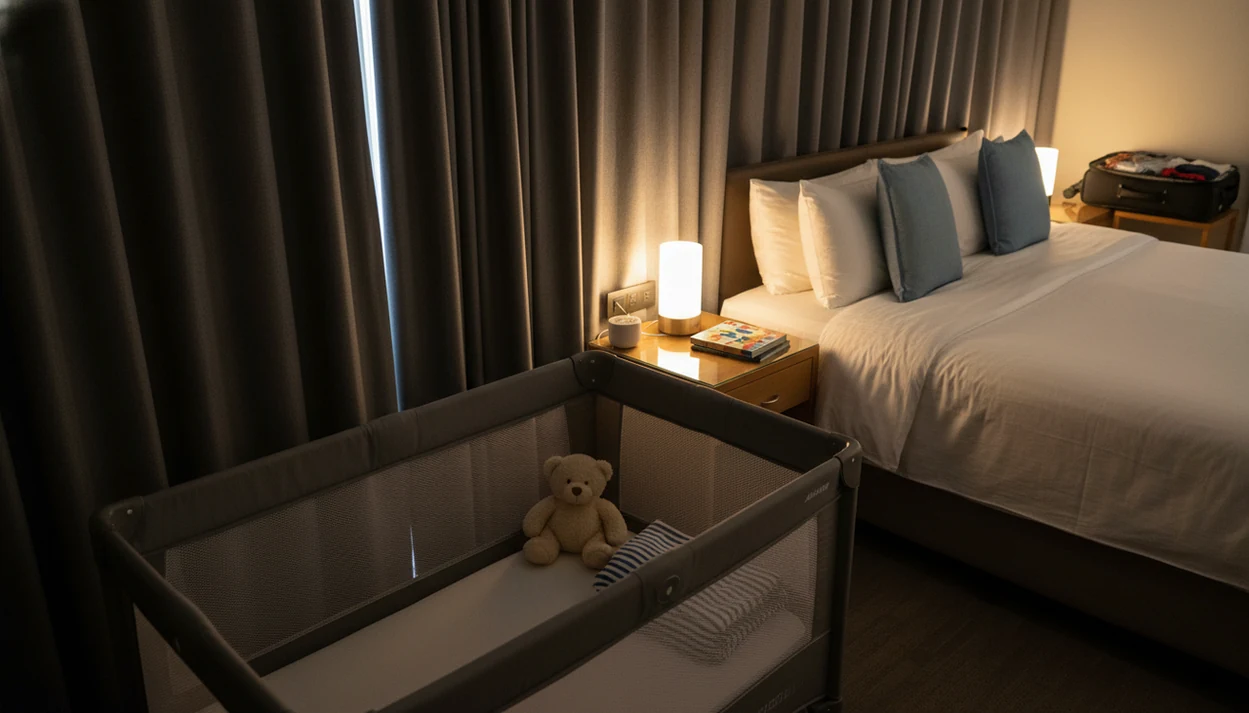
The best bedtime routine for hotel room with toddler travel is to keep the same order as home, make the room dark and boring, and use one familiar audio sequence as the portable goodnight cue. Plan on extra time the first night, but keep the steps predictable: explore the room, dim lights, pajamas, story, lullaby or sleep meditation, then lights out.
A hotel bedtime routine for a toddler is a repeatable travel sleep sequence that uses familiar timing, objects, light levels, and calming audio to signal sleep in an unfamiliar room.
- Keep the routine order the same even if the clock time shifts.
- Use familiar stories, lullabies, a comfort item, and dim light as portable sleep cues.
- Set up the hotel room before bedtime so the toddler is not exploring when they should be winding down.
Hotel Bedtime Toddler Plan At A Glance
- A hotel bedtime toddler plan works better when the sequence stays familiar; the American Academy of Pediatrics recommends consistent bedtime routines such as “Brush, Book, Bed” for young children (https://www.healthychildren.org/English/healthy-living/sleep/Pages/Brush-Book-Bed.aspx).
- Set up the room first: sleep space, curtains, white noise or lullaby, and anything breakable moved away.
- Let your toddler inspect the room before bedtime, not after pajamas, so the bathroom fan and closet feel less mysterious.
- Dim the lights, start the familiar story or audio, then move toward lights out in the same order as home.
- Expect the first hotel night to be uneven; extra wakeups are normal, and sequence matters more than exact clock time.
The hallway light cracked open may be enough. Keep the room boring after the routine starts.
How A Hotel Bedtime Routine With A Toddler Works
A hotel bedtime routine with a toddler works by turning a strange room into a familiar sequence. The goal is not to copy home perfectly; it is to repeat the same cue order so your child’s body recognizes bedtime.
Hotel rooms disrupt sleep cues because everything is new: the lamp, hallway sounds, curtains, bathroom fan, and the exciting fact that everyone is sleeping in one room. That novelty can stretch sleep-onset latency, which simply means the time it takes to fall asleep, and it can lead to more night wakings as your toddler checks where they are. A steady routine lowers the decision load.
- Set the room first, with the sleep space ready and interesting objects out of sight.
- Dim the lights so the room starts feeling less like a play space.
- Change into pajamas in the same part of the routine you use at home.
- Read one predictable story or start the saved audio cue.
- Play the familiar lullaby, white noise, or sleep meditation.
- Turn lights out and keep adult behavior quiet and boring.
During travel, the sequence matters more than the exact clock time.
Toddler Sleep Cues In A Hotel Room
A toddler sleep cue is a repeated signal, such as dim light, pajamas, a story, or a lullaby, that helps a young child understand what happens next.
How a travel bedtime routine works is simple: toddlers build habit loops from repeated cues. In plain language, their body learns the order. Hotel novelty can interrupt that pattern because the room invites checking drawers, climbing onto beds, and asking about every small sound.
Familiar audio can act like a portable sleep script. The same story, short sleep meditation, and lullaby tell the child, “this is still bedtime,” even when the hotel lamp is new. Structured bedtime routine research has shown improved sleep latency and fewer night wakings within two weeks, and AAP guidance also connects routines with better sleep. Good kids bedtime stories, sleep meditation, lullabies, and nap routines for toddlers and young children deliver repeatable calm-down cues, not guaranteed sleep on command.
Hotel Room Sleep Setup Before Toddler Bedtime
Prepare the hotel room before your toddler enters the settling window, because setup becomes harder once pajamas and curiosity collide. The 7:15 p.m. scramble after toothbrush, pajamas, and one missing stuffed rabbit is not the moment to test the blackout curtains.
- Sleep space: Use a safe crib, travel cot, toddler bed, or hotel bed arrangement that fits your child’s age and movement. Inspect the setup before use.
- Light control: Close blackout curtains early. Use towel clips if gaps glow, and add a nightlight only if your toddler uses one at home.
- Sound layer: Keep white noise or lullabies moderate and steady, not loud enough to cover your voice.
- Visual reset: Move snacks, remotes, toiletries, suitcases, and shiny hotel objects out of sight.
- Basic toddler-proofing: Check cords, balcony doors, low drawers, and reachable trash cans without turning bedtime into a safety lecture.
For travel audio planning, many families also prepare offline bedtime stories for kids before leaving home.
5 Steps For A Hotel Bedtime Routine With A Toddler
How to use a hotel bedtime routine with a toddler: keep the home order, shrink the choices, and make the room less interesting every few minutes. For most families, the most common medically supported way to support toddler sleep is a consistent bedtime routine combined with an age-appropriate sleep window.
- Show the room in daylight if possible, including the bathroom, closet, crib, and window, so bedtime is not the first full tour.
- Set the sleep zone before pajamas, with the comfort item in place and the phone face-down on a dresser.
- Dim lights 30 to 45 minutes before sleep, then use a lower voice and fewer questions.
- Play the same story, sleep meditation, or lullaby sequence you use at home, without adding bright video.
- Leave or sit quietly in the same way your family does at home, with minimal talking after lights out.
“Just one more story” often shows up here. Decide the final story before you start.
First-Night Hotel Bedtime Timeline For A Toddler
What should the first-night hotel bedtime timeline be for a toddler? Start about 60 minutes before sleep and expect the whole process to run longer than it does at home.
| Time before sleep | What to do |
|---|---|
| 60 minutes | Do calm room orientation and a bath if possible. Let your toddler see where everything is. |
| 45 minutes | Start pajamas, use a low voice, dim the lights, and stop room exploring. |
| 30 minutes | Begin the same saved story, meditation, or lullaby cue. Keep choices narrow. |
| 15 minutes | Play a lullaby or sleep meditation, offer the comfort item, and handle final drink or potty. |
| Lights out | Make adult behavior boring. Use minimal words and avoid restarting play. |
A downloaded bedtime-audio sequence can help when you want one familiar order during travel. If your trip started with a long flight, airplane bedtime stories for kids can help preserve the same cue before you reach the hotel.
Portable Goodnight Cues For Toddler Sleep Hotel Success
Portable goodnight cues help toddler sleep hotel routines feel like bedtime instead of a new playroom. The cue should be small, familiar, and easy to repeat when everyone is tired.
- Comfort object: Pack the favorite stuffed animal, sleep sack, blanket, pajamas, or small book. The pacifier tucked beside a plush rabbit can matter more than the room decor.
- Same audio order: Use story, sleep meditation, then lullaby if that is the home pattern.
- Travel story library: Use a saved kids bedtime story library with bedtime stories, sleep meditations, lullabies, and nap routines for toddlers and young children.
- Screen boundary: Avoid overstimulating screens before bed, especially bright video close to the face.
- Backup access: Download audio before travel if hotel Wi-Fi is unreliable.
Families planning several nights away may prefer kids bedtime stories for travel over choosing new content at bedtime.
4 Common Myths About Hotel Bedtime With A Toddler
Hotel bedtime myths often push parents to drop the routine too early. A flexible version of home is usually better than inventing a new system at 9 p.m.
| Myth | More balanced view |
|---|---|
| Vacation exhaustion guarantees sleep. | Overtired toddlers may fight sleep harder, wake more, or get louder before settling. |
| Hotel rooms are too different for routines to work. | The room is different, but the sequence can still signal bedtime. |
| White noise or lullaby audio always keeps toddlers awake. | Moderate, continuous sound can mask hallway noise when it matches the home routine. |
| Temporary co-sleeping never affects future sleep. | Some families choose it safely, but sudden changes can create new sleep associations. |
For a toddler away from home, familiar order usually works better than a brand-new bedtime plan because the child has fewer decisions to process.
Hotel Bedtime Verification Signs Before Parents Relax
Before parents relax, check whether the routine is actually moving the toddler toward sleep. Night wakings are common even at home; the National Sleep Foundation’s Sleep in America Poll reported frequent nighttime awakenings in 34.9% of children aged 1 to 2 (https://www.sleepfoundation.org/wp-content/uploads/2018/10/2004SleepPollFinalReport.pdf).
- Settling often looks like a slower body, softer voice, fewer questions, and less climbing.
- Accepting the comfort item is a useful sign, especially if the toddler stops throwing it back out.
- Staying in bed or the travel cot, even while awake, means the boundary is starting to hold.
- Adjust if the room is too bright, audio is too loud, bedtime is too late, or dinner was too light.
- The CDC recommends 11 to 14 hours of sleep per 24 hours for toddlers aged 1 to 2, including naps (https://www.cdc.gov/sleep/aboutsleep/howmuch_sleep.html).
The low hum of a white-noise track under a soft-spoken story can be enough, but it should not blast across the room.
Limitations
A hotel bedtime routine can support sleep, but it cannot remove every travel disruption. Keep expectations practical, especially on the first one or two nights.
- Some toddlers still wake more during the first hotel nights because the room is unfamiliar.
- Direct hotel-specific toddler sleep research is limited; most advice comes from general pediatric sleep education and parent practice.
- Jet lag, illness, missed naps, late meals, and major schedule shifts can override a tidy routine.
- Rigidly copying home clock time can backfire. Sequence matters more than perfection.
- White noise, blackout hacks, and audio are supports, not guarantees.
- Sudden sleep arrangement changes, including vacation co-sleeping, can create new associations.
- Screens may make some toddlers harder to settle, even when the content seems calm.
- If sleep problems are severe, unsafe, or paired with breathing concerns, ask your child’s clinician.
If you rely on downloaded audio, test it before travel. The hotel Wi-Fi login page is not bedtime-friendly.
FAQ
How do toddlers sleep in hotels?
Toddlers usually sleep better in hotels when the sleep space, comfort item, light level, and bedtime sequence feel predictable. The first night may still include extra settling time or wakeups.
Should toddlers use hotel cribs?
A hotel crib can work if it is age-appropriate, stable, clean, and safely assembled. Parents should inspect it before use and choose another safe sleep option if anything seems loose or poorly fitted.
What time should hotel bedtime be?
Use the normal home bedtime window when possible. If travel pushes bedtime later, keep the same sequence rather than rushing straight to lights out.
Does white noise help toddlers?
Moderate, continuous white noise can help mask hallway sounds and support a familiar sleep cue. Keep the volume reasonable and place the device away from the child’s head.
Can toddlers nap in hotels?
Toddlers can nap in hotels, especially when the room is dark, the sound cue is familiar, and timing stays close to home. Short or shifted naps are common during travel.
How dark should the room be?
Darker is usually better for toddler sleep in a hotel room. Use a small nightlight only if your toddler already uses one at home.
What if my toddler cries?
Check basic needs calmly, such as comfort, temperature, hunger, potty, or fear. Then return to the bedtime plan with low light, few words, and no play.
Should we co-sleep on vacation?
Co-sleeping is a family decision that should account for safety, space, and your child’s usual sleep habits. It may help some families temporarily, but it can also create a new expectation after travel.