
Restart After a Bedtime Routine Slip Up Gently
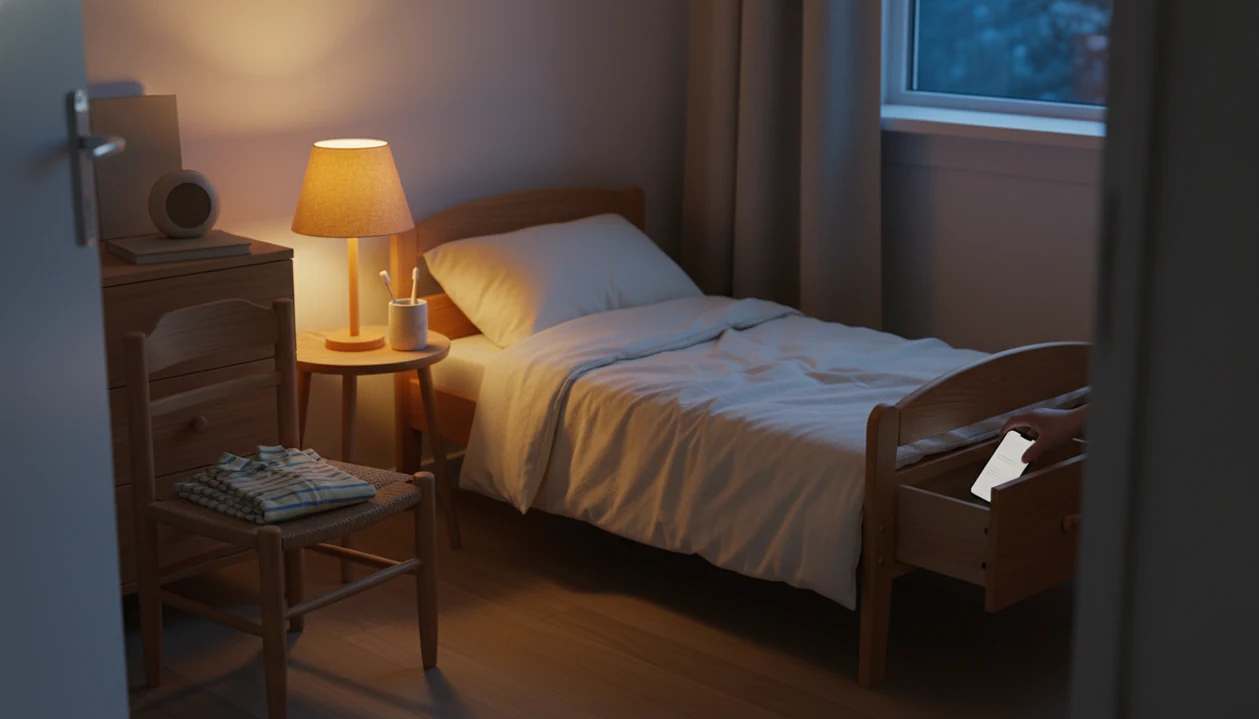
To restart after bedtime routine slip up nights, use a calm reset: pause the power struggle, return to a predictable bedtime sequence, and repeat the same response to stalling every night. Keep the first reset simple with stories, dim lights, a short goodnight phrase, and a consistent wake time the next morning.
Definition: A bedtime routine reset is a gentle return to a predictable evening sequence after bedtimes, rules, or sleep cues have become inconsistent.
TL;DR
- Reset the next bedtime with the same order every night: bathroom, pajamas, story, calming audio, lights, goodnight.
- If bedtime is spiraling, take a quiet 15–30 minute break outside the bedroom, then restart the routine from the beginning.
- Consistency matters more than strictness: use brief, boring check-ins and repeat the same boundary without negotiating.
Bedtime routine reset meaning for parents after a slip up
A bedtime routine reset is not a punishment; it is a return to the sleep cues your child already understands. It can mean one rough-night restart, or a multi-night plan after travel, illness, holidays, late screens, extra snacks, “Just one more story,” or a parent lying down longer than usual.
The goal is not sleep boot camp. It is rebuilding a predictable sequence so the child’s body hears the same message each night: bedtime is coming, the day is done, and the parent will respond calmly. A reset can be as small as putting the phone face-down on the dresser, dimming the lamp, and starting the short story again.
Small repairs count.
Tools like Kids Bedtime TL can help by giving parents age-appropriate bedtime stories, sleep meditations, lullabies, and nap routines to plug into the same nightly order without inventing something new at 7:15 p.m.
Child sleep problem statistics behind bedtime routine slip ups
Bedtime problems are common enough that a routine slip up should not be treated as a parenting failure. Per the CDC, about 35% of children ages 4 months to 17 years in a U.S. survey had trouble falling asleep or staying asleep at least a few times per week (https://www.cdc.gov/nchs/products/databriefs/db462.htm).
- The American Academy of Pediatrics notes that sleep problems affect roughly 25% to 50% of children and 40% of adolescents (https://publications.aap.org/pediatrics/article/138/5/e20163038/60301/Clinical-Practice-Guideline-for-the-Diagnosis).
- In a large international caregiver survey, 20–30% of parents reported significant bedtime problems and night wakings in young children.
- Children often test a new pattern when a temporary exception becomes rewarding, predictable, or emotionally interesting.
- Inconsistent responses can feed stalling, calling out, leaving the bedroom, or needing extra parent help to settle.
- A bedtime routine reset is a normal repair after normal family disruption, not proof that the routine is ruined.
The stuffed rabbit gets lost. A cousin sleeps over. A show runs late. Families recover by repeating the next calm step, not by replaying the mistake.
How a Bedtime Routine Reset Works
A bedtime routine reset works by making bedtime predictable again. Instead of treating each protest as a new problem to solve, the parent rebuilds the same cue-response loop: the room gets dim, the voice gets quiet, the steps happen in the same order, and sleep comes next.
In parent language, a habit loop means “when this happens, we do that.” Bathroom, pajamas, story, lullaby, lights, goodnight becomes a familiar track the child can recognize, even if they still object. Dim light supports the circadian rhythm, the body’s internal clock, without making normal bedtime resistance sound like a medical problem. A quiet voice lowers the emotional temperature. A repeated order removes the suspense. Pediatric sleep research has found that consistent bedtime routines are associated with better sleep outcomes for young children and less bedtime difficulty for families.
The parent response is part of the reset too. If every call-out gets a short, calm check-in and the same goodnight phrase, there is less payoff for renewed negotiation. The boundary becomes boring, which is often exactly what bedtime needs.
Child brain cues during a bedtime routine reset
> Consistent bedtime order works because repeated cues help the nervous system predict what happens next: dim light, quiet voice, story, lullaby, goodnight.
How a bedtime routine reset works: children learn through habit loops, which are repeated cue-response patterns. In plain terms, the same evening order makes bedtime feel less like a fresh negotiation and more like a familiar track. A stable bedtime and wake time also support the circadian rhythm, the body’s internal clock.
The most common medically supported way to rebuild bedtime structure is a consistent sleep schedule combined with a calm, repeatable routine. Research on standardized bedtime routines has found fewer nighttime awakenings and better parent sleep outcomes, and a school-age sleep-extension trial found children gained about 27 minutes of weeknight sleep (https://pubmed.ncbi.nlm.nih.gov/25704740/; https://pubmed.ncbi.nlm.nih.gov/25311606/).
Repeated parental responses matter too. If every call-out gets the same brief check-in, the child has less reason to keep testing. The hallway light left cracked open can stay the same; the debate does not need to.
Tonight’s bedtime routine reset checklist
Use tonight’s checklist before the bedroom door opens, not after the second protest. A bedtime routine reset works better when the parent has already chosen the order, the words, and the boundary.
- Time anchor: Choose the bedtime window and wake time before dinner. If you need a broader evening plan, a bedtime routine timeline can keep the whole night from drifting.
- Short sequence: Pick an order you can repeat: bathroom, pajamas, teeth, story, calming audio, lights, goodnight.
- Bedroom setup: Keep the room cool, use dim warm or red-toned light, remove screens, and place the comfort item where your child can reach it.
- Parent script: Decide the phrase now: “One more hug, then I’ll check on you soon.”
- Expectation check: Protests may happen for a few nights, especially if the old pattern was rewarding.
The bed rail against a striped pillow may be ready before the child is. That is normal.
How to Use a Bedtime Routine Reset
Use a bedtime routine reset by choosing one small plan and repeating it before you judge it. The reset is not a new personality for the whole family; it is one steady bedtime track after a few nights of drift.
- Choose one bedtime window and one wake time you can protect for the week. Keep them realistic enough that you can follow them after a long day, not just on a perfect night.
- Remove the newest disruptor first before changing the whole evening. If the trouble started with late screens, extra snacks, longer parent stays, or one more show, take that piece out first.
- Repeat the same short sequence for seven nights so your child can recognize the pattern: bathroom, pajamas, teeth, story or lullaby, lights, goodnight.
- Use one calm phrase for call-outs and exits, then return to boring consistency. Try something simple like, “It’s bedtime. I love you. I’ll check on you soon.”
- Review progress in the morning without shame. Notice what was easier, name one thing to keep, and start again that night.
7-day bedtime routine reset steps for parents
How to use a bedtime routine reset for the next week: keep the plan boring, repeatable, and small enough to do on a tired night. For toddlers, a toddler bedtime routine checklist can help parents avoid adding too many steps.
- Set one wake time and one bedtime window for the next 7 days, even after a rough night when possible.
- Remove the newest sleep disruptor first, such as screens, extra snacks, or long negotiations.
- Restart the same calming order: bathroom, pajamas, teeth, story, lullaby or sleep meditation, goodnight.
- Repeat a brief, boring response to every call-out or bedroom exit: return, reassure, leave.
- Review the next morning without shame and repeat the same plan the next night.
For many families, a predictable story or audio cue is easier than a new speech every night because it reduces parent improvisation. Kids bedtime stories, sleep meditation, lullabies, and nap routines for toddlers and young children deliver familiar calm-down cues, not a guaranteed fix for every sleep problem.
Kids Bedtime TL can supply consistent story, lullaby, and sleep meditation cues while the phone stays face-down, so the screen does not brighten the room.
Use Kids Bedtime TL as the repeatable audio or story cue inside the routine, not as a bargaining chip after protests begin. The value is consistency: the same calm story, lullaby, or sleep meditation can mark the transition from parent-led activity to lights-out.
15-minute bedtime reset for a spiraling night
When bedtime is already off the rails, reset the moment instead of escalating. A 15–30 minute pause can help everyone step out of the bedroom battle and return to the routine with less heat.
Leave the sleep space and do low-key, non-screen, non-sleep play. Think blocks on the rug, quiet sorting, or looking at a paper book under a dim lamp. Keep voices calm. Skip snacks, shows, chase games, and anything that turns the pause into a reward.
Then go back and redo the usual steps from the beginning, but shorter: bathroom check, pajamas stay on, one brief story, lullaby, goodnight. The timer set before the lullaby starts helps keep “restart” from becoming “second bedtime.”
Use this occasionally for off nights. If it happens nightly, it may teach your child that spiraling earns a delay.
5 bedtime routine reset mistakes after rule drift
A routine slip up often stretches because the repair becomes too complicated. The reset usually works better when parents remove friction, not when they add more rules.
- Changing the rule after crying: If the answer changes after repeated questions, the questions become part of the routine.
- Making the reset too big: A strict, long overhaul is harder to repeat than a short predictable sequence.
- Using screens to calm down: Screens can delay the body’s wind-down cues, especially when the reset depends on dim light and quiet.
- Adding new sleep crutches: Lying down longer, extra snacks, or new rewards can replace the old problem with a new one.
- Ignoring the full day: Naps, wake time, outdoor play, and overtiredness all shape bedtime behavior.
Brief protest does not automatically mean the routine is wrong. For preschoolers, a steady preschool bedtime routine can make the reset feel less abrupt.
Seven-night bedtime routine reset progress signs
Progress can look uneven across seven nights, but the trend should move toward fewer negotiations and faster settling. Track the same signals each night so you are not judging the whole plan by one hard bedtime.
| What to track | Progress sign | When to adjust |
|---|---|---|
| Bedtime start | Starts within the chosen window | Move the start earlier only after several calmer nights |
| Lights-out time | Less drifting after story or audio | Shorten the routine if it keeps expanding |
| Bedroom exits | Fewer exits, or faster returns | Use the same quiet return every time |
| Call-outs | Questions become less intense | Repeat one phrase instead of answering each new topic |
| Night wakings | Settling needs less parent help | Check naps, illness, and room comfort |
| Morning mood | Child wakes less irritable | Keep wake time stable when possible |
If your child is genuinely not sleepy, bedtime may need to shift slightly later at first, then move earlier gradually. For some children, a simple sleep meditation for kids works as a calm-down cue when stories keep the mind too busy.
Limitations
A bedtime routine reset is useful, but it is not a medical evaluation. Clinicians typically recommend seeking guidance when sleep disruption is severe, persistent, or paired with symptoms that suggest something beyond routine drift.
- A reset may not fix sleep apnea symptoms, restless legs, chronic pain, reflux, allergies, or medication-related sleep disruption.
- Significant anxiety, trauma, neurodevelopmental differences, or major family stress may require a slower plan and professional support.
- Results are not instant. Many families need days to weeks of calm consistency before bedtime feels easier.
- Melatonin and supplements should not be treated as the first reset step; discuss them with a clinician.
- Timed checks, chair methods, or parent-stays-nearby plans may need adaptation for your child’s temperament and family values.
- If night wakings include snoring, gasping, breathing pauses, pain, panic, or major daytime impairment, seek medical guidance.
Not every night is data. Some nights are just illness, teeth, storms, or a child who misses a parent.
FAQ
How do I reset bedtime after a few inconsistent nights?
Choose one bedtime window, restart the same short order every night, and use the same calm response to stalling. Keep the sequence simple: bathroom, pajamas, teeth, story, calming audio, lights, goodnight.
How long does a bedtime reset usually take?
Many families see some improvement after several consistent nights, but a full reset can take days to weeks. Progress usually depends on the child’s age, sleep debt, anxiety level, and how consistent the response is.
Should I restart bedtime tonight if the routine is already going badly?
A short on-the-spot reset can help if everyone is escalating and bedtime has turned into a power struggle. Take a quiet 15–30 minute break outside the bedroom, then redo a shortened routine.
What should I do if my child keeps leaving the bedroom?
Return your child to bed calmly with the same short phrase each time. Avoid bargaining, new rewards, long explanations, or changing the rule after repeated exits.
Do bedtime stories help children fall asleep?
Bedtime stories can help when they are used as a predictable calming cue in the same nightly sequence. Choose quiet, age-appropriate stories and keep the ending consistent.
Are screens bad before bedtime during a routine reset?
Screens can interfere with a reset because they add light, stimulation, and fresh content right before sleep. Use paper books, audio stories, lullabies, or quiet breathing instead.
When should I call a doctor about my child’s sleep problems?
Call a clinician if sleep problems are persistent, severe, or linked with snoring, gasping, breathing pauses, pain, significant anxiety, or daytime impairment. Medical issues should not be treated as routine resistance.