
Nap Routine Results After 2 Weeks Of Consistent Practice
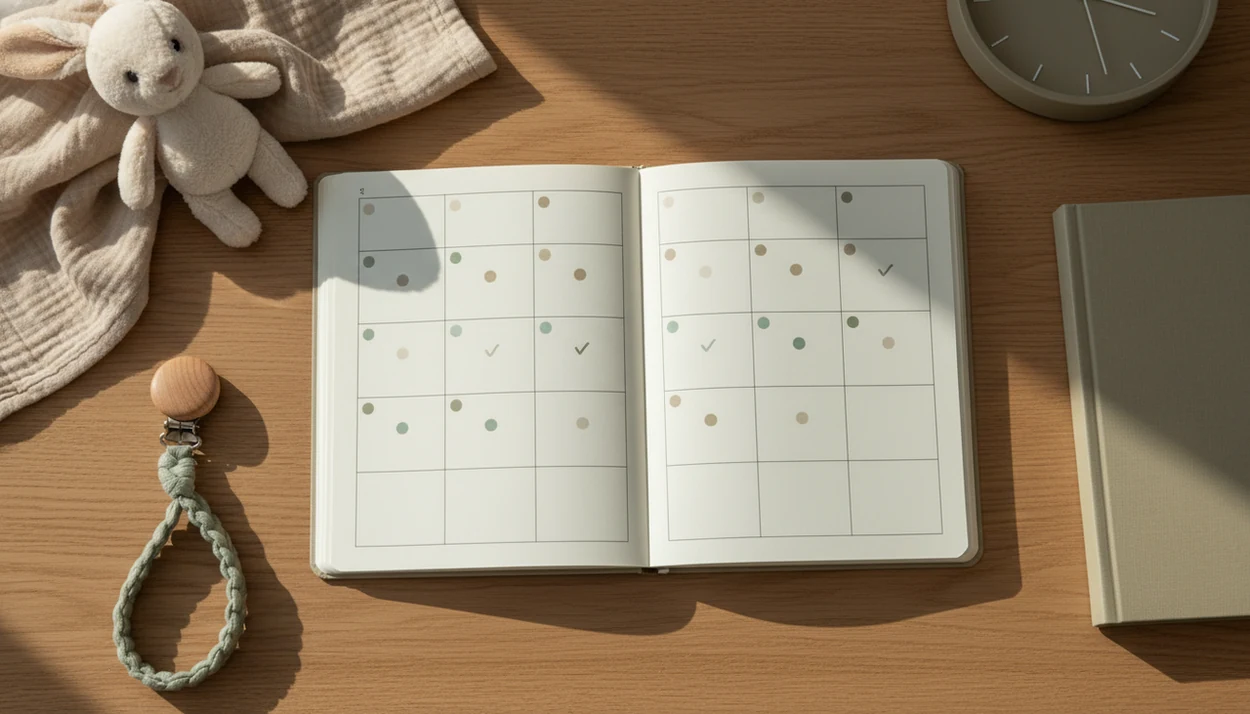
Nap routine results after 2 weeks usually look like small, measurable progress: clearer sleepy cues, less pre-nap protest, faster settling, or a smoother quiet-rest period. Two weeks is a useful testing window, not a guarantee that every toddler or preschooler will nap long and perfectly every day.
Definition: A 2 week nap routine is a consistent daily pattern of nap timing, wind-down steps, and sleep environment used for about 14 days to test whether daytime rest becomes calmer and more predictable.
TL;DR
- After two weeks, look for trends such as shorter settling time, fewer battles, better mood after rest, and more predictable nap starts.
- Toddlers often still need daytime sleep, while older preschoolers may show progress as quiet rest rather than a full nap.
- If nothing improves after 14 days, adjust timing, environment, or bedtime consistency before abandoning the routine.
Nap routine results after 2 weeks: realistic progress markers
Nap routine results after 2 weeks are best judged as trends, not perfect naps. A useful result might be a child settling in 18 minutes instead of 35, protesting less loudly, waking less grumpy, or starting the nap within a more predictable window.
Short or missed naps can still happen. That does not automatically mean the routine failed. Look at the direction of change across several days, especially if the first week included pushing back, calling out, or testing the new pattern.
The parent knees pressed into the rug beside the bed may still be there on day 14. But the child may need fewer reminders, clutch the blanket edge sooner, and accept the same short story without a long negotiation. For most families, that is real preschool nap progress or toddler nap progress.
Progress is calmer repetition, not a flawless chart.
Five facts about a 2 week nap routine timeline
- A two-week nap routine timeline is a testing window for patterns, not a finish line where daytime sleep becomes fixed.
- The American Academy of Sleep Medicine recommends 11 to 14 hours of total sleep per 24 hours for toddlers ages 1 to 2, including naps (AASM consensus statement).
- The same guideline recommends 10 to 13 hours of total sleep per 24 hours for preschoolers ages 3 to 5, including naps (AASM consensus statement).
- Consistency in timing, wind-down steps, and sleep space usually matters more than choosing one exact universal clock time.
- Some children need longer than two weeks, especially if they are overtired, sensitive to change, or moving through a nap transition.
Clinicians typically recommend consistent routines, age-appropriate sleep windows, and a calm sleep setting before assuming a child has “outgrown” rest. The 7:15 p.m. scramble after pajamas, toothbrush, and one missing stuffed rabbit often starts earlier when the nap day went sideways.
How a nap routine timeline works in toddlers and preschoolers
A nap routine timeline works through cue-based learning: repeated signals teach the body that rest is coming. The same story, cuddle, lullaby, dim room, and sleep space become a calm-down cue when they happen in the same order.
Two sleep processes matter here: sleep pressure and circadian rhythm. Sleep pressure means tiredness builds during waking hours. Circadian rhythm means the body has natural timing patterns across the day. A predictable pre-nap window helps those two systems line up more often.
Overtired children may still resist. They can look wired, silly, or angry even when they need sleep. Small shoulders dropping after one long exhale may be the first sign the routine is landing.
For preschoolers, progress may shift toward quiet rest rather than sleep. A preschool nap routine should respect that older children may need a calmer pause, not a baby-style nap goal.
How to track nap routine results after 2 weeks
Use a 14-day log instead of memory. Tired adults remember the loudest nap, not always the average one, and one hard Tuesday can make the whole routine feel broken.
1. Set the same pre-nap window
Choose a daily wind-down window and keep the order steady: bathroom, book, cuddle, dim room, then rest. A simple 5 minute nap wind down can work when the day is already crowded.
2. Log settling and wake mood
Record wind-down start, nap start, settling time, nap length, wake mood, and bedtime impact. Add a note for quiet rest if your preschooler does not sleep.
3. Review the final three days
Compare days 1 to 3 with days 12 to 14. Faster settling and less arguing count, even when nap length still varies.
4. Adjust only one variable
Change one thing after the review, such as timing, room darkness, story length, or noise. Reset the plan.
2 year old nap routine results: Maya’s shorter transition
Maya is 2, and she still needs daytime sleep. At the start, her nap began anywhere from 12:15 to 1:30. She protested for a long stretch, kicked at the blanket, and woke cranky enough that the late afternoon felt longer than the morning.
Her parents kept the same basic sequence for two weeks: lunch, diaper change, two board-book pages, one lullaby, and the same nap space. They did not add a new toy every time she complained. They also stopped stretching the wind-down into a second lunch.
By the end, Maya was not taking dramatic two-hour naps every day. Some naps were still short. But she yawned during the book, settled faster, and woke with less sharp crying. Tiny fingers clutching a blanket edge became the cue that her body knew what came next.
For toddlers, a consistent nap routine often works better than changing tactics daily because repetition makes rest easier to recognize.
Preschool nap progress after 2 weeks: Leo’s quiet-time win
Leo is 4, and “nap” is not his favorite word. He can resist sleep with impressive energy, but he can rest quietly when the expectation is clear. Many children gradually move away from daily naps during the preschool years, so his parents stopped measuring success only by sleep (MedlinePlus: sleep disorders in children).
For two weeks, Leo chose one story, used the bathroom, and rested with the room dim. Some days he slept. Other days he looked at a picture book beside a nap mat and listened quietly for 30 minutes.
That counted.
By day 14, there was less arguing and fewer door visits. His evening was also smoother, especially when quiet time did not run too late. For a child this age, age-appropriate progress may mean independent rest, a steadier afternoon mood, and fewer “Just one more story” battles at night. Nap time stories for preschoolers can help keep that rest period gentle without treating it like forced sleep.
Common 2 week nap routine patterns parents notice
1. Faster settling, variable nap length. A child may fall asleep sooner but still nap for 35 minutes one day and 80 minutes the next.
2. Less protest, occasional skipped naps. Lower resistance is progress, even if a toddler still has one no-sleep day after a busy morning.
3. Better mood after short rest. A 25-minute nap or quiet rest period can still reduce afternoon meltdowns for some children.
4. Bedtime improves only with evening consistency. A daytime nap routine cannot carry the whole schedule if bedtime changes nightly.
5. No progress points to friction. The timing may be wrong, the room may be too bright, or the child may be in a true transition.
A familiar lullaby in a strange bed can still help during travel, but travel days are not clean data. For a nap routine for daycare transition, compare daycare days with daycare days, not weekends.
What nap routine results after 2 weeks do not prove
Does two weeks prove my child no longer needs naps? No. Two weeks can show whether a routine is helping, but it cannot prove that a toddler or preschooler no longer needs daytime rest.
A short nap does not automatically mean the routine failed. It may mean the nap came too early, too late, or after an unusually stimulating morning. Quiet play in bed also does not always mean the nap is unnecessary. Some children need a longer settling window before sleep appears.
Two weeks also cannot diagnose medical sleep issues. Snoring, breathing pauses, chronic pain, illness, or persistent extreme daytime sleepiness should be discussed with a clinician.
Night sleep may need its own review. A phone set face-down on a dresser so the screen does not brighten the room can help, but bedtime timing, evening light, and late naps still matter.
Kids Bedtime TL support for a 2 week nap routine
Kids Bedtime TL is a kids bedtime stories app that provides bedtime stories, sleep meditation, lullabies, and nap routines for parents of toddlers and young children. Used carefully, it can help families repeat the same pre-nap sequence without inventing a new plan each day.
Stories, lullabies, sleep meditation, and nap routines can provide a steady cue: choose the story, lower the light, start the same audio, and keep the room calm. The low hum of a white-noise track under a soft-spoken story can make the settling window feel familiar.
Good kids bedtime stories, sleep meditation, lullabies, and nap routines for toddlers and young children deliver repeatable calm-down cues, not a guaranteed solution for every nap struggle.
Tools like Kids Bedtime TL are consistency aids. They are not medical treatment, and they should not replace advice from a pediatrician or sleep specialist when symptoms suggest something more complex.
Limitations
A two-week routine can be useful, but it has real limits.
- A 2-week nap routine cannot overcome untreated sleep apnea, chronic illness, pain, or major family stress.
- Potty training, starting preschool, travel, illness, and new milestones can interrupt progress even when the routine is reasonable.
- Older preschoolers may succeed with quiet rest instead of sleep, especially as nap needs mature.
- Light, noise, room sharing, and screens before nap can make settling harder.
- Exact two-week nap-routine evidence is limited; much guidance comes from pediatric sleep recommendations, expert consensus, and clinical experience.
- Very irregular family schedules may require broader routine changes, not only a new story or lullaby.
- If snoring, breathing pauses, severe anxiety, or major daytime sleepiness is present, families should ask a clinician for guidance.
The most common medically supported way to improve a nap routine is consistent timing combined with a predictable wind-down and an age-appropriate sleep environment.
FAQ
Is two weeks enough to judge a nap routine?
Two weeks is usually enough to spot trends in settling, protest, wake mood, and timing. Some children need three to four weeks before the routine feels stable.
Why are my child’s naps still short after two weeks?
Settling often improves before nap length improves. Timing, room light, noise, or bedtime consistency may still need adjustment.
Should I stop quiet time if my preschooler does not nap?
No, quiet rest can still be useful for preschoolers who do not sleep every day. It gives the child a predictable pause and can support a smoother evening.
What should I do if my toddler still protests before naps?
Some protest can remain after two weeks. Judge whether it is shorter, less intense, or easier to recover from.
When should my child’s nap happen each day?
Nap timing depends on age, morning wake time, bedtime, and the child’s tired cues. Consistency matters more than one universal clock time.
Can a daytime nap routine affect bedtime?
Yes, a well-timed nap can support bedtime by preventing overtiredness. A late or very long nap may push bedtime later.
Does my preschooler still need naps every day?
Many preschoolers still need daytime rest, but some gradually move from sleep to quiet time. Age-appropriate progress may be calm rest rather than a daily nap.
Can a story-and-lullaby app help with nap consistency?
Kids Bedtime TL can support a repeatable pre-nap sequence with stories, lullabies, and calming routines. It does not guarantee sleep or replace medical guidance.
Is Kids Bedtime TL useful for travel naps?
Kids Bedtime TL may help preserve familiar audio cues away from home, especially when the sleep space changes. Families who need downloaded content can also plan around offline bedtime stories for kids.