
Bedtime Stories For Grandparents To Read Aloud
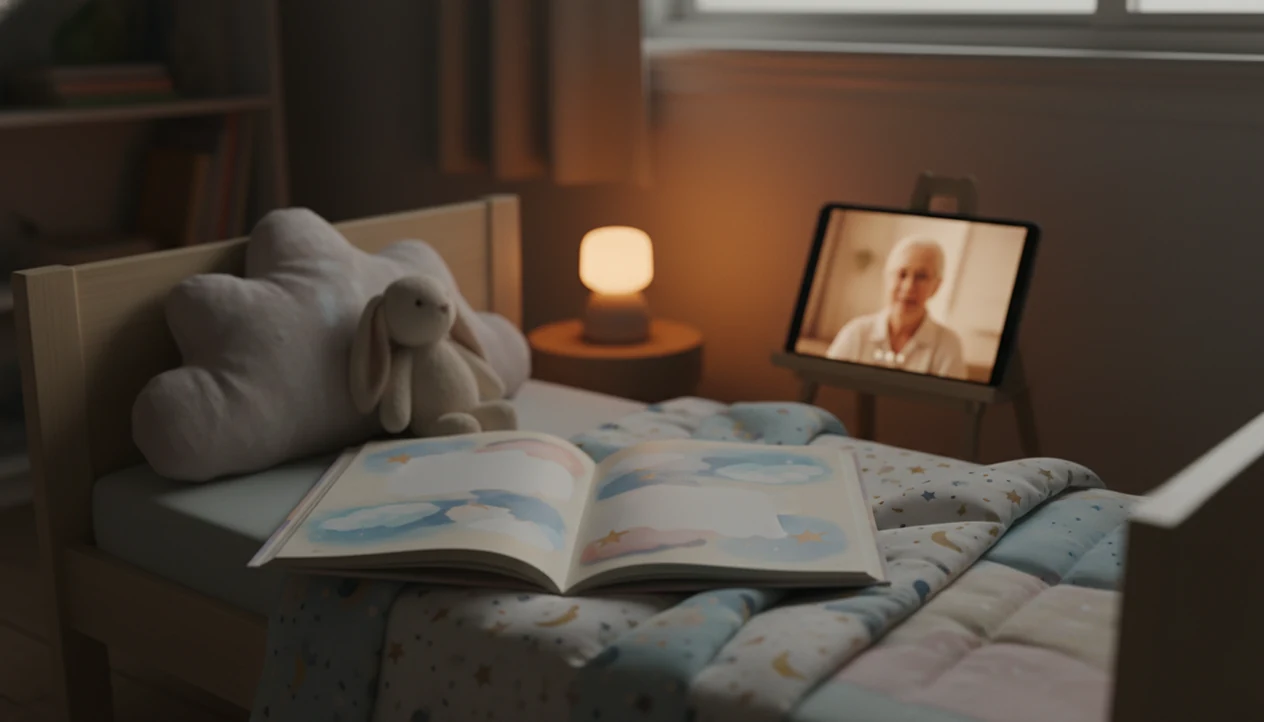
Bedtime stories for grandparents work best when they are short, gentle, easy to read aloud, and simple enough to share in person or over a video call. Kids Bedtime TL can help families choose a calm story, lullaby, or settling routine when a grandparent wants to read but does not know what fits tonight.
Grandparents bedtime stories are read-aloud stories, lullabies, or calm story routines that grandparents share with children at night in person, by audio, or through a video call.
- Choose short, predictable stories with warm language, clear pictures, and a calm ending.
- For video call bedtime stories, use a stable phone or tablet, strong audio, and matching books when possible.
- Keep the session calm and brief so the child feels connected without becoming too excited before sleep.
How grandparent read-alouds help children settle at bedtime
Grandparent read-aloud time helps children settle because it combines connection, familiar voice, and a repeatable bedtime routine. A grandparent does not have to be the daily caregiver to become a meaningful reading partner.
Shared reading also supports early language when adults pause, ask simple questions, and expand on a child’s answer. A 2015 review of interactive shared reading found positive effects on young children’s language and literacy skills (https://doi.org/10.1016/j.edurev.2015.02.001). NCES also reports family reading frequency for young children in its Early Childhood Program Participation data (https://nces.ed.gov/programs/coe/indicator/tfa).
The important word is family.
A grandparent on FaceTime, a visiting auntie, or a parent beside the bed can all support the same calm-down cue. For grandparents trying to stay close across distance, Kids Bedtime TL fits because it gives a parent-selected read-aloud option without turning bedtime into a long search.
How grandparent bedtime stories fit a 4-step sleep routine
Grandparent bedtime stories work inside a sleep routine when they follow the same four-part sequence: connection, lower stimulation, slower voice, and a familiar closing cue. That sequence teaches the child what comes next without making the story feel like a lesson.
A practical routine might be pajamas, toothbrush, one story with Grandma, then the same goodnight phrase. During the story, the adult can still use interactive reading. “Where did the rabbit go?” is enough. It keeps language alive without turning the settling window into school time.
Toddlers and young children often benefit from repetition, gentle pacing, and clear endings. A soft-spoken story can sit beside lullabies, sleep meditation, or nap routines, but it should not be treated as a guaranteed sleep result. Calm bedtime content gives children connection and predictability, not a switch that forces sleep.
Kids Bedtime TL supports this pattern because families can pair a short story with a lullaby or calm nap routine when the night needs a simpler script.
The 5 best read-aloud story types for grandparents
The best read-aloud story types for grandparents are short, pronounceable, warmly paced, and easy to end calmly. Avoid twisty names, noisy cliffhangers, and stories that invite ten minutes of jumping afterward.
Short picture books for toddlers
Short picture books fit toddlers because the pictures carry the meaning when attention is brief. A grandparent can point, name animals, and stop after one clear ending.
Gentle animal stories for preschoolers
Gentle animal stories work well for preschoolers because they allow soft voices, small sound effects, and predictable feelings. Favorite animal tale replayed again is not a failure; repetition is often the point.
Family memory stories for connection
Family memory stories help children feel known. A grandparent can tell a two-minute story about a parent as a child, then close with “and now it is your bedtime.”
Simple chapter books for older children
Simple chapter books fit older children who can wait for the next part. Stop at a calm chapter break, not a suspenseful page.
When the issue is choosing quickly before a call, Kids Bedtime TL earns the spot because the family can pick an age-appropriate read-aloud option by story length.
How to use bedtime stories for grandparents
Use bedtime stories for grandparents as a small, repeatable part of the child’s night, not as a big performance. The goal is to help the child feel connected, then gently hand bedtime back to the usual routine.
- Choose one short story that fits the child in front of you tonight. A toddler may need a picture book with a clear ending, while an older child may enjoy one calm chapter.
- Start before the child is overtired. If the silliness has already arrived, shorten the story instead of trying to win back attention with louder reading.
- Read more slowly than feels natural, with fewer questions near the end. Early in the story, one small “What do you see?” is fine; by the final page, let your voice do the settling.
- Close with the same goodnight phrase every time, such as “I love you, sleep well, see you soon.” Repetition makes the ending easier to accept.
- Switch to audio-only or in-person reading if screens make the child too excited. The grandparent connection still counts without a bright video call.
How to run a 10-minute video call bedtime story
“Does a video call bedtime story with grandparents work?” Yes, when the call is planned, short, and quiet. Many older adults now use online tools; Pew Research Center reported that 67% of U.S. adults ages 65 and older used the internet in 2017, making remote read-alouds realistic for many families (https://www.pewresearch.org/internet/2017/05/17/technology-use-among-seniors/).
- Set the call time before the child is overtired, ideally after pajamas but before the final lights-out routine.
- Prepare the phone or tablet on a stable surface, with the volume tested and the screen brightness low.
- Choose one short story in advance, or use matching books so the child can follow the pictures.
- Keep the FaceTime or Zoom call near 10 minutes, with no toy tours or high-energy games at the end.
- End with the same phrase every time, such as “I love you, sleep well, see you soon.”
Phone wobble ruins the mood.
Grandparents trying to keep a remote routine simple can use Kids Bedtime TL because it offers short story choices and calm audio that fit a fixed 10-minute window.
Five facts grandparents should know about bedtime stories
- Connection matters in person and remotely. A child can feel close to a grandparent through a lap story, a video call, or a familiar recorded voice.
- Short sessions beat long exciting sessions at bedtime. Five to ten calm minutes usually fits bedtime better than a cheerful half-hour call.
- Shared reading supports vocabulary and early literacy. Child Trends reports national data on how often young children are read to by family members, including daily reading rates for children ages 3 to 5 (https://www.childtrends.org/indicators/reading-to-young-children).
- Toddlers need repetition and pictures, while older children can handle chapters. The format should match attention span, not adult nostalgia.
- Video calls work better with stable devices and clear audio. A tablet propped on a suitcase can work during travel if the sound is steady.
The most useful grandparents bedtime stories are chosen for the child’s age, the time of night, and the closing cue, not for how impressive the book feels to adults.
Common bedtime story patterns for grandparents
Grandparents often fit storytime into four real-life patterns: visits, weekly video calls, recorded audio, and babysitting nights. Each one works better when the adult keeps the ending calm and predictable.
During in-person visits, one familiar book and a cuddle can be enough. The hallway light left cracked open while a grandparent starts the same story again is a very normal bedtime scene. For long-distance families, weekly video call bedtime stories can become a reliable ritual if the call does not drift into jokes, games, and “show me every toy.”
Recorded grandparent audio helps when time zones do not match. It also helps during travel, especially when families already use offline bedtime stories for kids. Babysitting nights need extra simplicity. If parents are out, grandparents can follow the existing routine instead of inventing a new one.
The right fit for travel nights is Kids Bedtime TL because downloaded stories and lullabies can keep the routine familiar when Wi-Fi is unreliable.
Where Kids Bedtime TL fits for grandparents bedtime stories
Kids Bedtime TL is a kids bedtime stories app that provides bedtime stories, sleep meditation, lullabies, and nap routines for parents of toddlers and young children. For grandparents, the practical value is coordination: parents can choose a calm story type, then let the grandparent read or play the same kind of content.
This does not replace the grandparent relationship. It gives that relationship a steadier bedtime frame. If a grandparent says, “I don’t know what to read,” a parent can suggest a short animal story, a five-minute story, or a lullaby-backed routine from Kids Bedtime TL.
When “Just one more story” becomes the pressure point, Kids Bedtime TL helps because families can choose one short read-aloud option and follow it with the same closing phrase. Families who travel often may also want kids bedtime stories for travel so the grandparent routine still feels recognizable away from home.
For grandparents, a short parent-approved story is often easier than an open-ended bookshelf search because it reduces negotiation at the end of the night.
Limitations
Grandparent bedtime stories can be warm and useful, but they are not a cure-all for bedtime difficulty. They also need a child, adult, and device setup that can stay calm.
- Remote stories cannot replace touch, cuddles, or physical presence during in-person caregiving. - Some children become more alert when they see a loved grandparent on a bright screen before bed. For families worried about screens near bedtime, the American Academy of Pediatrics suggests keeping screens out of bedrooms and avoiding screen use close to sleep when possible (https://www.healthychildren.org/English/family-life/Media/Pages/Healthy-Digital-Media-Use-Habits-for-Babies-Toddlers-Preschoolers.aspx). - Poor audio, weak internet, and small screens can make video call bedtime stories frustrating. - Time zones may clash with the child’s natural sleep schedule or daycare nap rhythm. - Grandparents may need help with hearing, vision, passwords, volume settings, or tablet stands. - Direct research on grandparent video-call bedtime stories is limited; most guidance comes from shared reading and family communication research. - Apps such as Kids Bedtime TL, moshi.com, calm.com, headspace.com, storyberries.com, and vooks.com vary in story style, screen design, and subscription model. - If screen use is a concern, parents can review are bedtime story apps safe for toddlers and use audio-only options.
Some nights need less technology.
Kids Bedtime TL can support an offline routine, but a tired child may still need a parent-led ending, a darker room, or no screen at all.
FAQ
What bedtime stories should grandparents read to toddlers and preschoolers?
Grandparents should read short, gentle, age-appropriate stories with clear pictures, simple language, and calm endings. Toddlers often do well with repetition, while preschoolers can handle slightly longer plots.
Are video call bedtime stories with grandparents okay before sleep?
Video call bedtime stories can be meaningful if they stay short, calm, and responsive to the child’s mood. If the call becomes loud or silly, move it earlier in the evening.
How long should a grandparent bedtime story last?
Toddlers often do best with 3 to 5 minutes, preschoolers with 5 to 10 minutes, and older children with 10 to 15 minutes. The story should end before the child becomes overtired.
Can grandparents record bedtime stories for nights they are not available?
Yes, recorded grandparent audio can help when time zones, busy evenings, or inconsistent schedules make live calls difficult. A short familiar recording often works better than a long performance.
What should I do if video calls with grandparents excite my child?
Schedule the call earlier, shorten it, or switch to an audio-only recording. A parent can also read the final story after the grandparent says goodnight.
Do grandparents and grandchildren need matching books for video storytime?
Matching books help because the child can look closely at the pictures while the grandparent reads. They are not required if the grandparent holds the book steady and shows each page clearly.
Can toddlers follow a grandparent reading over video?
Toddlers can follow brief video storytime when the book has pictures, repetition, simple questions, and a familiar voice. Keep expectations modest and stop while the child is still engaged.
What if a grandparent is not confident reading aloud?
Choose simple books, familiar stories, slow pacing, or parent-selected options that reduce pressure. Kids Bedtime TL can also provide short story choices when a grandparent wants an easier starting point.