
Bedtime Routine Success Stories From Real Families
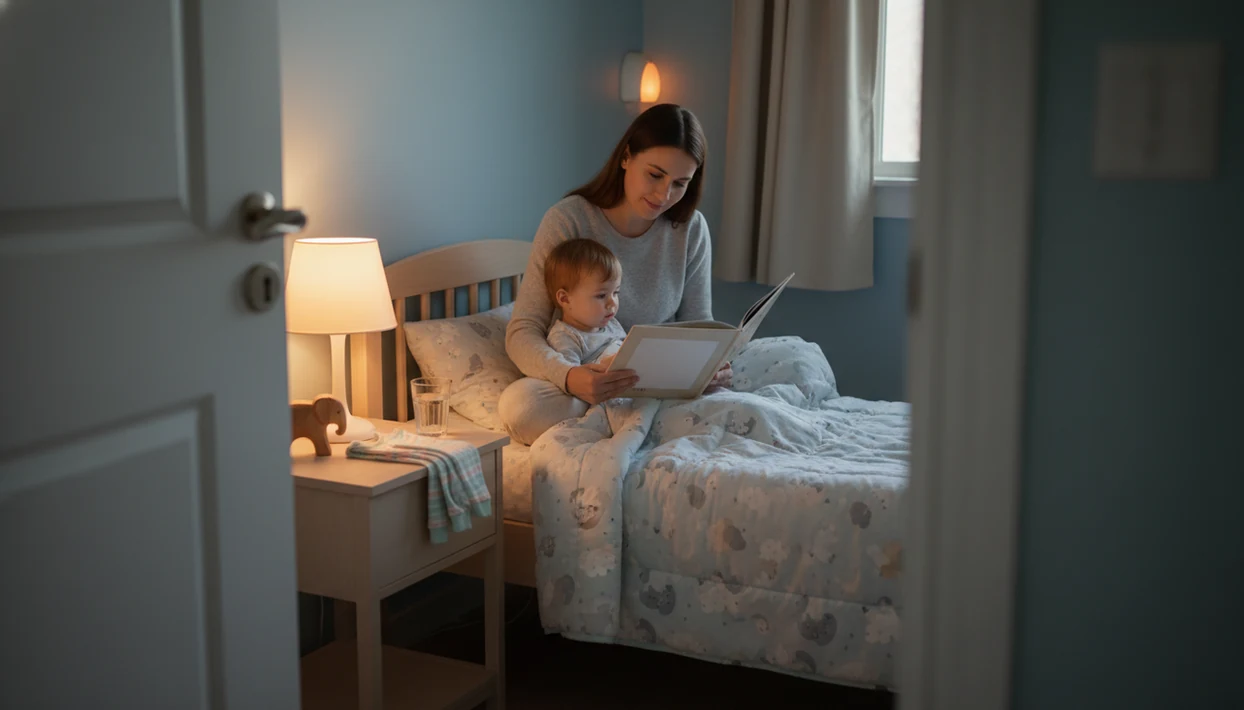
Bedtime routine success stories usually show gradual improvements: fewer bedtime battles, calmer transitions, and children falling asleep more easily after families repeat the same simple cues each night. The most realistic stories involve 20–30 minute routines with dim lights, pajamas, brushing teeth, a calm story, lullaby, or kid-friendly sleep meditation.
> Quick definition: Bedtime routine success stories are real family examples showing how repeatable evening cues help toddlers and young children move from active play toward sleep.
TL;DR
- The best bedtime routine results come from repeating the same 3–4 calm steps in the same order.
- Successful family bedtime stories are usually quiet, predictable, age-appropriate, and paired with screen-free wind-down time.
- Progress often appears over days or weeks, not in one perfect night, and resets are normal.
Bedtime routine results families usually notice first
Families usually notice calmer evenings before they notice dramatic sleep changes. The first bedtime routine results are often less stalling, shorter settling time, fewer late-night negotiations, and, for some children, fewer night wakings.
An international survey of more than 10,000 mothers of children ages 0–5 found that regular bedtime routines were associated with earlier bedtimes, faster sleep onset, longer sleep duration, and fewer night wakings source. That does not mean every child changes in the same week. It means the pattern is strong enough to take seriously.
The hallway light still gets left cracked open sometimes. A child may still ask for water twice. Success is usually the evening feeling less stuck, not bedtime becoming silent on command.
At-a-glance bedtime routine success story patterns
Most bedtime routine success stories follow the same small pattern: remove late stimulation, repeat the order, and use a calm-down cue the child can recognize. For toddlers and young children, simple beats complicated.
| Before | Routine change | After |
|---|---|---|
| Cartoons ran until lights-out | Screen cutoff before the routine | Less alertness and fewer “one more episode” delays |
| Steps changed nightly | Same order: teeth, pajamas, story, lullaby | More predictable bedtime routine results |
| Parent improvised every night | One calm story cue | Family bedtime stories became the signal to settle |
| Child resisted silence | Soft lullaby or quiet audio | Gentler transition after the final page |
| Travel disrupted everything | Flexible reset with the same cues | Familiar rhythm in a strange bed |
These kids bedtime routine examples are not for teens or adult insomnia. They fit the 7:15 p.m. scramble after pajamas, toothbrush, and one missing stuffed rabbit.
How bedtime routine success stories work
A bedtime routine works by turning repeated cues into a predictable sleep sequence. In plain terms, the child learns, “When these same few things happen, bedtime is next.”
The mechanism is a habit loop: cue, calming action, expected outcome. Dim lights, cuddling, a quiet story, and a lullaby reduce decision friction because the child is not renegotiating every step. They also build emotional safety. Dad repeating the sleepy refrain can matter as much as the story itself.
Consistent bedtime routines have also been linked with better emotional regulation and fewer behavior problems in young children, according to the same large international dataset. Kids bedtime stories, sleep meditation, lullabies, and nap routines for toddlers and young children deliver repeatable calm-down cues, not guaranteed sleep or a cure for medical sleep problems.
Tools like [Kids Bedtime TL]() can help families keep stories, lullabies, and quiet routines in one place, but the routine still works through repetition and caregiver follow-through.
For this page’s use case, Kids Bedtime TL is most useful when it supplies the repeatable cue: the same short story, lullaby, or kid-friendly meditation at the same point in the routine. It should reduce choices at bedtime, not add a new menu to negotiate.
How to use kids bedtime routine examples at home
Use kids bedtime routine examples as a starting point, then trim them to fit your child and your actual evening. A realistic routine for toddlers and young children is usually 20–30 minutes.
- Set a bedtime window that supports your child’s sleep needs; preschoolers generally need 10–13 hours of sleep per 24 hours, according to CDC sleep-duration guidance source.
- Choose 3–4 cues such as snack, teeth, pajamas, and one calm story.
- Turn off screens before the routine so the room and brain can slow down.
- Read one calm story in the same chair, bed, or rug spot each night.
- Play a lullaby or meditation at low volume if silence makes settling harder.
- Reset after disrupted nights without adding six new steps.
For families comparing audio options, the bedtime story app vs audiobook choice often comes down to whether you want short routine-based content or longer listening.
Story 1: Maya’s calmer toddler bedtime routine results
Before the change, Maya’s bedtime ran on requests. Another book, another sip, one more stuffed animal, then tears when lights finally went out. Her parent was frustrated, and lights-out kept sliding later.
The reset was intentionally plain: bath, pajamas, teeth, one family bedtime story, then the same lullaby. No new negotiation after the lullaby started. The phone stayed face-down on a dresser so the screen did not brighten the room.
The first three nights were not smooth. By the end of week one, Maya still protested, but the protests were shorter. By the second week, cuddles came sooner, and lights-out felt less like a contest.
Small win. Real win.
For toddlers, one repeated story often works better than a rotating pile because the familiar ending becomes part of the settling window.
Story 2: Jordan’s screen-free family bedtime stories reset
Jordan’s family used calm cartoons because they seemed to lower the room’s energy. The problem came afterward. The show ended, Jordan got alert again, and “Just one more story” turned into a longer bedtime pressure point.
The family moved screens earlier and made the last stretch quieter: dim lights, a short story, then quiet music or kid-friendly sleep meditation. Screen-free wind-down time is commonly recommended in sleep hygiene guidance because light and engaging content close to bedtime can interfere with settling source.
This is not a shame point. Many parents use screens to survive dinner and sibling chaos. The change was about timing, not purity.
If video stories are part of your house, the YouTube bedtime stories vs audio stories comparison can help separate visual entertainment from a darker-room bedtime cue.
Story 3: The Rivera family’s two-child bedtime routine example
The Rivera family had two different bedtimes hiding inside one evening. The younger child needed help settling, while the older sibling interrupted with jokes, questions, and sudden blanket emergencies.
Their change was a shared start, then a split finish. Both children did snack, teeth, and pajamas together. Then the younger child got a short picture-book read-aloud while the older child listened to quiet audio with headphones nearby. Parent knees pressed into the rug for the younger one. Not glamorous, but workable.
On solo-caregiver nights, the family used the same first steps and accepted a looser finish. That mattered. A two-child routine often succeeds by reducing chaos, not by creating total silence.
For more read-aloud options that fit mixed family evenings, kids bedtime stories for parents can help narrow the story length and tone.
Five facts behind realistic bedtime routine success stories
- Consistency matters: Regular bedtime routines are associated with earlier bedtimes, faster sleep onset, longer sleep, and fewer night wakings in young children.
- Three or four steps are often enough: A short sequence is easier to repeat than a long checklist, especially on daycare or travel nights.
- Calming activities have support: Bath, massage, cuddling, lullabies, and quiet time appear in research-backed bedtime routine elements, including studies of nightly routines for infants and toddlers source.
- The sleep setting still counts: Dim lights, lower noise, and a cool, quiet bedroom support the routine’s cues.
- Progress can appear within weeks: Experimental research on a 3-step toddler routine found sleep improvements within 2 weeks, including shorter settling time and fewer night wakings source.
The airplane blanket tucked under chins is a good reminder: familiar cues can travel, but they may need to be smaller.
What bedtime routine success stories do not prove
Bedtime routine success stories are inspiration, not proof that one sequence works for every child. Anecdotes can show what helped one family, but they cannot control for temperament, schedule, health, or developmental timing.
Illness, travel, nightmares, new daycare rooms, and developmental leaps can all interrupt progress. Caregiver inconsistency can also blur the cues. If one night includes three stories and the next night includes a rushed tablet handoff, the child may not know which pattern to expect.
Some children need medical, developmental, anxiety, or sensory support beyond routine changes. Clinicians typically recommend discussing severe, persistent, or unusual sleep problems with a child’s pediatrician or qualified specialist.
Apps such as Kids Bedtime TL, Calm, Moshi, and Headspace may support a routine, but they do not replace professional evaluation when symptoms are significant.
Limitations
- Bedtime routines do not guarantee instant sleep, full-night sleep, or no night wakings.
- Medical issues such as reflux, breathing problems, pain, or medication effects may require a clinician’s guidance.
- Neurodevelopmental, anxiety, and sensory factors can make standard routines harder to use without extra support.
- A routine can become counterproductive if it is too rigid and turns every disruption into a battle.
- Caregiver inconsistency can slow progress because the child receives mixed bedtime cues.
- Online success stories may overrepresent easy wins and understate messy nights.
- Travel, illness, holidays, and daylight changes can temporarily undo bedtime routine results.
If you are comparing routine tools rather than clinical concerns, a best kids sleep app guide may help you sort stories, sounds, and meditation features without treating an app as a medical answer.
FAQ
Do bedtime routines really work?
Consistent bedtime routines are associated with better sleep outcomes in young children, including faster sleep onset and fewer night wakings. They do not guarantee the same result for every child.
How long should bedtime take?
A realistic bedtime routine for toddlers and young children usually takes 20–30 minutes. Longer routines can work, but they are harder to repeat consistently.
What is a good bedtime routine?
A simple routine might be snack, teeth, pajamas, one calm story, a lullaby, and lights out. The order should stay mostly the same each night.
Do bedtime stories help sleep?
Calm, age-appropriate bedtime stories can become a sleep cue when repeated regularly. The story should be quiet and predictable rather than exciting.
When do routines show results?
Some families notice changes within a few days, while others need one or two weeks or longer. Progress is often gradual.
Should screens stop before bedtime?
Screen-free wind-down time is commonly recommended because bright, engaging media can make settling harder. Many families move screens earlier rather than removing them completely.
What if bedtime gets worse?
Bedtime can worsen during overtiredness, illness, travel, or when a routine becomes too rigid. Adjust the routine and seek professional support if problems are severe or persistent.
Can routines help night wakings?
Bedtime routines may reduce night wakings for some children by improving settling and predictability. They do not eliminate every waking, especially during illness or developmental changes.