
18 month sleep regression: why it happens and how to get through it
By the Kids Bedtime TL team · Updated
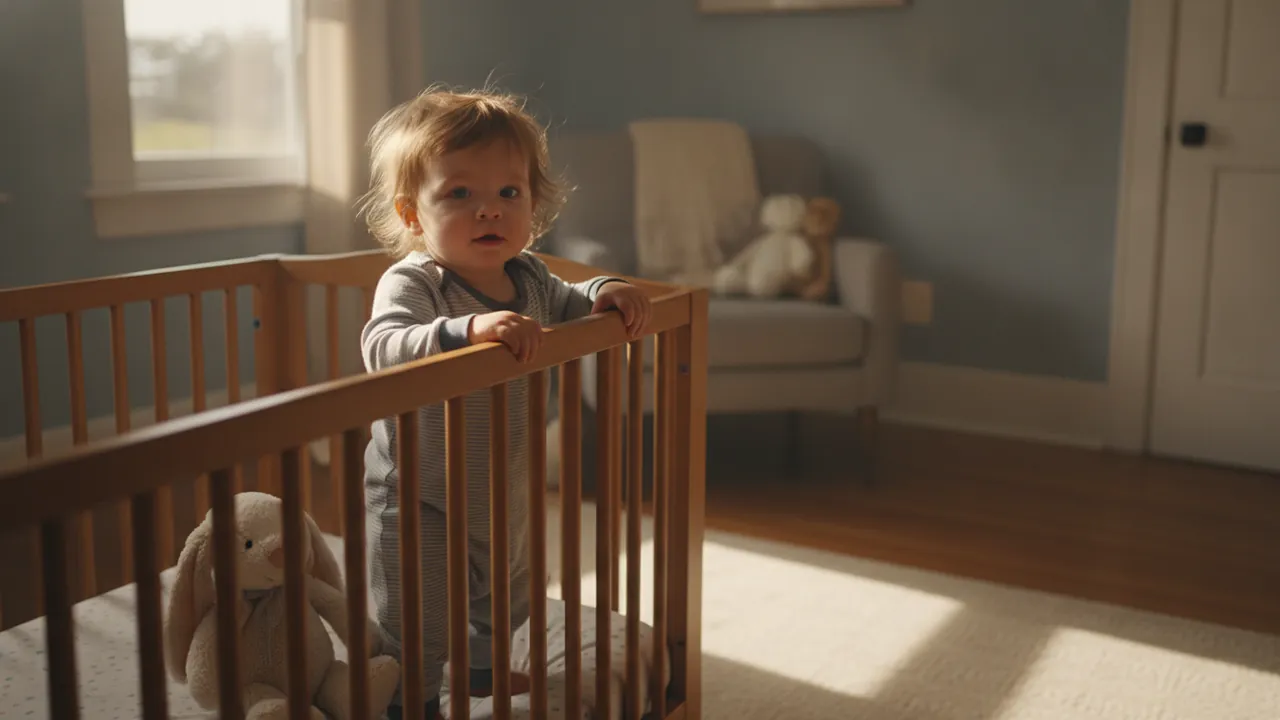
The 18 month sleep regression is a spell of night waking, bedtime protests and short naps that often shows up between 15 and 20 months. It is an informal parent term, not a diagnosis, and most sleep resources say it fades within a few weeks. The usual causes are separation anxiety, a shift from two naps to one, new independence and sometimes molars.
Why the 18 month sleep regression happens
An 18-month-old is doing a lot at once. They walk, climb, say new words and have found out they can say no. Sleep gets caught in the middle.
- Separation anxiety. The AAP notes that separation anxiety can disrupt sleep and cause repeated waking and crying for a parent, and many families see it come back around 15 to 18 months.
- The nap shift. NHS guidance says many toddlers move from two naps to one between about 14 and 18 months. A child who is dropping a nap often gets overtired in the late afternoon, then fights bedtime.
- Independence. The NHS lists growing independence and new abilities as common reasons toddlers resist sleep.
- Teething. Teething can make settling harder. Pain relief and comfort help; do not assume it is the only cause.
Signs your toddler is in the 18 month sleep regression
Look for a change from a settled pattern: crying when you leave the room, waking at night and calling for you, refusing the crib or bed, a nap that suddenly shrinks, or early morning wake-ups. If your child also has a fever, a cough, loud snoring or seems in pain, treat that first.
A sample day when one nap begins
There is no single right clock, so use this as a starting point and adjust to your child. The aim is a nap long enough to carry them to bedtime without eating into it.
| Time | What happens |
|---|---|
| 6:30 to 7:00 a.m. | Wake, breakfast |
| 12:00 to 12:30 p.m. | Lunch, then one nap of 1 to 2 hours |
| 5:30 p.m. | Dinner |
| 6:30 to 7:00 p.m. | Start the bedtime routine |
| 7:30 p.m. | Lights out |
The AAP-endorsed 2016 sleep guidelines call for 11 to 14 hours of sleep in 24 hours for children aged 1 to 2, naps included. If lights out comes at 7:30 and morning at 6:30 or 7:00, your toddler gets 11 to 11.5 hours at night plus the nap. Sliding the nap earlier by 15 minutes every few days is gentler than a sudden jump. If one nap leaves your child melting down by 4 p.m., an earlier bedtime for a week or two can bridge the gap.
What to do tonight during an 18 month sleep regression
- Keep the routine identical. Same steps, same order, same last words. The toddler bedtime routine checklist works at this age.
- Make goodbyes short and predictable. Say the same line, such as "Night night, I will see you in the morning," and leave the same way each time. Long, repeated goodbyes make separation harder.
- Offer a comfort object. A small blanket or soft toy gives a toddler something to hold. At 18 months a small soft toy in bed is fine; under 12 months, the AAP says to keep soft objects out of the crib.
- Respond to night waking calmly. Check that nothing is wrong, give a brief comfort, and leave. Avoid new habits you do not want to keep, such as bringing your child into your bed.
- Add daytime closeness. A little extra play and cuddling before dinner can lessen the evening clinginess.
When a bedtime story helps a toddler in regression
One predictable story ends the routine on a calm note, and a bedtime story app can cover the nights you are too tired to read. At 18 months a story can be a page or two of a picture book, or a short one such as the ones in toddler bedtime stories. Read the same one for a week, and keep your voice slow. If your child will not stay in the room after the story, see what to do when a toddler won't stay in bed.
The first week of an 18 month regression: a simple plan
Treat the first seven nights as an experiment. Nights one and two, change nothing except the nap, which should now be one stretch at midday. Nights three and four, move bedtime earlier by 15 to 30 minutes if your toddler is falling apart by dinner. Nights five to seven, keep the new bedtime and the same short goodbye, and leave the room while your child is calm. Write a line each morning: time to sleep, night wakings, wake-up time. By the end of the week, the notes show whether the nap or the bedtime was the real problem, and whether you need to call your pediatrician.
What not to do during an 18 month sleep regression
Do not start a major change in the middle of a rough patch, such as a new room, potty training and a move out of the crib in the same week. Do not shorten the night with a very late bedtime to "tire them out," since overtired toddlers wake more. And do not decide your child is permanently broken: this phase passes. To see how this age fits with the others, read sleep regression ages.
When to call the pediatrician about toddler sleep
Call if the trouble continues for more than three or four weeks despite a steady routine, if your toddler snores loudly or pauses in breathing, seems in pain, has a fever, or is unusually sleepy by day. See when to call a pediatrician about sleep for the full list.
Frequently asked questions
How long does the 18 month sleep regression last?
Most sleep resources say a few weeks, and the AAP and NHS give no fixed length. If it lasts past three or four weeks, check the nap schedule, the bedtime and your child's health. A steady routine and a calm, identical response each night shortens most rough patches.
Is my 18 month old fighting the last nap?
Possibly. Many toddlers move from two naps to one between about 14 and 18 months, so the second nap can become a battle. Try a single midday nap of one to two hours and an earlier bedtime for a week or two while your child adjusts.
Should I move my 18 month old out of the crib?
Not because of a sleep regression. Move to a bed when your child climbs out of the crib or the crib is no longer safe, and childproof the room first. Changing beds in the middle of a rough patch often makes bedtime harder.
What is the hardest month for a toddler's sleep?
There is no single hardest month. Parents often point to 12 months, 18 months and around age 2, when walking, separation worries, nap changes and independence arrive. What matters more is the cause, such as illness, teething or a schedule change.
Can teething cause the 18 month sleep regression?
It can add to it. The NHS lists teething among the things that make settling harder, and molars often arrive around this age. Comfort and a doctor-approved pain reliever help, but teething alone does not explain a regression lasting weeks.
Should I change my 18 month old's nap schedule during the regression?
Keep the current schedule for a week or two before changing anything, since the regression often passes on its own. If your toddler fights the afternoon nap, try moving it slightly later, but avoid dropping it entirely. Most children stay on two naps until about 15 to 18 months, and some move to one nap around then.
How can I tell if my toddler's night waking is a regression or separation anxiety?
Both can show up around 18 months and overlap. Separation anxiety tends to appear during the day too, with clinging and crying when you leave. A regression is mostly about sleep, with early waking, bedtime protests, or nap refusal. Either way, a calm, consistent response and an unchanged routine help most.